
From Theory to Transformation: Dr. Mohan Raja Pulicharla’s Vision for AI and Data Engineering
Dr. Pulicharla is bridging research and real-world impact with intelligent data solutions.

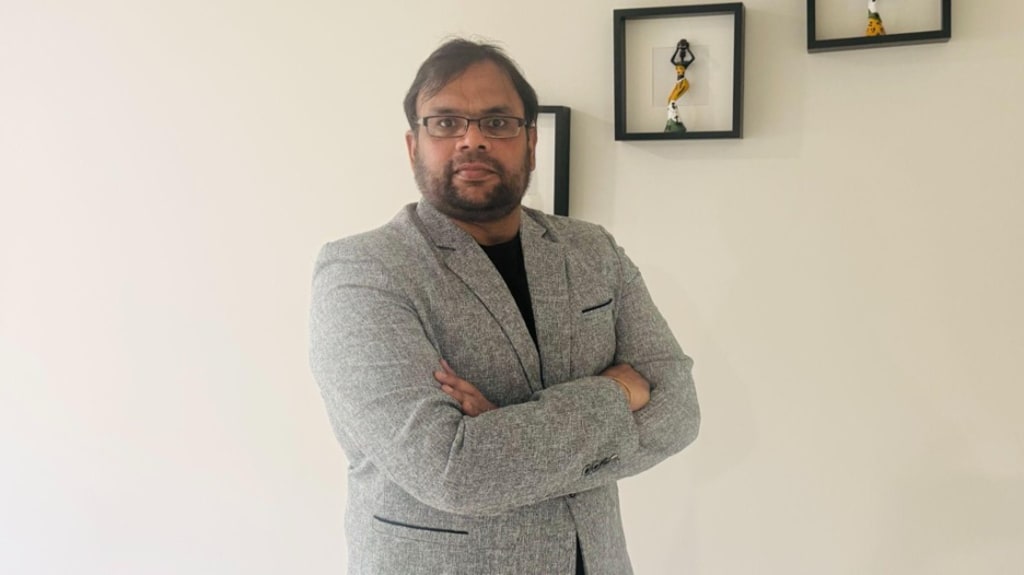
Dr. Mohan Raja Pulicharla is a distinguished researcher whose remarkable contributions extend across machine learning, artificial intelligence, and data engineering. Holding a PhD in machine learning with a specialization in advanced computational methods for e-healthcare, Dr. Pulicharla currently serves as a staff data engineer at Move Inc. His extensive body of work, encompassing numerous peer-reviewed publications and innovative provisional patents, exemplifies his ability to seamlessly integrate complex theoretical concepts with practical, real-world applications. Dr. Pulicharla’s groundbreaking efforts not only advance scientific understanding but also set new benchmarks in industry practices, reflecting his unwavering dedication to innovation and societal progress.
In this interview, the author sat with Dr. Mohan Raja Pulicharla to discuss his journey, impact, and the role AI is going to play in the field of data engineering.
Q: Dr. Pulicharla, could you tell us about your journey toward specializing in Machine Learning and Data Engineering?
Dr. Pulicharla: My journey into machine learning began with my intrinsic curiosity about computational intelligence and its ability to address complex, real-world challenges, especially in healthcare. My doctoral research solidified my commitment, exploring machine learning approaches for disease prediction and diagnostics within e-healthcare. Eventually, integrating advanced data engineering techniques into my work allowed me to enhance data quality, scalability, and robustness of AI systems—further deepening my professional trajectory in these disciplines.
Q: What inspired you to focus your PhD specifically on Machine Learning applications in e-healthcare?
Dr. Pulicharla: Healthcare represents one of the most meaningful applications of technology, directly impacting human lives. Inspired by the potential of machine learning to revolutionize medical diagnosis and patient care, I aimed my research at developing computational models capable of early and accurate detection of heart diseases. My work focused on creating robust classification models, significantly enhancing diagnostic accuracy and thus saving lives.
Q: Your publications often emphasize the intersection of Machine Learning and Data Engineering. Could you explain how you integrate these two fields in your research?
Dr. Pulicharla: Effective machine learning models depend fundamentally on high-quality, well-structured data. My research strategically combines sophisticated data engineering practices, such as scalable data pipelines and robust data governance, with machine learning methodologies. This integrative approach ensures that the models we develop not only deliver theoretical advancements but also practical efficiency and reliability when implemented in real-world environments.
Q: What distinguishes your scholarly articles within the broader landscape of Artificial Intelligence research?
Dr. Pulicharla: My scholarly articles stand apart through their distinctive blend of theoretical innovation, methodological rigor, and practical relevance. Each publication is meticulously designed, featuring novel computational frameworks validated through comprehensive experiments. By focusing simultaneously on academic contribution and industrial applicability, my articles have consistently advanced the fields of AI and Data Engineering, earning recognition across scientific and industrial communities alike.
Q: Can you elaborate on the significance and innovation behind your provisional patents?
Dr. Pulicharla: My provisional patents represent a commitment to pioneering innovation at the frontiers of AI and Data Engineering. Each patent addresses specific technical gaps in existing methodologies, providing novel solutions to critical problems like automated data integration, real-time analytics, and scalable machine learning deployments. These innovations aim to enhance operational efficiency, predictive capabilities, and the reliability of intelligent systems, serving both academic progress and industry demands.
Q: How does your work at Move Inc. influence or inspire your ongoing research?
Dr. Pulicharla: At Move Inc., I am continuously exposed to practical, large-scale data engineering challenges that inspire and guide my research. The complex data pipelines, real-time analytics requirements, and innovative machine learning deployments I encounter at Move Inc. provide fertile ground for both theoretical inquiry and practical experimentation. This synergy helps ensure my academic research remains deeply connected to industry needs and technological advancements.
Q: Given your extensive experience, what do you see as the most pressing ethical considerations in modern AI research?
Dr. Pulicharla: Ethics in AI is paramount, particularly regarding transparency, fairness, and bias mitigation. It is crucial to ensure our algorithms are developed responsibly, minimizing biases, ensuring transparency, and adhering to privacy standards. I actively incorporate ethical considerations throughout the lifecycle of my research, emphasizing the importance of human-centric design and robust governance to foster trustworthy AI systems.
Q: Can you highlight one particular project or research outcome you consider especially impactful?
Dr. Mohan Raja Pulicharla: One of my most impactful projects involves the development of a machine learning-based system for early heart disease detection. This research resulted in significantly higher diagnostic accuracy, demonstrating clear practical value in healthcare contexts. The success of this system underscored the transformative potential of machine learning, solidifying its importance in clinical diagnostics and preventive healthcare.
Q: In your opinion, what are the emerging trends in Machine Learning and Data Engineering that professionals should closely follow?
Dr. Pulicharla: Professionals should closely monitor trends such as real-time analytics, Explainable AI (XAI), hybrid quantum-classical machine learning models, and automated ML operations (ML Ops). These advancements will fundamentally redefine AI and data engineering, emphasizing interpretability, operational scalability, and real-time adaptability to rapidly evolving data landscapes.
Q: How do you ensure that your innovations maintain scalability while preserving model accuracy?
Dr. Pulicharla: I employ distributed computing infrastructures, automated hyperparameter tuning, and advanced ensemble learning methods to achieve scalability without compromising accuracy. Rigorous validation and continuous performance monitoring ensure our models maintain reliability and precision even at substantial scale, ultimately achieving a harmonious balance between performance and operational demands.
Q: Your extensive contributions have influenced various fields. Could you discuss how your research has practically impacted industries or communities?
Dr. Pulicharla: My work has notably impacted healthcare, financial analytics, and public-sector projects. By implementing optimized data pipelines and predictive machine learning models, I have enabled organizations to substantially reduce manual efforts, improve accuracy in financial reporting, and enhance healthcare outcomes. Such real-world impacts validate the relevance of our theoretical innovations.
Q: How do you maintain rigor and innovation while ensuring your research remains accessible and practically relevant?
Dr. Pulicharla: Striking this balance requires clarity of communication and rigorous experimental validation. My research is deliberately structured to be comprehensible, yet technically profound, ensuring methodological transparency and practical applicability. Each innovation is validated in realistic scenarios, ensuring that the theoretical insights translate effectively into tangible outcomes.
Q: As a seasoned researcher, what strategies do you recommend for young scholars aspiring to excel in Machine Learning and Data Engineering?
Dr. Pulicharla: I encourage emerging scholars to embrace interdisciplinary collaboration, maintain an openness to continuous learning, and engage in rigorous experimental practice. Critical thinking, ethical considerations, and a commitment to societal impact are indispensable qualities. Ultimately, the relentless pursuit of knowledge and practical problem-solving will differentiate exceptional researchers in our dynamic fields.
Q: In your view, how important is interdisciplinary collaboration for breakthroughs in Machine Learning research?
Dr. Pulicharla: Interdisciplinary collaboration is absolutely critical, providing diverse perspectives that enrich research outcomes. Collaborations across fields such as neuroscience, ethics, statistics, and computer engineering significantly expand the horizons of machine learning research, often resulting in groundbreaking innovations otherwise unattainable within isolated disciplinary frameworks.
Q: Finally, Dr. Pulicharla, what future directions are you most excited about pursuing in your research?
Dr. Pulicharla: I am particularly enthusiastic about exploring further integrations of quantum computing within classical machine learning frameworks, advancements in explainable AI, and the automation of ML operations at scale. Each of these domains presents remarkable opportunities to significantly advance the capabilities and societal impact of intelligent systems, ultimately driving AI towards unprecedented levels of efficacy, transparency, and societal benefit.
About the Creator
Oliver Jones Jr.
Oliver Jones Jr. is a journalist with a keen interest in the dynamic worlds of technology, business, and entrepreneurship.
Keep reading
More stories from Oliver Jones Jr. and writers in Interview and other communities.
An Exclusive Interview with Karthik Venkatesh and the State of Cloud Security and DevSecOps
Few people have had as much influence as Karthik Venkatesh Ratnam in the fast-changing scene of cloud computing and cybersecurity. Karthik has been leading the way in including security in cloud infrastructures and DevSecOps methods, with a career spanning more than eight years. This exclusive interview covers his academic contributions, honors, and future insights about cloud security.
By Oliver Jones Jr.11 months ago in Interview
Part 2 Interview With Joe Patterson, Author Of Melanin Memoirs
This is my second interview with Joe Patterson. His 4th anniversary writing on Vocal will be in March 2026. He has one achievement on Vocal, The Other Foot. He has over 17,000 reads on Vocal since he started on Vocal in 2022. Joe Patterson is very creative poet and rapper. Joe is deep thinker and I feel it is reflected in his latest published book, Melanin Memoirs.
By Mariann Carroll25 days ago in Interview
Finding His Voice: Steven McCoy on Storytelling, Silence, and the Power of Media
For Steven McCoy, journalism isn’t just a career, it’s a lifeline. As a child, bullying left him silenced, struggling with selective mutism, unable to fully share his thoughts with the world. But where words failed, pencils, pens, and paper spoke. He built entire worlds on paper, channeling his imagination and voice through stories, drawings, and poems. That early refuge became the foundation of his calling: telling stories that matter and giving voice to those who feel unheard.
By Tales From The Media6 days ago in Interview
Early March 2026: 4 Goals Accomplished
It's early March and I've now accomplished my 4th writing goal for the year of 2026. Before diving into the behind-the-scenes of it... why not tell you up front what that accomplishment was? I was published in a 2nd publication for this year. Published in Helix Literary Magazine out of Central Connecticut State University. You can read it for free right now!
By Stephen Kramer Avitabile4 days ago in Writers


Comments
There are no comments for this story
Be the first to respond and start the conversation.