
Divination in Sound: The Transformative Art of Jess McAvoy
How a Nonbinary Maverick Fuses Myth, Music, and Theatrical Reinvention to Forge Authentic Connection


Jess McAvoy doesn’t just make music—they conjure worlds. From Perth’s DIY stages to Brooklyn’s theatrical labs, McAvoy has spent thirty years forging an art that resists easy definition: part rock riff, part mythic fable, part confessional therapy. Their current projects—most notably the one-person rock musical The Search and the Americana-infused album American Dreaming—are not just performances or records, but living experiments in identity, transformation, and cultural critique.
At age 4, McAvoy sat transfixed in a cinema watching Supergirl. “I remember feeling changed,” they recall. Two years later, six-year-old Jess watched Madonna defy expectations and understood that music could be a vehicle for influence—and provocation. Those early sparks ignited a lifelong mission: to challenge norms and harness creativity as a force for personal and social reinvention.
Growing up in Perth’s tightknit creative community, McAvoy found a surrogate family among fellow teen performers. “We supported each other’s shows—no ego, just collective uplift,” they say. That early ecosystem taught them that art is dialogue: a conversation flowing between creators and audience, each feeding the other.
By their mid-20s, McAvoy felt constrained by Perth’s small scene and the fallout of coming out as nonbinary in a less-accepting environment. The leap to New York was catalytic. “Suddenly I had to up my game—or get lost in the crowd,” they reflect. The city’s competitive intensity sharpened their craft; every gig demanded more nuance, every recording session more ambition.
It was during the pandemic, holed up in Oklahoma and Texas, that McAvoy wrote American Dreaming. The album’s open plains and neon highway signs seep into tracks that blend rock, blues, and singer-songwriter intimacy. “I wanted to absorb Middle America from the inside,” they explain. The result is an authentic Americana vibe—songs that feel both timeless and urgently of the moment.
If American Dreaming explores place, The Search explores self. Conceived when a friend challenged McAvoy to script the stories they riff between songs, this one-person rock musical took four years to mature. On stage, McAvoy embodies multiple facets of their consciousness—each an “inner voice” brought to life through song, monologue, and movement.
“Words are spells,” McAvoy says. “This show is about self-actualization. Every night I conjure parts of myself—some tender, some furious—and integrate them.”
The emotional apex arrives in a closing monologue of redemption. Even fully healed, McAvoy admits, they find themselves moved to tears. “It’s harder to hold it together, but that vulnerability makes it real—for me and the audience.”
This spring, McAvoy will record The Search live in Brooklyn, rallying a world-class team to capture the show’s raw power. “This feels like closing a chapter,” they say. “I’m ready to change tactics—and maybe break a few more boxes.”
On American Dreaming, tracks like “The Fool” and “Daedalus” reveal McAvoy’s fascination with myth as mirror. “When Australia was burning and COVID hit, the Emperor’s New Clothes felt eerily apt,” they explain of “The Fool”—an allegory for societal denial. Likewise, “Daedalus” casts McAvoy’s relationship with their father in the light of ancient Greek lore, transforming personal reckoning into universal parable.
Remote collaborations—session players in London, Nashville, and Stockholm—tested McAvoy’s patience (“one of the most pain-in-the-ass ways to make a record”) but also yielded unpredictable textures: a slide-guitar echo here, a ghost-vocal flourish there. These global threads weave into a tapestry that remains distinctly McAvoy’s: restless, genre-fluid, fiercely authentic.
Central to American Dreaming is producer Tre Nagella, a multi-Grammy winner whose own journey paralleled McAvoy’s. “We share reference points and a refusal to compromise,” Jess notes. Nagella distilled McAvoy’s sprawling ideas into cohesive arrangements, giving the record a spacious, “expensive” sheen without sacrificing its raw heart. Their partnership exemplifies McAvoy’s ethos: seek collaborators who elevate your vision, then let go and watch the magic happen.
Parallel to their music and theater, McAvoy sustains a thriving career as a voice educator—ranked among New York’s top instructors. They see teaching as an extension of their artistry: helping others find and own their voices, literal and metaphorical. “Empowering someone to speak—or sing—their truth is profoundly political,” they observe.
As a nonbinary, queer artist, McAvoy’s very presence challenges industry formulas. They’ve felt the pressure to conform, especially in earlier Australian days, but quickly abandoned the attempt. “My work resists categorization because I resist being categorized,” they assert. That defiance has become their trademark—and a beacon for fans seeking authenticity.
McAvoy credits much of their creative success to two practices: radical listening and narrative reframing. Before every project, they immerse themselves in stories—mythic, personal, cultural—then listen for the kernels that resonate. When a campaign stumbles or a show falters, they “rewrite the narrative,” turning setbacks into plot twists. That resilience, they argue, is the true engine of art.
Even as The Search prepares for its live capture and American Dreaming finds its audience, McAvoy’s curiosity refuses to rest. They envision forays into filmmaking, visual art, and new theatrical forms—always in collaboration with kindred spirits. And yes, given the chance, they’d share a studio with David Bowie, whose fearless reinventions remain a lodestar.
Ultimately, McAvoy hopes their work inspires others to embrace their full selves. “If people leave my shows feeling empowered to use their own voices,” they say, “then I’ve done my job.”
Jess McAvoy’s journey—from a wide-eyed Perth child in a Supergirl cape to a boundary-shattering artist in Brooklyn—reminds us that creativity is both mirror and hammer. Through mythic allegory, radical vulnerability, and unflinching authenticity, they shape stories that transform audiences as surely as they transform themselves. In their hands, art is not merely expression—it is alchemy.
About the Creator
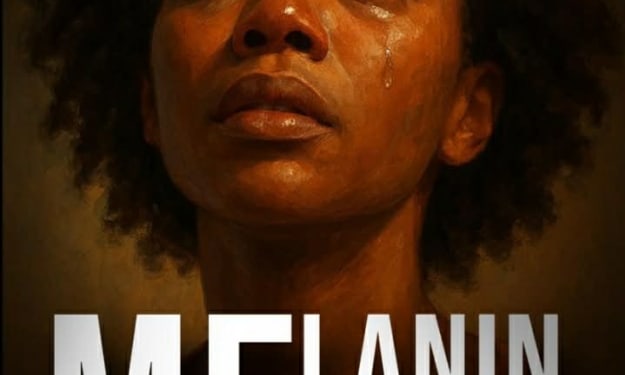
Part 2 Interview With Joe Patterson, Author Of Melanin Memoirs
This is my second interview with Joe Patterson. His 4th anniversary writing on Vocal will be in March 2026. He has one achievement on Vocal, The Other Foot. He has over 17,000 reads on Vocal since he started on Vocal in 2022. Joe Patterson is very creative poet and rapper. Joe is deep thinker and I feel it is reflected in his latest published book, Melanin Memoirs.
By Mariann Carroll26 days ago in Interview
Why I Built an AI Therapist
I’ve been a waiter, a construction worker, a DJ, a kitchen hand, a porter, a caregiver, and a supermarket cashier. I’ve washed dishes in Australia and meditated in the Himalayas. I’ve battled addictions, eating disorders, anxiety, depression, and self-destructive behavior. Before I ever sat across from a client as a psychotherapist, I had already lived a dozen lives — and nearly destroyed myself in several of them.
By Laurentis Theofanus2 days ago in Interview
The BAFTA Awards
By now, in a stunning departure from recent years, most of the world is aware of what happened at the BAFTA film awards. Social Media Headlines will tell you the bare bones: that John Davidson, a Tourette's Syndrome advocate, shouted a racial slur at two Actors of Colour, Michael B Jordan and Delroy Lindo.
By Natasja Rose7 days ago in Psyche



Comments
There are no comments for this story
Be the first to respond and start the conversation.