
Beyond the Brief: Marcus Chan’s Cinematic Reckoning
How a Former Corporate Lawyer Uses Legal Precision and Artistic Courage to Reinvent True-Crime, Branded Storytelling, and Representation on Screen

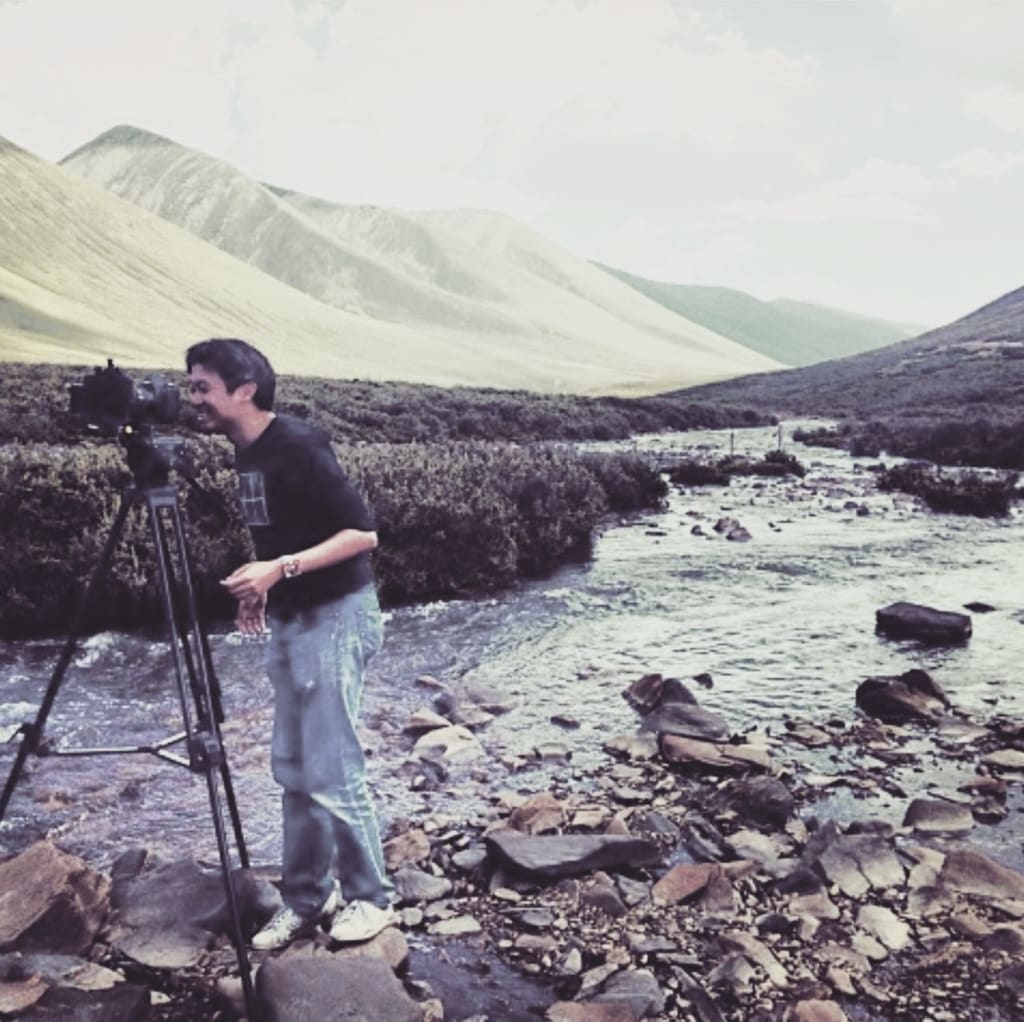
As dawn’s pale light filtered through the blinds of a modest Hong Kong apartment in early 2005, Marcus Chan sat hunched over a borrowed laptop, editing the final frames of a short film shot on a shoestring. By day he drafted contracts in a high-rise law office; by night he stitched together “Six Fragments of the Endless Journey Called Life.” What began as a necessary creative outlet became a compass: when that film became a finalist at Hong Kong’s Independent Film and Video Awards, Chan realized that the precise strategies of litigation had collided with the boundless possibilities of cinema, and he could no longer ignore the call of the latter.
“Approaching thirty made me ask myself, ‘What do I really want to do for the rest of my life?’ ” Chan recalls. Corporate law had offered stability, prestige, and a clear trajectory—but each contract he reviewed felt like another brick in a wall between him and his true north. In those late-night edits, he rediscovered the childlike wonder of creation. The law taught him to anticipate every outcome; filmmaking taught him to cherish unpredictability. “Filmmaking is not just about creativity; it’s about managing people, expectations, and countless moving parts,” he says. His legal training—meticulous preparation, strategic foresight, collaborative negotiation—became invaluable tools in the editing suite and on set.
In 2010, Chan moved to Los Angeles and encountered Hollywood’s familiar pigeonholes. As a “Chinese filmmaker,” he was expected to tell stories about Chinese culture—nothing more. “I don’t spend my time thinking about my ‘Chinese-ness,’ ” he insists. “What fascinates me are the people underneath: their fears, their hopes, their contradictions.” Inspired by Wong Kar Wai’s Happy Together, Chan treats cultural identity as a backdrop, not a headline. His characters are defined by their interior lives, not by stereotypes—a philosophical stance that signals true social advancement.
Chan’s current centerpiece is a feature-length true-crime documentary on toxic masculinity and spousal abuse. Here, his dual instincts converge: he interrogates systemic failures with the rigor of a courtroom cross-examination, yet he wields the empathy of an artist. “We didn’t want to show gore for shock value,” he explains. “Our goal was to trace the roots of violence: family dynamics, cultural pressures, institutional blind spots.” By interweaving first-person survivor testimony, expert insight, and carefully reconstructed scenes, he turns voyeuristic impulse into social inquiry. Every cut is an ethical choice—lingering on a survivor’s trembling hand rather than sensational detail—guiding audiences to question their assumptions and consider their role in change.
At the same time, Chan directs a branded short for a global wellness company. The film follows three frontline healthcare workers navigating burnout, family obligations, and personal dreams. In less than five minutes, it transcends promotional tropes to become a miniature character study about resilience and empathy. “Find the human core,” Chan says. “If the audience cares about the people, they’ll remember the brand almost as an afterthought.” This project extends his creative reach into new funding networks while allowing him to experiment with the interplay of vérité and lyrical montage.
Across every medium—documentary, narrative, branded content—Chan’s role as editor remains central. He describes editing as an ethical practice: “Every cut is a decision about whose story you elevate and whose you silence.” His legal mind anticipates consequences; his artist’s heart trusts the poetry of everyday gestures. The result is work that flows with logical precision yet resonates with improvisational energy.
Beyond his own films, Chan judges festivals devoted to diversity and social impact. He celebrates the democratization of filmmaking tools—smartphone cameras, online collaboration—but warns of ethical pitfalls: “Anyone can record anything. But permission, context, and respect remain essential.” He urges emerging storytellers to pair technical freedom with moral responsibility, ensuring that representation never slips into exploitation.
What unites Chan’s eclectic body of work is a single aim: to ask questions, not just provide answers. His upcoming slate—a narrative feature about migrant laborers, a hybrid documentary on climate refugees—continues this mission. He sees cinema as a public forum where legal reasoning and emotional resonance converge to illuminate injustice and possibility.
Marcus Chan’s path remains unconventional because he refuses to choose between art and strategy, advocacy and entertainment. Each project is a negotiation—much like a courtroom battle—between competing narratives, practical constraints, and the imperative to remain truthful. Yet in that tension, he finds creative freedom.
From that first midnight edit in Hong Kong to his current projects that challenge societal norms, Chan reminds us that the most powerful stories combine the rigor of reason with the courage of the heart. Cinema, in his hands, becomes both a mirror and a hammer—a way to see ourselves clearly and to shape our collective future.
About the Creator
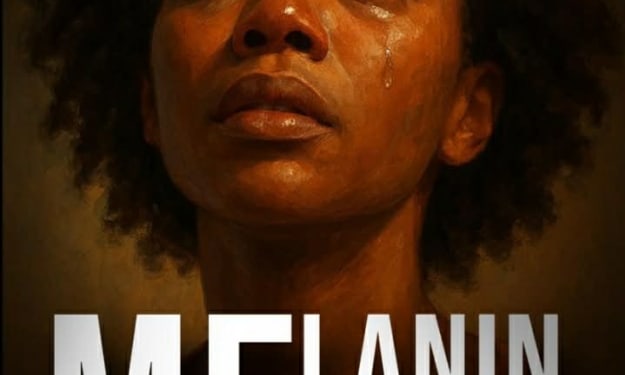
Part 2 Interview With Joe Patterson, Author Of Melanin Memoirs
This is my second interview with Joe Patterson. His 4th anniversary writing on Vocal will be in March 2026. He has one achievement on Vocal, The Other Foot. He has over 17,000 reads on Vocal since he started on Vocal in 2022. Joe Patterson is very creative poet and rapper. Joe is deep thinker and I feel it is reflected in his latest published book, Melanin Memoirs.
By Mariann Carroll18 days ago in Interview
Sports podcast What's The Call Premieres
Tennis is one of my favorite sports. And, I enjoy the women’s game much more than men’s tennis. Why? Who wants to see 40 aces in a game? It’s like watching teams strike out in baseball. I like the ball in play in any sport. Sports mean action. Even Curling has action. In golf, there should be a shot clock. Stop throwing grass in the air and just hit the ball!
By Frank Racioppi2 days ago in Interview
Flower Bloom 369
FLOWER Bloom 2/25/26 Wednesday By Mariann Carroll Karen had been with Tony for 7 years. Tony started acting strangely after her surgery. He would mow the lawn in the rain and be on his cellphone. He started pushing Karen away. Tony came clean about seeing someone. Karen moved out two months later. Karen moved in with a friend. She felt betrayed.
By Mariann Carroll5 days ago in Fiction



Comments
There are no comments for this story
Be the first to respond and start the conversation.