
Delilah Napier and Lucy Powers Bring Dark Humor and Raw Honesty to Modern Love with Floating Carousel
Women and Movies


Filmmaking duo Delilah Napier and Lucy Powers are no strangers to pushing creative boundaries. With their new dark comedy feature, Floating Carousel, the pair dive into the chaos of modern dating through a surreal, witty, and painfully relatable lens. The film, making its World Premiere at the Woodstock Film Festival on Friday, October 17th at 8:30 PM, follows five twenty-somethings as they navigate love, loneliness, and connection in what many call "the loneliest century." Blending satire, realism, and emotional depth, Napier and Powers craft a story that mirrors the absurdity of our digital-age relationships and proves once again why they're among the most exciting emerging voices in indie cinema.

Without giving too much away, please tell us about FLOATING CAROUSEL.
Floating Carousel is a dark comedy about dating in New York that's an apocalypse film from the start. A Gender Studies masters student, a messy philanderer, an in-denial Sugar Baby, an aspiring cabaret artist, and a professional cuddler collide in a web of dystopian dating scenarios in modern-day New York City. Floating Carousel is a humorous and raunchy look at the transactional nature of our modern day relationships - in a time that has been called the "loneliest century."
A lot of the film was inspired by true events. Both of us have experienced so many dystopian dates - from our own lives and those of our friends - that we thought that there was a bigger story here: one that could speak to what's happening to our generation right now as the ones living it. We wanted to expose some of the stuff that was going on behind closed apartment doors today. We joke that the rom coms from the early 2000s often feel like a fantastical dream. In our film, we subverted the rom-com genre - the meet-cute. The times are changing and with that we wanted to make a film that more accurately represented what we're experiencing.
What do you hope festival audiences at Woodstock will take away from FLOATING CAROUSEL after its world premiere?
While we don't wish our characters' romantic lives on anyone, we hope people relate. We hope people see themselves in the cringe-y moments. In the stupid choices. In the absurdity.
In putting a series of strange dates, moments of loneliness, and relationships that feel transactional on screen, we wanted people to watch and feel less alone. We were initially inspired by our own stories, but the plot grew once we started hearing the stories of friends and even strangers. It is undeniably a strange time in history. Our generation is experiencing more social isolation, depression, and the lowest rate of sex among adults of all time. While we're arguably more connected than ever, we're still more lonely. However, realizing that this feeling of social disconnection is universal can actually bring us together. While the film is inspired by dark themes, we wanted to make it a comedic, cathartic release. No, it's not just you: we're all going through something culturally and it's okay to feel a little bit crazy.
The film's logline calls this era "the loneliest century." How do you hope audiences will reflect on their own relationships after seeing the film?
We hope people will be able to laugh at themselves. And we hope the film will inspire discourse about what people really want out of their relationships and life. Sometimes in order to reflect on what we're experiencing, we have to take a step back from it. Sometimes this sense of limitless options can ironically make us feel more existential and isolated. There's decision fatigue. There's a sense that there's always "something else," and this constant reminder can be quite overwhelming until it makes us spin out. Buddhist philosophy centers around the idea that one must relinquish control in order to achieve happiness. We reference this idea in one of the last scenes of the film wherein the therapist, played by Jessica Hecht, says, "People often find that they're unhappy because they convince themselves that there's another place. But there's not. This is it."
So maybe we don't always have to be looking for something "better," and instead, try to be content with what is.
What was the biggest creative challenge you faced during the creative process and how did you overcome it?
Like many indies, we were working within a strict budget and timelines - so some of the biggest creative challenges we faced were the limitations on budget, our shooting schedule and locations. We had 21 days of shooting and double the locations, so we had to build our shoot around availability. Sometimes we had to reimagine a scene depending on the space that we had, or repurpose a room to look like a location we had in mind. But sometimes those restrictions can lead to happy accidents - we originally imagined a scene with a newscaster taking place in a news studio, but when we couldn't easily find one within our budget, we shot the scene on a street in front of a boarded up restaurant, which actually lent itself more to the world of the film. You tend to find these moments all throughout an indie shoot and some of the tightest timelines and trickiest locations actually led to some of our favorite moments in the film.
You worked with an incredible ensemble cast including Michael Cyril Creighton, Jon Rudnitsky, Jessica Hecht, and Dylan Baker. What was your favorite on-set moment collaborating with such talent?
It's amazing to imagine a scene in a screenplay, and then, months later, Jessica Hecht is game to sit on a rock in the middle of Cape Cod, playing a new age therapist. Every one of our actors was so down to step onto our set and really embody their characters. Since the script was full of moments of strange intimacy, we were really jumping right into some pretty intense scenes - from Michael portraying a man who was addicted to professional cuddling - to Jon's character taking the lead on a three way kiss. And everyone was so game to play.
Each actor brought such fun ideas to set as well. We didn't have a budget to have any rehearsals before we started shooting, so we offered all our actors the option of zooming with us before to discuss their characters. And almost all of them wanted to talk before. Even Dylan Baker, who had a fun, small cameo role; he came into the meeting with excitement and great ideas and pitches for BRIAN. Suddenly, Dylan Baker wasn't just a professor who was leading his former students in a writer's room for his podcast, but one whose podcast is toying with the idea of a character "having an oral fixation that manifests itself in the third act."
Same with Michael. Same with Jessica. They all wanted to talk about their roles and contribute ideas, and it felt wonderfully collaborative. There are no small roles.
What's next for you both as a creative team? Do you plan to continue exploring similar themes in your next project?
We are always writing and there's no genre we're not interested in exploring. We're currently writing a dark thriller feature. We're also developing a comedy pilot and have a script optioned that's a coming-of-age comedy set in the '90s.
We always love a dark comedy, a little satire, and using inspiration drawn from real life.
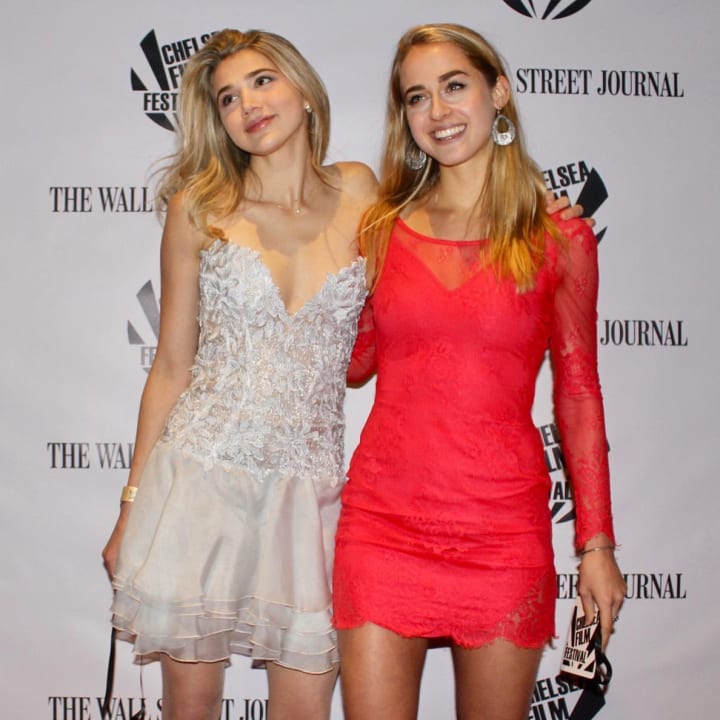
More on Delilah Napier and Lucy Powers
Floating Carousel is Delilah Napier and Lucy Powers' fourth film together and their second feature, marking their first non-student feature.
The Woodstock Premiere will take place Friday, October 17th at 8:30 PM at the Tinker Street Cinema in Woodstock, NY. The second screening will be Sunday, October 19th at 11:30 AM at the Rosendale Theatre in Rosendale, NY.
Be sure to stay updated on the filmmaking duo through their social media channels:
About the Creator
Tammy Reese
Tammy is best known for her legendary interviews with Sharon Stone, Angela Bassett, Sigourney Weaver, Geena Davis, Morris Chestnut, Jeffrey Dean Morgan, Sheryl Lee Ralph, Laurence Fishburne, Omar Epps, Joseph Sikora, and more.
Keep reading
More stories from Tammy Reese and writers in Interview and other communities.
Brandon Young Builds Pathways of Leadership and Opportunity for Future Generations
Brandon Young is more than a CEO. He is a builder of people, a mentor of youth, and a leader whose mission reaches far beyond the walls of his companies. As the driving force behind Safety Ops Specialists LLC and Khal Horizons Consulting Group, Young has spent decades blending business expertise with community service. His journey from managing hundreds of employees to coaching high school athletes reflects a deep commitment to growth at every level. Personal, professional, and generational. With every venture, Young works to ensure that opportunity is not just created but sustained, leaving a legacy of empowerment that will inspire leaders for years to come.
By Tammy Reese4 months ago in Interview
Center Stage with Gina C.
*** I'm keen to republish the interviews I did for my series with Vocal creators. It's been a few years and I thought it might be nice to revisit these wonderful conversations. I'll be releasing them one at a time for a few weeks/months.
By Heather Hubler4 days ago in Interview


Comments