
The First Snowfall of Childhood
Where laughter melts the coldest winter

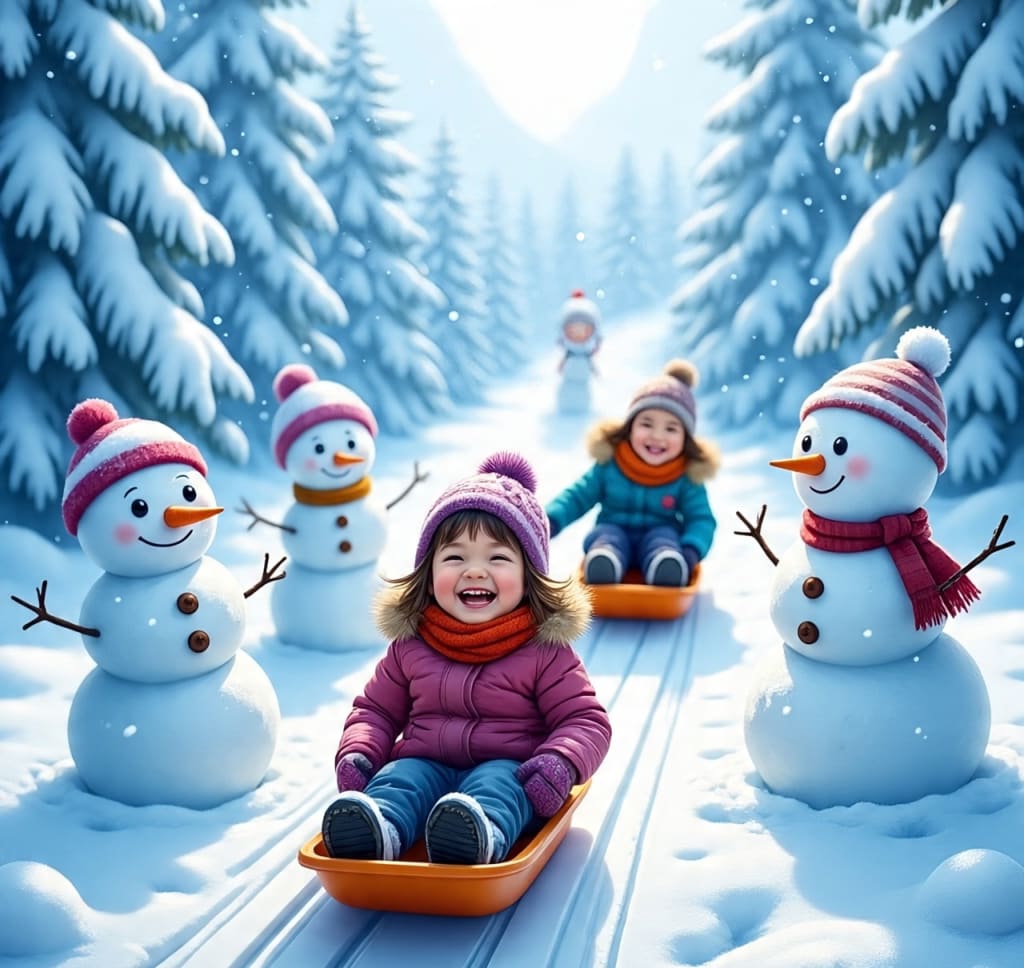
The first flakes fell quietly, almost shyly, in the gray light of early morning. They clung to the rooftops, settled on tree branches, and dusted the streets like powdered sugar. For most adults, it was just another winter day. But for a child, it was an invitation—an unspoken promise of adventure, mischief, and wonder.
I remember waking up to the soft tapping of snow against my window. My breath fogged up the glass as I pressed my nose to it, eyes wide with excitement. The world outside was transformed overnight. The familiar street, usually dull and drab, was now a sparkling playground. My heart raced; I could almost hear the snow whispering, Come out and play.
Bundled in layers of wool, fleece, and scarves that barely let me see, I ran outside, each step crunching beneath the thick blanket of white. My friends were already there, their cheeks red from the cold, their eyes alight with the same uncontainable joy. Without a word, we began the timeless ritual: snowballs first, of course.
The first one hit my shoulder, cold and hard, and we all erupted into laughter. Laughter that seemed to echo through the quiet neighborhood, carrying the warmth of childhood in its sound. Soon, snowballs were flying in every direction. We ducked, dodged, and retaliated, forming alliances and betrayals that lasted only minutes. In the snow, rules were simple: run, throw, laugh, repeat.
After the battle, breathless and glowing, we rolled snow into spheres, stacking them into a lopsided army of snowmen. One had a carrot nose, another a crooked smile made from pebbles. Each was more ridiculous than the last, yet each felt perfect. The world around us faded, leaving only the sparkle of frost in the sunlight and the echo of our shouts.
Then came the sledding. Oh, the thrill of hurtling down the hill, the wind slicing your cheeks, the icy sting of snow in your gloves. Each ride was a battle against gravity and fear, a tiny victory when you landed at the bottom without tumbling into a heap. Some of us tried daring jumps, others perfected the art of spinning wildly, laughter trailing behind like smoke.
But my favorite part was the quiet moments. When the snow fell gently on my eyelashes and the world seemed muffled and soft. Walking through the trees, leaving footprints in the untouched drifts, I felt like an explorer in a white, sparkling universe. The cold bit at my nose, but inside, my chest swelled with the warmth of something far bigger than me—pure, unadulterated joy.
By mid-afternoon, our hands were numb, our boots wet, our scarves soaked through. Yet no one wanted to go inside. We lingered, making angels in the snow, rolling around until our coats were covered in white. It was a battle against the inevitable: the warmth of the house, the call of hot chocolate, the slow return to normalcy.
When at last we trudged home, faces frozen into silly smiles, we were greeted with steaming mugs of cocoa and blankets that smelled like home. But even inside, the snow stayed with us. In the patterns of frost on the windows, in the sparkling edges of icicles hanging like chandeliers, in the stories we recounted again and again of who had thrown the hardest snowball or gone the fastest on the hill.
That night, as I lay in bed, exhausted and happy, I realized that snow was more than frozen water. It was magic. It was freedom. It was laughter captured in crystalline form. And in those fleeting hours of play, the world had felt infinite, safe, and full of possibilities.
Even now, whenever snow falls, I remember that morning—the first snow of childhood, the snow that taught me how to laugh with abandon, how to tumble into joy, how to turn a gray, cold day into a world of wonder. The snow may melt, but the memory lingers, soft and persistent, like a whisper of frost against the windowpane: Come out and play.
About the Creator
We Regret to Inform You That Your Friend Is Speaking Entirely in Obscure Movie Quotes
As editors, we feel it is our responsibility... nay, our duty, to issue the following disclaimer: If you are currently friends with, related to, or standing behind a man who speaks exclusively in obscure movie quotes, we want you to know something very important.
By The Pompous Post7 days ago in Humor


Comments
There are no comments for this story
Be the first to respond and start the conversation.