
Spoonerism
Another form of word play (frighters glove Focal) (writers love Vocal)


Did anyone know that there is actually a word for a slip of the tongue?
Bet you didn't know there was another form of SPOONING. Word play.
The definition of Spoonerism in the 1924 edition of the Oxford English Dictionary is: "An accidental transposition of the initial sounds, or other parts, of two or more words".

"Three cheers for our queer old dean!" (while giving a toast at a dinner, which Queen Victoria was also attending). Dear old queen.
"Is it kisstomary to cuss the bride?" (as opposed to "customary to kiss")
"The Lord is a shoving leopard." (instead of "a loving shepherd")
"A blushing crow." ("crushing blow")
"A well-boiled icicle" ("well-oiled bicycle")
"You were fighting a liar in the quadrangle." ("lighting a fire")
"Is the bean dizzy?" ("Dean busy")
"Someone is occupewing my pie. Please sew me to another sheet." ("Someone is occupying my pew. Please show me to another seat.")
"You have hissed all my mystery lectures. You have tasted a whole worm. Please leave Oxford on the next town drain." ("You have missed all my history lectures. You have wasted a whole term. Please leave Oxford on the next down train."
Spoonerism
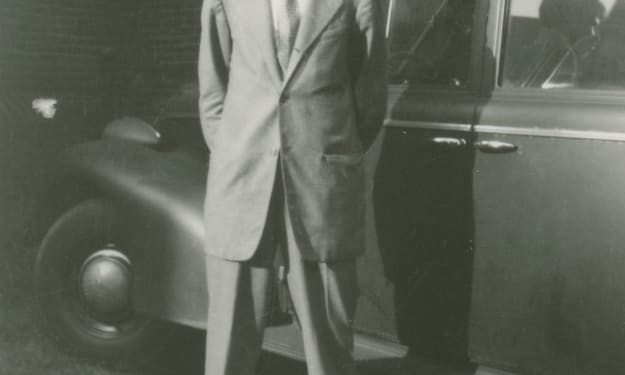
A spoonerism is an occurrence in speech in which corresponding consonants, vowels, or morphemes (meaning of morpheme below) are switched between two words in a phrase. These are named after the Oxford don and ordained minister William Archibald Spooner, who reputedly did this a lot.
An example is saying "The Lord is a shoving leopard" instead of "The Lord is a loving shepherd" or "runny babbit" instead of "bunny rabbit." While spoonerisms are commonly heard as slips of the tongue, they can also be used intentionally as a play on words
Morphemes (plural noun)
Meaningful morphological units of a language that cannot be further divided (e.g. in, come, -ing, forming incoming). A morphological element considered in respect of its functional relations in a linguistic system.
Can the English language get any more complicated and intertwined I wonder.
Although based on poor Mr. Spooner's probably one mistake, this belief may be purely apocryphal (of doubtful authenticity, although widely circulated as being true).
Spoonerism poem
He once proclaimed, "Hey, belly jeans"
When he found a stash of jelly beans.
But when he says he pepped in stew
We'll tell him he should wipe his shoe.
— Cleary, Brian P. Rainbow Soup: Adventures in Poetry. Minneapolis, MN: Carolrhoda, 2004
Kniferisms and forkerisms
As complements to spoonerism, Douglas Hofstadter used the nonce (slang or coined) words kniferism and forkerism to refer to changing, respectively, the vowels or the final consonants of two syllables, giving them a new meaning. Examples of so-called kniferisms include a British television newsreader once referring to the police at a crime scene removing a 'hypodeemic nerdle'; a television announcer once saying that "All the world was thrilled by the marriage of the Duck and Doochess of Windsor", and during a live broadcast in 1931, radio presenter Harry von Zell accidentally mispronouncing US President Herbert Hoover's name as "Hoobert Heever".
Playing with the words in any language is the reason why we all write. If we can find the beauty and fun in between the meaning of words which we use every day, then is it not more joyful to write in our own style.
I started out looking up double entendre, Pun and the whole array of different wordings for play on words to remind myself of the difference in meanings. This led me to Spoonerism, this then led me to Kniferism and Forkerism, and the whole hilarious history behind these words.
False etymology
Spoonerisms are sometimes used in false etymologies. For example, according to linguist Ghil'ad Zuckermann, some wrongly believe that the English word butterfly derives from 'flutter by.
This writing gig gets cooler the more I write.
........................................................
Thanks Wikipedia.
About the Creator
Novel Allen
You can only become truly accomplished at something you love. (Maya Angelou). Genuine accomplishment is not about financial gain, but about dedicating oneself to activities that bring joy and fulfillment.
Reader insights
Outstanding
Excellent work. Looking forward to reading more!
Top insights
Compelling and original writing
Creative use of language & vocab
Easy to read and follow
Well-structured & engaging content
Excellent storytelling
Original narrative & well developed characters
Expert insights and opinions
Arguments were carefully researched and presented
Eye opening
Niche topic & fresh perspectives
Heartfelt and relatable
The story invoked strong personal emotions
Masterful proofreading
Zero grammar & spelling mistakes
On-point and relevant
Writing reflected the title & theme
Keep reading
More stories from Novel Allen and writers in Humor and other communities.
From ad men to mad men
It's after 2am in the morning when a local police patrol vehicle in Northern New Jersey spots a figure costumed as Quasimodo, The Hunchback of Notre Dame, proceeding southbound on the sidewalk along Lydecker Street. Though the hunchback’s costume stuffing offers added insulation, it's January, and friggin’ freezing. Carefully, the officers slow down, gently question the subject, and offer him a ride home.
By David W. Maury5 days ago in Humor
The Day My Cat Became a Genius
I always thought I was the clever one in my household. I had a steady job, a routine, and even a Spotify playlist that reflected my “refined” taste in music. Meanwhile, my cat, Mr. Whiskers, spent most of his day staring at walls, chasing imaginary monsters, and sleeping in awkward positions that made me question evolution.
By Waleed khan5 days ago in Humor
Guard Your Battery
Why are some people so attractive just by standing there? It’s not because they are "likable," but because they don’t need everyone to like them. I realized later that truly charismatic people allow themselves to be criticized, but they never criticize themselves. They never try to please the world; instead, the world stops to watch them.
By Emily Chan - Life and love sharing7 days ago in Poets



Comments (6)
A fascinating instructive on these three phenomena of language that is also a commentary on how we can make our mistakes endearing. Have you read Dryer's English? If not, I think you'd love it!
Oooo, I never knew it was called spoonerism. And I've also never heard of all the other terms either. The one that I always say is 'chai part' instead of 'pie chart' 🤣🤣🤣🤣🤣🤣
I’ve never heard of a spoonerism but I like it. And the poem.
Well, that was interesting!!! Left some love!!!❤️❤️💕
I've done that before and have heard people making the slip. It's almost like dyslexia of the mouth. Never knew it was called spoonerism. Thanks for sharing.
This is fascinating!! I often make mistakes like those haha