
Job Listing — Regional Strongman (Middle East Division)
U.S. Department of World Affairs — Bureau of Leadership


Posted: June 20, 2025
Location: [REDACTED]
Language Requirements: Fluent Persian, some English.
Employment Type: Full-Time (Until Coup)
Salary: Competitive (plus access to national treasury and complimentary U.S. military hardware)
Job Description
The U.S. Department of World Affairs is seeking a dynamic, charismatic, and morally flexible individual to serve as the leader of a strategically vital Middle Eastern nation in a position that is expected to open soon.
This role is perfect for ambitious candidates who thrive in a high-pressure environment, enjoy absolute power, and have a knack for maintaining plausible deniability.
As head of a nation state, you will act as the face of stability in a volatile region, ensuring U.S. interests are upheld while maintaining a veneer of local sovereignty.
Key Responsibilities:
Maintain Order: Suppress dissent with a blend of charm, propaganda, and just the right amount of secret police activity. Bonus points for interrogation methods that don’t leave scar marks.
Photo Ops with U.S. Officials: Smile for the cameras alongside visiting senators and defense contractors. Must be proficient in handshakes and wearing Western-style suits while maintaining a “local” vibe.
Resource Management: Ensure uninterrupted access to oil, gas, or other strategic resources for U.S. partners. Bonus if you can funnel profits into offshore accounts discreetly.
Media Coverage: Master the art of attributing all domestic issues to “foreign interference” and “terrorist elements.” Bonus points for implicating neighboring countries we don’t like.
Host U.S. Military Bases: Provide prime real estate for American troops and drones. Must convincingly sell this to your population as “job creation.”
Performative Elections: Stage elections with predetermined outcomes. Experience in “countering foreign influence” in vote-counting is a must.
Qualifications
Experience: Minimum 5 years in a leadership role (military junta, guerrilla army, or a DC-based think tank).
Education: No formal education necessary. Ancestral connection to hereditary monarchy a plus.
Skills
- Exceptional ability to be a “team player” and comply with orders from Washington while appearing autonomous.
- Ability to mispronounce “democracy”, rolling the ‘R’ convincingly.
- Basic knowledge of geopolitics (or willingness to memorize talking points provided by CIA handlers).
- Proficiency in delivering impassioned speeches about national sovereignty while signing secret arms deals.
- Comfort with tear gas deployment and managing international PR fallout.
- Ability to adapt to the rapidly changing jargon of Anglo-American Cultural Supremacy.
Personal Attributes: Charismatic yet intimidating. Must have a signature look (e.g., aviator sunglasses, military beret, or ominous mustache).
Background Check: Anything goes as you will be “our dictator”.
Benefits
- Access to a lavish palace (interior decorator not included).
- Unlimited diplomatic immunity (until you’re no longer useful).
- Complimentary U.S.-made tanks, fighter jets, and surveillance tech.
- All-expenses-paid trips to Washington, D.C., for “consultations” at luxury hotels.
- A dedicated team of press specialists to manage your image on CNN and BBC.
Employment Restrictions
Don’t bring more than one wife to US funded Women’s Rights conferences.
Absolutely no YouTube appearance or long form interviews (policy update post- 2019 Dalai Lama BBC appearance)
Work Environment
You’ll operate in a fast-paced, high-stakes environment with occasional rocket fire and protests outside your palace. You’ll collaborate with a diverse team of U.S. diplomats, intelligence operatives, and local cronies who owe you favors.
Application Process
To apply, please submit your resume, a headshot in military regalia, and a 500-word essay titled “Why I’m the Best Choice to Serve U.S. Interests While Pretending to Care About My People.”
Note: Applicants must agree to a loyalty oath, a no-compete clause (no working with Russia, China, or Iran), and a mandatory polygraph test to confirm you’re not too idealistic.
Equal Opportunity Employer
The U.S. Department of International Affairs is an equal opportunity employer. We do not discriminate based on race, religion, or gender and appreciate those who can read between lines.
Disclaimer: The U.S. government reserves the right to withdraw support at any time, citing “human rights concerns” or “strategic realignment.” Employment is at-will and may be terminated via drone strike with or without notice.
Meet Our Team
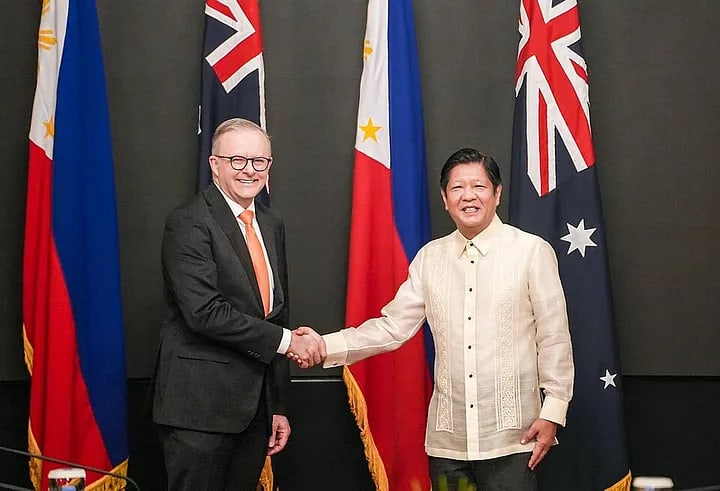
Philippines — Ferdinand Marcos Jr. (2022–present): While not a dictator in the traditional sense, Marcos Jr.’s administration has received U.S. military and economic support, with over $2 billion in aid pledged since 2022 to counter China’s maritime claims. His family’s history of authoritarian rule under his father (1965–1986) and allegations of historical revisionism raise questions about democratic backsliding.
Saudi Arabia — Mohammed bin Salman (Crown Prince, de facto ruler since 2017): As Crown Prince and de facto leader under King Salman, MBS has overseen a modernizing yet repressive regime, with the U.S. providing over $100 billion in arms deals since 2017. His Vision 2030 economic plan aligns with U.S. interests in countering Iran, but his role in the 2018 Khashoggi murder and the Yemen war (supported by U.S. logistics) highlight a tolerance for human rights abuses, reflecting a pragmatic alliance over democratic ideals.
Egypt — Abdel Fattah el-Sisi (2014–present): After overthrowing Mohamed Morsi in 2013, Sisi’s regime has received $1.3 billion annually in U.S. military aid to maintain the Egypt-Israel peace treaty and counter terrorism. His crackdown on dissent, with thousands imprisoned, is overlooked for stability, mirroring Cold War patterns, though post-Arab Spring dynamics suggest a shift toward countering Islamist movements rather than communism.
Notable Alumni

Augusto Pinochet (Chile, 1973–1990): Following a U.S.-backed coup that ousted socialist President Salvador Allende, Pinochet’s military dictatorship received CIA support, including training and funding. His regime tortured and killed thousands, yet the U.S. endorsed him for his anti-communist stance and neoliberal economic policies, suggesting a willingness to overlook atrocities for ideological alignment.
Islam Karimov (Uzbekistan, 1991–2016): After the Soviet Union’s collapse, Karimov, a former communist turned authoritarian, received U.S. support post-9/11 for basing rights at Karshi-Khanabad to support operations in Afghanistan. The U.S. provided over $500 million in aid by 2005, despite his regime’s brutal suppression (e.g., the 2005 Andijan massacre, killing hundreds). Support waned after human rights criticism, but it initially prioritized anti-terrorism over democracy.
Hosni Mubarak (Egypt, 1981–2011): Following Anwar Sadat’s assassination, Mubarak’s regime was propped up with $1.3 billion annually in U.S. military aid, the second-largest recipient after Israel, to maintain the Egypt-Israel peace treaty and counter Islamic extremism. His 30-year rule involved widespread torture and election rigging, tolerated until the 2011 Arab Spring forced his ouster, revealing a U.S. focus on regional stability over reform.
Pervez Musharraf (Pakistan, 1999–2008): After a 1999 coup, Musharraf’s military government received over $10 billion in U.S. aid post-9/11 for counterterrorism cooperation against the Taliban and al-Qaeda. His suspension of democracy and human rights abuses were overlooked until his 2008 resignation amid domestic pressure, reflecting U.S. reliance on him as a strategic ally in South Asia.
Hamid Karzai (Afghanistan, 2001–2014): Installed as interim leader after the U.S. invasion toppled the Taliban, Karzai’s government received billions in aid ($100 billion by 2014) to establish a pro-Western regime. His administration was marred by corruption and weak governance, yet U.S. support persisted to counter insurgency, questioning the effectiveness of backing such leaders.
Nursultan Nazarbayev (Kazakhstan, 1991–2019): After independence, Nazarbayev’s authoritarian rule was supported with U.S. aid and investment (over $2 billion by 2015) for oil and gas interests and as a buffer against Russia. His suppression of opposition and rigged elections were ignored until his 2019 resignation, highlighting economic motives over democratic ideals.
Mohammad Reza Pahlavi (Shah of Iran, 1941–1979): Installed as Shah with British and U.S. support after a 1941 coup against his father, the Shah’s rule was solidified with significant American backing, especially after the 1953 CIA-orchestrated coup that overthrew Prime Minister Mohammad Mossadegh. The U.S. provided billions in military aid and economic support to modernize Iran and secure its oil reserves, viewing him as a bulwark against Soviet influence and Arab nationalism. His regime’s repression via SAVAK (secret police), which tortured and executed thousands, was tolerated until the 1979 Islamic Revolution, highlighting a U.S. focus on strategic alignment over human rights.
Fulgencio Batista (Cuba, 1952–1959): Batista seized power in a 1952 coup and ruled Cuba with U.S. backing until overthrown by Fidel Castro in 1959. The U.S. provided military aid and economic support, viewing him as a bulwark against communism in the Caribbean. His regime was marked by corruption and repression, which the U.S. tolerated to protect American business interests, such as those of the United Fruit Company, raising questions about economic motives overshadowing human rights concerns.
Syngman Rhee (South Korea, 1948–1960): Installed as president with U.S. support after World War II, Rhee led an anti-communist regime that brutally suppressed dissent, killing tens of thousands during purges. The U.S. backed him to counter North Korean and Soviet influence, providing military and financial aid, though his authoritarian tactics and the 1960 student uprising that forced his resignation highlight the instability of such support.
Chiang Kai-shek (Republic of China/Taiwan, 1945–1975): After losing the Chinese Civil War to Mao Zedong, Chiang retreated to Taiwan, where the U.S. supported his Kuomintang (KMT) government as an anti-communist stronghold. Despite his repressive “White Terror” campaign, which jailed and executed thousands, the U.S. supplied arms and economic aid, reflecting a strategic choice to maintain a Cold War ally rather than foster democracy.
Suharto (Indonesia, 1967–1998): After leading a U.S.-supported coup against Sukarno, Suharto’s New Order regime massacred up to 500,000 alleged communists in 1965–1966. The U.S. provided military aid and training, valuing his anti-communist stance and resource-rich economy (e.g., oil and minerals), though this support ignored widespread corruption and human rights abuses in East Timor and elsewhere.
Anastasio Somoza Garcia and Family (Nicaragua, 1936–1979): The Somoza dynasty, starting with Anastasio Somoza Garcia, ruled with U.S. backing, receiving military and economic aid to counter leftist movements. Their regime was notorious for corruption and repression, yet the U.S. supported them until the 1979 Sandinista revolution, prioritizing regional stability over democratic governance.
Park Chung-hee (South Korea, 1961–1979): After seizing power in a coup, Park’s military government received substantial U.S. military and economic support to combat North Korean communism. His authoritarian rule included martial law and political repression, tolerated by the U.S. for strategic military basing and economic growth, though it fueled domestic unrest.
Mobutu Sese Seko (Zaire, now DRC, 1965–1997): Installed with CIA assistance after overthrowing Patrice Lumumba, Mobutu’s regime was propped up with billions in U.S. aid to counter Soviet influence in Africa. His kleptocracy and brutal suppression of opposition were overlooked, reflecting a focus on Cold War alliances over governance standards.
Rafael Trujillo (Dominican Republic, 1930–1961): Though his rule began earlier, U.S. support continued post-1945, with military aid and economic ties, until his assassination in 1961 with alleged CIA involvement. His dictatorial control and human rights abuses were tolerated to maintain a pro-Western government, exposing a pragmatic disregard for local democracy.
Jorge Rafael Videla (Argentina, 1976–1981): As part of the U.S.-supported Operation Condor, Videla’s military junta overthrew Isabel Perón, receiving American aid to combat leftist guerrillas. The “Dirty War” resulted in 30,000 disappearances, yet U.S. support persisted, driven by anti-communist goals rather than human rights, challenging the moral consistency of such alliances.
Other Job Openings — We have no open positions for Global Religious Leader (a spot was recently filled) but encourage highly motivated candidates to submit applications for this competitive role.
About the Creator
Scott Christenson🌴
Born and raised in Milwaukee WI, living in Hong Kong. Hoping to share some of my experiences w short story & non-fiction writing. Have a few shortlisted on Reedsy:
https://blog.reedsy.com/creative-writing-prompts/author/scott-christenson/
Keep reading
More stories from Scott Christenson🌴 and writers in Humor and other communities.
US Air Force General Explains Why America's Bombers are Perfectly Safe
US Air Force General Buck Johnson held a press conference to reaffirm the USAF's unwavering faith in its decades old warplanes - days after cheap Ukraine drones decimated Russia's strategic bomber fleet.
By Scott Christenson🌴7 months ago in Humor
Where's the Glory?
In breaking news, rehabilitated Republican Senator Johnnie Johnson (Pronouns: HE, HIM, HIS) called a press conference from the Men’s room of the New Orleans Louis Armstrong International Airport, Concourse B, across from the Ignatius Reilly’s Lucky Dog stand. The Senator had just returned from a sexual reorientation rehabilitation program in Memphis, TN after being publically disgraced at a Buckee’s Truckstop restroom soliciting sex from an undercover cop three months ago. He is a founding member of the Reformed Christians for Christ, a conservative, pro-family and ex-gay advocacy group. In the spirit of being reborn, Senator Johnson invited reporters to marvel at his plans for a major remodeling of airport bathrooms.
By Cathy Schieffelin5 days ago in Humor
A Failed Artist, A Disillusioned Poet, An Underpaid Game Show Host
I took my son and niece to Gori, a small town in Georgia where Joseph Stalin was born. They talked me into visiting the Stalin's Museum, the largest in the post-Soviet space. I had resisted going there because I just can't stand the monster and know enough about him, or so I thought.
By Lana V Lynx6 days ago in FYI


Comments (1)
Once again nailed it