
Your Prosperity Depends on How You Talk About Money
Change your financial situation by changing the words you speak.


The Words We Speak
Have you ever listened to people talk and heard how many times they mentioned money in their conversation? Perhaps you have done it yourself without realizing that the words you speak are powerful.
You might not have thought much about it, but things gravitate to us by the words we speak. Surely, some things we say are innocent, but that doesn't matter. According to Proverbs 18:21, “Death and life are in the power of the tongue.”
That's why I am careful about the words I speak. I am not fond of clichés, fads, and trends without knowing their origin and what they really mean. I could be inviting unwanted things into my life because of the words I speak.
Read through the list and see if there is something you usually say about money that you might want to eliminate from your vocabulary.
“A Penny For Your Thoughts”

How many times has someone offered you a penny for your thoughts? Don't you think that's very cheap? Don't you think inflation would have caused that amount to have increased over the years since that expression was first said? When people see me in deep thought and say that to me, I politely tell them that my thoughts are worth more than a penny.
Speaking of pennies, have you ever said, “I don't have a penny to my name?” When you said it, you claimed it, and it just might come true.
Benjamin Franklin said, “A penny saved is a penny earned.” That was a long time ago. He won't mind if you change the amount to something much bigger. Perhaps a penny saved was a penny earned then, but surely there has been an increase in that amount since Franklin said it so long ago.
“Two Cents”
“Two cents” is a gambling phrase that dates back to the 1800s, when two cents were the minimum requirement for someone to play cards. Today, when someone puts their “two cents” in a conversation, it means the person is offering an opinion or giving some unwanted advice.
“Rubbing Two Nickels Together”

Stop saying you don't have two nickels to rub together because more than likely you do. If you don't have two nickels in your change purse or in your pocket, you could get two nickels if you needed them.
You probably are not so destitute that you don't have two nickels. If you keep saying that about your finances, it just might come to that. Change your financial situation by changing the words you speak.
“Another Day, Another Dollar”

To increase your chances of becoming prosperous, you should begin to stop shortchanging yourself by using small numbers and amounts in your conversations. After working all day, some people say, “Another day, another dollar.”
They are insinuating that their pay is so low that it amounts to earning only a dollar for an entire day's work.
“As Phony as a Three-Dollar Bill”
There is no such thing as a three-dollar bill. When you say it about somebody, you are describing that person as a phony. When someone says it about you, it is because you give the impression that you are a phony, and there is nothing real about you.
“Thanks a Million”
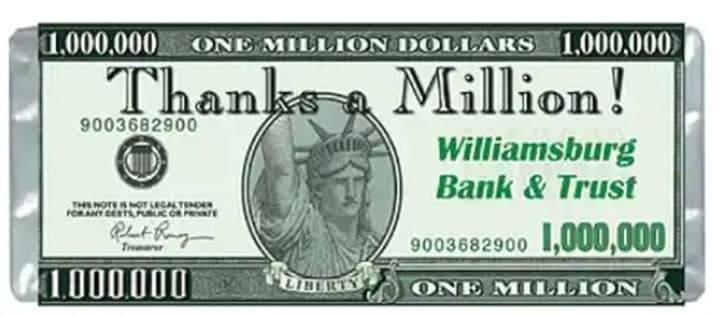
When someone does something nice for us, sometimes we say, “Thanks a million!” That's a good thing to say, but would you really give the person a million dollars if you had it? Probably not. Therefore, you said the words, but you didn't see yourself actually giving the person a million dollars.
“On a Fixed Income”
Some people who get a monthly Social Security check sometimes say they are on a fixed income. That is a very bad thing to say because if something is fixed, that is the way it will stay. Something that is fixed has no flexibility. You leave no room for an increase if you say, “My income is fixed.”
A fixed income is one that is set in stone with no wiggle room. If you usually say that, make a point to refrain from describing your income that way. Otherwise, resign yourself to having a “fixed income” with no chance of it ever changing. Almost every year, there is an increase in Social Security checks. Therefore, your income changes and is not fixed.
“Heading to the Poor House”
Some people say they are heading to the poor house. That might not be the case at all. So, why would someone say that? If you keep saying it, that is where you might end up.
Conclusion of the Matter
Take the advice of Oliver Napoleon Hill, author of the self-help book Think and Grow Rich.
“Think twice before you speak, because your words and influence will plant the seed of either success or failure.”
About the Creator
Margaret Minnicks
Margaret Minnicks has a bachelor's degree in English. She is an ordained minister with two master's degrees in theology and Christian education. She has been an online writer for over 15 years. Thanks for reading and sending TIPS her way.
Keep reading
More stories from Margaret Minnicks and writers in Humans and other communities.
Christmas Traditions Over the Years
A tradition is defined as a custom or belief that has been handed down from generation to generation. A child does what her mother does. The mother does what her mother did. When the child has children of her own, they will do what their mother does.
By Margaret Minnicks26 days ago in Humans
Restoring Balance in Medicine: Andrew Rudin MD on Why Prevention Must Come First
Modern healthcare has delivered extraordinary achievements. Medications control conditions that once shortened lives. Procedures restore heart rhythm, open blocked arteries, and prevent sudden cardiac events. Imaging technologies allow physicians to detect disease earlier and with greater precision than ever before. Yet despite these advances, many patients feel that care often begins too late. Treatment is efficient, but prevention is inconsistent. According to Andrew Rudin MD, this imbalance now represents one of the most significant challenges facing modern medicine.
By Dr. Andrew Rudina day ago in Humans
Wild Card Weekend Recap: What Happens Now?
I think I figured out why I love Wild Card Weekend so much. It's because it's the first playoff anything of the calendar year. The NFL season starts in the fall, and once upon a time, the champion was crowned either on or slightly before New Year's. The evolution of the NFL schedule has resulted in the playoffs starting just into the New Year, and currently, the final week of the season falls on the first weekend of the New Year, with Wild Card Weekend coming a week after that. So yes, chronologically, the NFL's Wild Card Weekend serves as the first playoff anything of the calendar year.
By Clyde E. Dawkins2 days ago in Unbalanced



Comments
There are no comments for this story
Be the first to respond and start the conversation.