
You Don’t Have It Figured Out by 25? You’re Not Supposed To
A comprehensive look at realistic life goals and illusions for twenty-somethings in today’s modern world

At some point in your twenties, maybe after another birthday passes with little fanfare, you look around and wonder: Am I behind? Social media says you should have a high-paying career, an enviable apartment, a long-term partner, and maybe even a side hustle that doubles as a passion project. Yet here you are—still figuring out what you actually want for dinner, let alone for life. If that sounds familiar, you’re not failing. You’re living in the age of illusions.
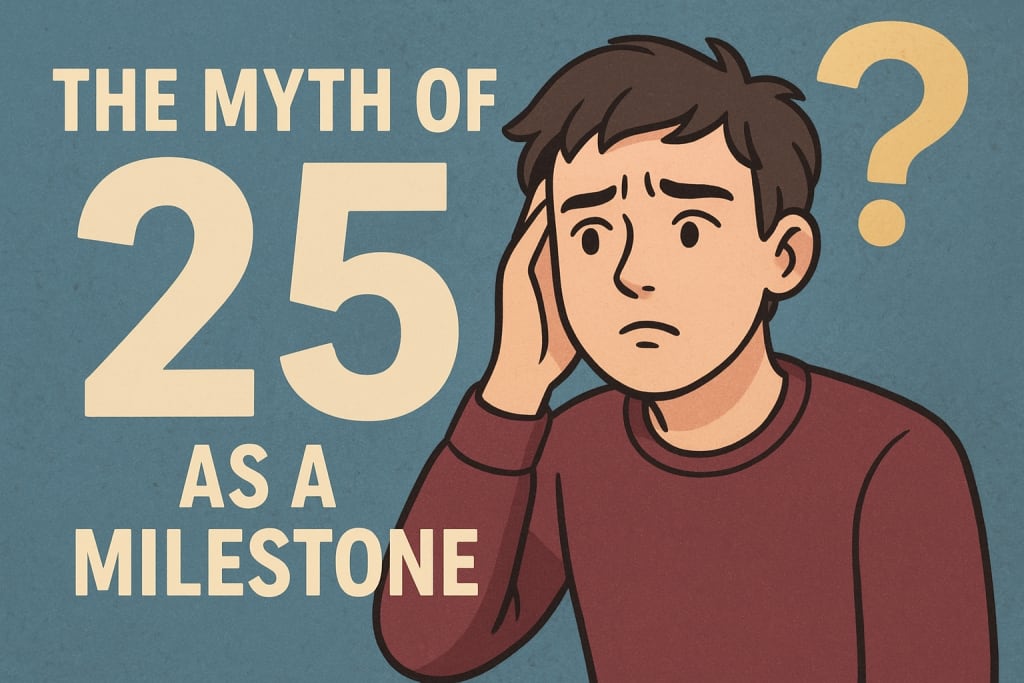
The Myth of 25 as a Milestone
The idea that 25 is a make-or-break age is surprisingly recent. For much of the 20th century, adulthood was marked by fixed milestones: graduate, get a job, marry, buy a house. Those steps were relatively accessible in a post-war economy where wages and housing costs aligned in a way that now feels like fantasy.
Today, 25 is less a milestone and more a mirage. The job market is volatile, student debt is crushing, housing prices soar, and traditional timelines don’t align with reality. Even those who appear to have it all figured out often admit, privately, that they don’t feel anchored. What has changed isn’t ambition—it’s the conditions that once made tidy, linear progress possible.
Realistic Goals vs. Cultural Illusions
When we strip away Instagram highlight reels and LinkedIn success stories, what do “realistic” life goals for someone in their mid-twenties actually look like? They’re far less about ticking boxes and more about setting foundations:
• Financial foothold, not financial empire. Building savings, learning to budget, or paying off even a fraction of debt can be a greater achievement than owning property in today’s market.
• Exploration over permanence. Careers now stretch across industries and decades. Trying new roles or even failing at them is part of growth, not a deviation from it.
• Relationships as experiments. Friendships and dating in your twenties often shift, but learning how to set boundaries, communicate, and understand yourself is more enduring than finding “the one” on deadline.
• Health as investment. Exercise, therapy, or even learning how to cook a balanced meal counts. In a culture obsessed with hustle, prioritizing rest is quietly radical.
The illusions, meanwhile, are easy to name: that everyone else knows what they’re doing, that stability comes early, that success is measured by external markers instead of personal meaning.
Expert Perspectives: The Quarter-Life Reassessment
Psychologists often refer to the mid-twenties as a period of “emerging adulthood.” It’s not adolescence, but it’s not settled adulthood either. Jeffrey Arnett, who coined the term, described it as a time of exploration and instability—two conditions that, while uncomfortable, are also fertile ground for identity formation.
Career coaches echo this: rather than mapping out a rigid 40-year trajectory, they encourage people in their twenties to treat these years as a lab. Test different paths, learn new skills, and tolerate the discomfort of not knowing. That uncertainty, paradoxically, is the very thing that prepares you for later stability.
Historical Comparisons: The Age of Extension
If you were 25 in 1965, odds were high you already had children and a mortgage. Today, the median age of marriage in the U.S. is close to 30, and many delay homeownership until their thirties or forties—if at all. What looks like “falling behind” through the lens of the past is, in fact, the new normal.
Sociologists call this phenomenon “the age of extension.” Adolescence has stretched longer, adulthood begins later, and life expectancy has grown. That means the mid-twenties are less of an end point and more of an opening chapter.
A More Honest Framework
So what if, instead of seeing 25 as a deadline, we framed it as a draft? A time when imperfection is expected, recalibration is constant, and success looks less like clarity and more like resilience.
Some people will buy houses young, others won’t. Some will fall in love and stay there, others will move through breakups that teach them more than permanence ever could. The point isn’t comparison—it’s recognizing that the scaffolding of adulthood is built unevenly, often invisibly, and always over time.
Closing Reflection
To not have it all figured out by 25 is not only common—it’s appropriate. The illusion is that clarity is something you either have or don’t. The reality is that life is iterative: we revise, we experiment, we shift. If your twenties feel like a series of drafts, it’s because that’s what they are.
Someday, you’ll look back and realize the uncertainty you’re wrestling with now wasn’t a detour. It was the work of becoming.
About the Creator
Gage
I write about stuff.




Comments
There are no comments for this story
Be the first to respond and start the conversation.