
Would Living on Different Planets Affect You.
"Exploring Extraterrestrial Realms: Evolution, Adaptation, and the Fascination of Life Beyond Earth"

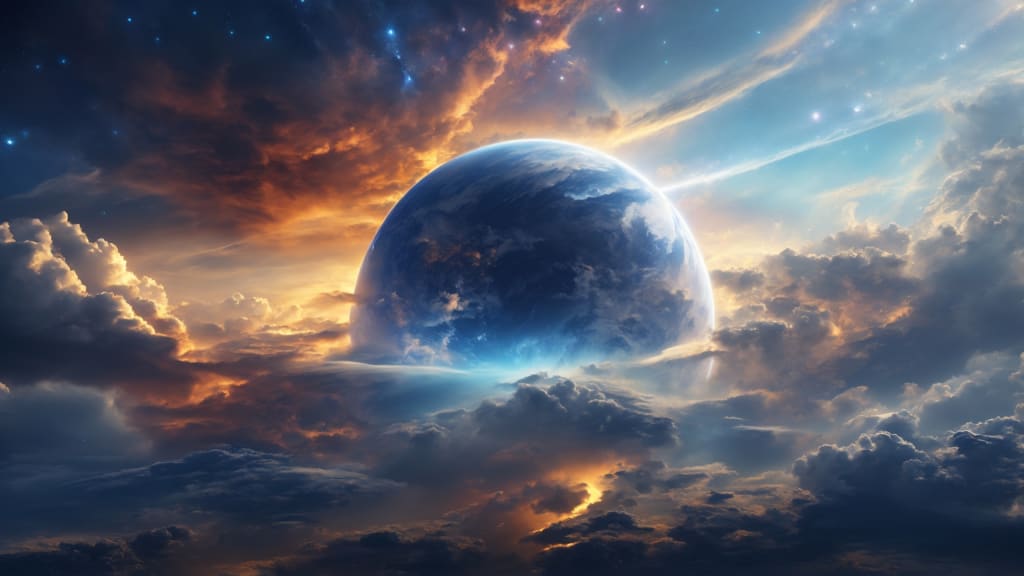
Exploring the vastness of the universe sparks our imagination with endless possibilities and mysteries. One intriguing question arises: how would life, especially for us as humans, manifest on other planets? Envision a world where the laws of physics, environmental conditions, and the very fabric of existence differ vastly from what we are accustomed to on Earth. Adapting and evolving to survive in these alien landscapes becomes a captivating prospect.
Consider Mercury, the closest planet to the Sun, characterized by a thin atmosphere and extreme temperatures ranging from over 800°F on the day side to a chilling -290°F on the night side. To confront these daunting conditions, the idea of settling underground emerges as a viable option, where temperatures are more stable. Evolutionary adaptations might include developing larger eyes to capture available light and thicker skin to shield against intense radiation. Essentially, the question becomes whether we transform into metallic beings or subterranean creatures resembling moles.
Venus, often referred to as Earth's twin, presents a hostile environment with a thick, toxic atmosphere and scorching temperatures around 847°F. The surface, dry and treacherous, experiences volcanic eruptions, hurricane winds, and lightning storms. Adapting to survive on Venus seems challenging; potential solutions involve becoming microorganisms capable of withstanding the harsh conditions. Alternatively, as humans, we might require advanced protective gear, including heat-resistant exoskeletons and specialized lungs to filter out the toxic elements in the atmosphere.
Moving on to Mars, our red sibling, the weaker gravity on the planet would lead to noticeable changes in the human body over time. Muscles and bones would shrink, necessitating increased food intake and regular exercise. Adapting to the lower atmospheric pressure and colder temperatures would likely result in the development of thicker skin for better insulation. Additionally, evolving larger eyes to compensate for the weaker sunlight on Mars becomes a plausible scenario.
Jupiter, a gas giant with its iconic bands of clouds, presents a unique challenge. With no solid surface, living on Jupiter would involve floating in its dense atmosphere, navigating through layers of hydrogen until encountering a liquid ocean. Evolution might lead to the development of bell-shaped structures for propulsion and the absence of a skeletal structure to withstand pressure.
Saturn, known for its spectacular rings, poses another set of challenges. While its rings are not solid surfaces for habitation, the planet itself offers some layers with milder temperatures. Surviving on Saturn would likely require adapting to extreme cold, intense storms, and the absence of a solid surface. Evolutionary changes might involve developing thicker skin and insulation.
Uranus and Neptune, the ice giants, differ significantly from the terrestrial planets. With colder temperatures, lack of a solid surface, and unique atmospheres, adapting to life on these planets would involve evolving thicker skin, larger eyes for better vision in darkness, and potentially developing a new hearing system.
Pluto, though a dwarf planet, presents extreme cold and a surface covered in ice. With weak gravity and a thin atmosphere, survival on Pluto would require robust adaptations, possibly involving thicker skin and an ability to endure frigid temperatures.
Considering the prospects of running on various planets, the interplay of gravity, atmospheric conditions, and protective suits becomes crucial. Mercury, with its lower gravity, offers the potential for increased speed despite the need for space suits. Venus, despite its similar gravity to Earth, allows for slightly faster running due to reduced weight. Each planet presents a unique set of challenges and opportunities for human adaptation, sparking the imagination and fueling our curiosity about the mysteries of our solar system.
So yes, it does affect you.
About the Creator
Keep reading
More stories from writers in Humans and other communities.
Time to change your life.
Is it even possible for you to change your life? A lot of people, more than there should be, are unhappy with their lives. But what are they doing about it? Usually nothing. People talk about how shitty their lives are and want change, but are they not taking the actions to change?
By Jen Phillipsabout 9 hours ago in Humans



Comments
There are no comments for this story
Be the first to respond and start the conversation.