
Why the First Philosophers Still Matter.
The Forgotten Origin Point Where Science and Spirit Began as One

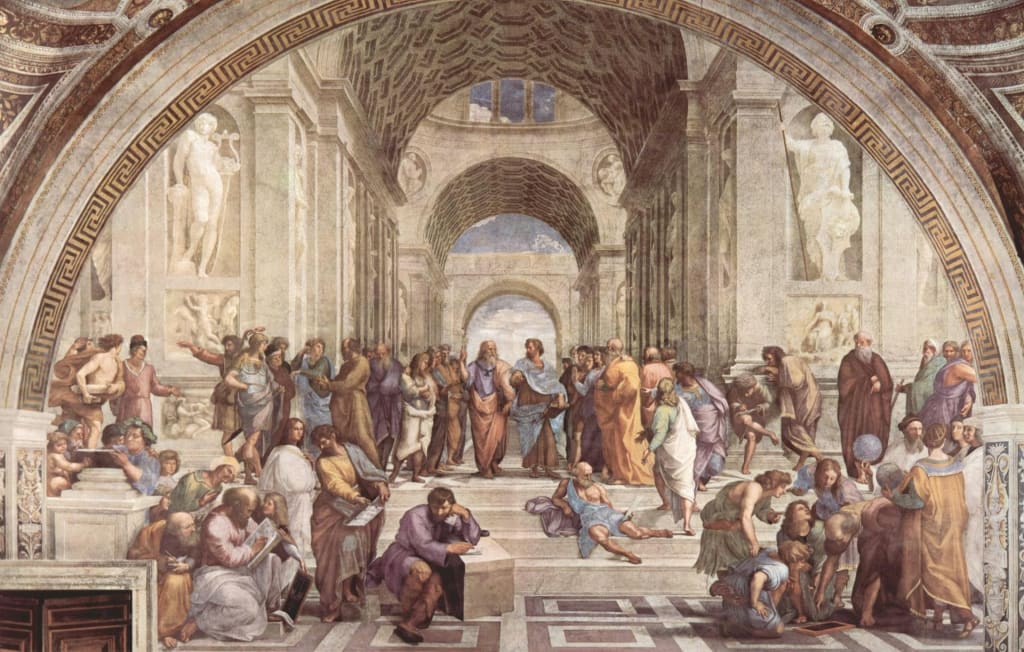
When we think of philosophy, we usually think of its original founders as three great figures: Socrates, Plato and Aristotle - in that exact order. They were indeed major players, and without them the game wouldn’t be the same. Their combined influence shaped Western culture and determined much of the direction philosophy would take.
However, they weren’t the first great Ancient Greek thinkers. Before them - in the 6th Century BC - came a group we now call the Pre-Socratic philosophers, such as Thales, Anaximander, and Anaximenes, to name a few. They are also referred to as Milesian philosophers , due to their place of origin - Miletus, Ionia.
What caught my attention while learning about them is how they managed to unite two seemingly contradictory notions:
1. The natural, rather than supernatural principles of Nature are responsible for the processes of life.
2. This doesn’t mean God doesn’t exist - quite the contrary. God is behind it all, but in a very different way than Greek mythology suggests.
In mythology, the pantheon of Gods residing on Mount Olympus were seen as all powerful, and the ancient Greeks lived in both fear and reverence of them. This dynamic placed humans in a powerless, dependent, almost childlike position. Yet, despite their supposed immortality and power, the Greek gods were also highly emotional and impulsive, prone to human like passions and behaviours, as well as highly questionable moral and ethical choices. Mortals were therefore at the mercy of divine moods and whims. This anthropomorphic interpretation of the divine was rejected by Pre Socratic thinkers such as Xenophanes, who sought a more abstract and unified understanding of the sacred.
The arrival of philosophy itself can be seen as an impulse to counteract this imbalance - an awakening of reason, reflection and self-awareness in the pursuit of a meaningful life. More than anything else, it marked the birth of human autonomy and self-responsibility.
Going back to our Pre-Socratic thinkers - their curiosity was drawn to both the Earthly - speculating about the nature of matter, observing Nature and the role the four elements play in it - and the cosmic: the nature of the heavenly bodies and their movements.
Milesian philosophers are considered to be the forefathers of scientific thinking, moving beyond blind religious belief, and yet they were not atheists. I find that fascinating, because in modern times, this duality is usually seen as paradoxical, with individual worldviews swaying towards either the scientific perception or the religious one. These two worldviews differ in a major way, since the former needs a tangible evidence at all times in order to accept something as real, and for the latter, faith plays a defining role. To me this proves once again that the evolution of all things - of thought in this case, is cyclical, as opposed to linear.
Enter Rudolf Steiner, an Austrian philosopher, mystic, scientist and a founder of Anthroposophy. According to Steiner, the Greek period represents a profound evolutionary milestone in human consciousness. He described Ancient Greece as the cultural epoch when humanity first developed the faculty of conceptual and logical thinking- the ability to observe, reflect , and reason independently.
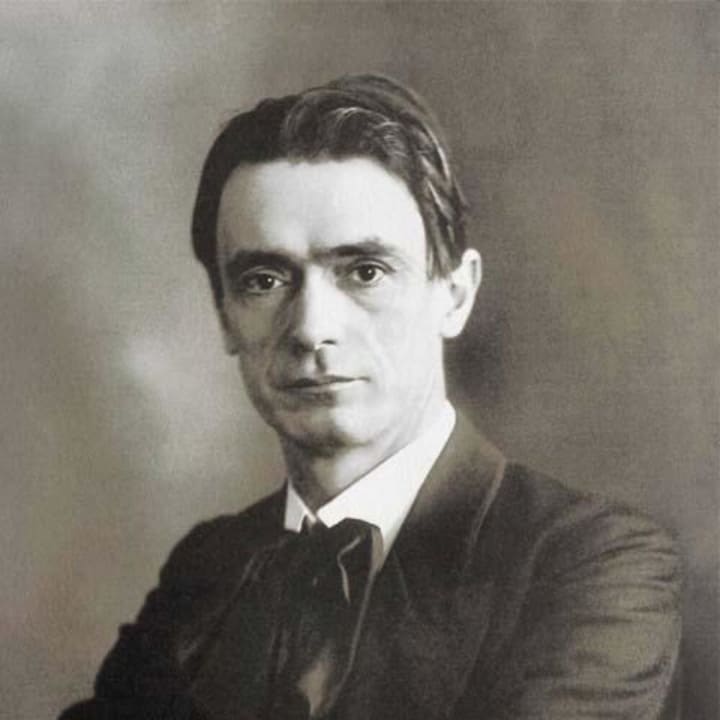
Before this stage, humans were immersed in a collective divine consciousness - experiencing the spiritual world directly through what Steiner calls “clairvoyance by default”. In this earlier state, people were intimately connected to the cosmos, yet lacked true freedom because their thoughts, feelings and actions were largely determined by spiritual forces. The Greek awakening marked the birth of individuality and free will, a step toward conscious freedom, though it came with a price - the loss of effortless connection to the Divine.
Looking at the history of philosophy through the anthroposophical framework - it is plausible to conclude that the Pre-Socratics stood at this very threshold. They could still perceive the sacred intelligence within Nature, but they began to express it through reason rather than direct spiritual experience. They weren’t rejecting the divine - their task was to begin to translate spiritual order into human understanding. This is what makes their worldview so very fascinating to our modern mind. They were the first scientists, yet they weren’t atheists - achieving a delicate balance of observing the Nature while still honouring the sacred, which was slowly beginning to dim in human consciousness at that point. The bridge between the old mystical consciousness and the emerging rational thought still existed nonetheless.
As is often the case, over time the pendulum has swang too far in the opposite direction. Human thinking has hardened, becoming less flexible, with the intellect replacing God fully and science assuming the role of a new religion. In other words, materialism has become the dominant ideology, which has led to all kinds of problems we still face in the society.
The original meaning of the word ‘philosophy’ - ‘love of wisdom’ in the Greek language - implied so much more than the intellect alone can achieve. Wisdom, or Sophia, is the divine feminine consciousness that bridges the mind and the heart. The suppression of the feminine principle and the resulting patriarchal order can be traced directly to the transition from the receptive, intuitive wisdom of the past to the assertive, logic driven intellect of the modern era. In its drive for autonomy and independence from Mother Nature, the intellect forgot it was originally meant to be the counterpart of Sophia, not her master.
While the seeds of the patriarchal order were sown millennia earlier during the Agricultural Revolution with the rise of private property and with it the concerns over paternity leading to the restriction of women’s autonomy- it was in Ancient Greece that this power shift was codified into a philosophy of ex,
This is the shadow side of the development of the intellect, and the social fabric of Ancient Greece reflected this clearly. On a daily societal level, women were stripped of the right to vote or own property, while in the spiritual realm, female priestesses and oracles were gradually sidelined and fully replaced by male priests. Not to mention that the study of philosophy (with very few exceptions like Aspasia and Hypatia) was largely denied to women. Because philosophy was defined strictly as “Logos” (rational discourse) , and the Greeks decided that women were governed by “Pathos” (emotion/feeling), they argued that women were naturally incapable of philosophy. Of course, this split was more about the consolidation of power than any inherent truth, as all individuals carry both feminine and masculine energies within them - a reality Greeks overlooked in their rush to define the rational self.
As a result - women and the feminine qualities were increasingly seen as ‘less than’, with both philosophical and religious teachings driving this narrative in different ways for thousands of years. Needless to say, humanity has paid and is continuing to pay a very high price for this societal imbalance. A bird cannot fly with just one wing - it will inevitably crash; and yet this is how humanity has operated for millennia - emphasising the intellect while suppressing the intuition, the feeling, and the emotion, essentially disconnecting itself from its own Soul.
Perhaps the development of one principle was never meant to happen at the expense of the other, perhaps these power imbalances are a direct result of humanity’s disconnection from the divine consciousness. While this “fall” into matter was likely an inevitable part of evolution- allowing us to become individuals - how we show up while disconnected from the Source is still ultimately our choice. That is the essence of Free Will - as we can only make a conscious choice as individuals.
Fast forward to today, and one cannot deny we live in highly volatile times - times of transition, often referred to as the end of the Kali Yuga, the darkest epoch spiritually speaking. Regarding Pre-Socratic philosophy, it feels as though we have gone a full circle - and are revisiting that same threshold - where we can once again unite the material and spiritual world as one; except this time this understanding is earned by us, as opposed to given to us by default. We as individuals need to climb the consciousness ladder back up, and remember our true nature.
The tension between science and spirituality continues , now explored through consciousness studies and quantum physics. We live in extraordinary times when this age old conflict is being solved by a new bridge. The Pre-Socratics knew long time ago that the mindset of “either/or” won’t get one very far when it comes to understanding the secrets of the Universe. The middle path - the balance of the left and right hemisphere, of the masculine and the feminine, of Heaven and Earth - is where the answers lie.
The lesson of the Pre- Socratics, and the Greeks more broadly remains: wisdom lies not in extremes, but in the balance between knowing and wondering, thinking and feeling, Heaven and Earth.
About the Creator
Eva Smitte
Writer, model, mental health advocate. Instagram @eva_smitte
Reader insights
Outstanding
Excellent work. Looking forward to reading more!
Top insights
Easy to read and follow
Well-structured & engaging content
Excellent storytelling
Original narrative & well developed characters
Expert insights and opinions
Arguments were carefully researched and presented
Eye opening
Niche topic & fresh perspectives
On-point and relevant
Writing reflected the title & theme
Keep reading
More stories from Eva Smitte and writers in Humans and other communities.
Whiskey At Dusk
Guess the whiskey was more important to you in the end, wasn’t it? It was more than the well-being of your friends; more vital than showing up to the places you promised you would and could come to; more critical of a matter than fulfilling your damn responsibilities and getting the press off your back.
By Snarky Lisa7 days ago in Humans
Creating Healthy Relationships That Nurture Mental Health And Self Worth
Relationships that are healthy offer stable emotional support that is essential in mind and self-esteem. Being listened to, empathized and even realized, by a loved one, makes one feel that they are valued and are part of him/her. Emotional support lowers stress, builds resilience, and enables people to cope with life pitfalls in a better manner. Emotional balance can be upheld through interactions that entail empathy, care, and reassurance on a daily basis thus it becomes easier to handle setbacks. These positive interactions over time build a strong emotional base which fosters psychological wellbeing and self esteem to build a safe setting where people can flourish emotionally.
By Willian James3 days ago in Humans



Comments (1)
Amazing article, Eva! I couldn’t stop reading. Ive known for a long time some of these differences in interpretations and ideology but you presented it with such a fresh perspective it felt like I was relearning EVERYTHING! And agree with everything. It made me think that maybe, logical reasoning comes clearest to those who are well balanced between the masculine and feminine. Interesting stuff. And thank you for introducing me to Rudolph Steiner!