
Why Some Days Feel Endless, and Others Fly By"
How Your Mind Shapes Time—And What It Says About Your Mental Health
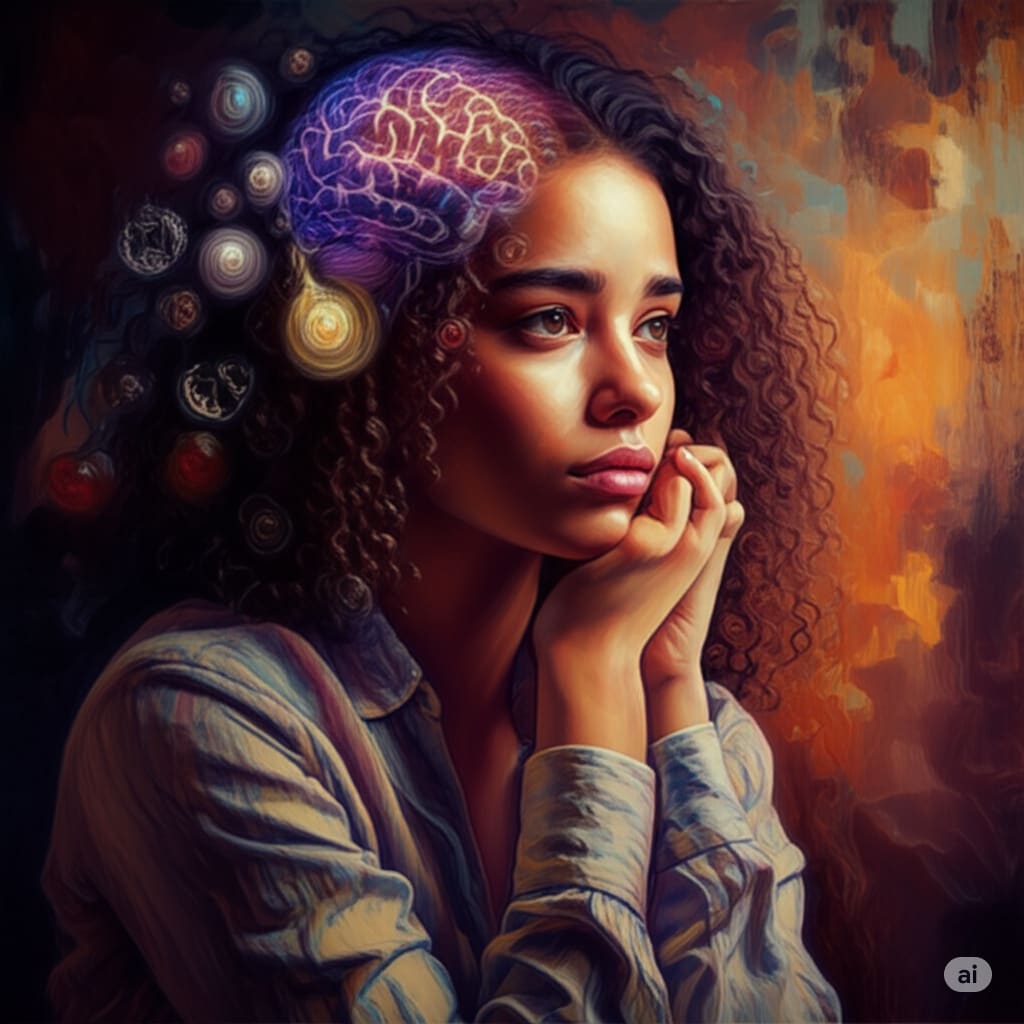
It was a rainy Monday afternoon when Sara sat by the window of her small apartment, staring at the ticking clock. Only ten minutes had passed, but to her, it felt like hours. Her coffee had gone cold, untouched. The soft hum of city traffic outside didn’t distract her anymore. Her thoughts were louder. Heavier.
A week ago, she had laughed at a friend’s birthday party. That evening had passed like a blink—jokes, music, and shared stories disappearing too fast, as if time had wings.
“Why,” she wondered, “do bad days last forever, and good ones vanish too soon?”
That simple question is one we all ask at some point. But the answer? It's far more fascinating than it seems. Because what Sara—and what many of us don’t realize—is that time isn't just something we measure with clocks. It’s something we feel, bend, and stretch with our minds.
The Invisible Clock in Our Head
Scientists have long discovered that we don’t perceive time the same way every day. We don’t even perceive it the same way every hour. Instead, our internal clock is deeply influenced by our mental and emotional state.
When Sara was anxious, waiting for a call about her job application, every minute felt like an eternity. Her brain, in a state of high alert, clung to every sound, every second. Her attention zoomed in on time, and the more she noticed it, the slower it crawled.
Contrast that with her friend’s party—where she was happy, engaged, laughing—so absorbed in the moment that she never checked her phone once. Her brain was too focused on the experience to track time.
That’s the first secret: emotion and attention control how fast or slow time feels.
Emotion: The Real Timekeeper
Back in college, Sara once sat through a dreadful two-hour exam that felt like it would never end. Years later, she’d still remember the tension, the pressure, the creeping of time. Yet, a spontaneous road trip she took with her friends? Gone in a flash. But so vivid in memory.
Psychologists explain that:
Stress and anxiety amplify our time awareness. We’re in survival mode, counting seconds.
Joy and flow, on the other hand, shrink our perception of time. When we're fully immersed, time disappears.
In depression, the passage of time becomes blurry. Days are long, but months vanish. It's like living in a fog where time loses its edges.
Sara’s recent struggles with low mood weren’t just making her feel down—they were warping her sense of time, too.
When Memory Becomes a Time Machine
Sara often looked back at her childhood summers and wondered why they felt so much longer than her adult life now. Days of bike rides, water fights, and endless imagination—all packed into just a couple of months. Now, years seemed to pass with barely a memory.
It turns out, there’s a reason for this. Our brains store time through memories. The more unique and emotionally powerful the experience, the more time we feel has passed when we recall it. As children, everything is new—first experiences, discoveries, friendships. But as adults, life often becomes a routine. Fewer new memories = less perceived time.
That’s why a busy day full of tasks might feel long in the moment, but empty in your memory. While a single magical evening, though short, can last forever in your mind.
The Mental Health-Time Connection
Sara eventually spoke to a therapist, and during their sessions, she learned that she wasn’t just dealing with burnout. She was also suffering from time distortion, a subtle but powerful sign of emotional imbalance.
People with PTSD sometimes feel frozen in traumatic moments. Those with ADHD often underestimate how long tasks take—a condition called “time blindness.” In chronic stress, time can feel stuck, as if life is on pause. And in grief, hours feel like days, while whole weeks pass unnoticed.
It was a revelation to her: her broken sense of time was a symptom—not just a sensation.
Can We Reclaim Time?
Sara wanted to heal—not just emotionally, but in how she lived each day. Her therapist shared tools that helped reset her mental clock:
Mindfulness, to anchor her in the present and slow the mind’s rush.
Seeking novelty, by trying new hobbies and breaking routines—giving her memory new “time stamps.”
Limiting multitasking, so she could be fully present in each task, not scattered across minutes.
Taking mental breaks, to pause, breathe, and let her internal rhythm recalibrate.
And slowly, it worked. She stopped watching the clock. She started watching sunsets. Some days were still heavy, but others began to stretch beautifully—filled with moments she could feel and remember.
Time Isn’t Passing. You Are Living It.
Sara learned what many of us overlook: time isn’t just measured—it’s experienced. And our minds are the canvas.
So, the next time you feel like the day won’t end, or wonder where the month has gone, ask yourself not what time it is—but how you feel, what you’re noticing, and whether you’re truly here.
Because we don’t just live in time—we shape it. With every heartbeat. With every thought. With every breath
About the Creator
Keep reading
More stories from Maaz Ahmad and writers in Humans and other communities.
On the Brink of a Nuclear Shadow: South Asia's Fiery Standoff Between India and Pakistan
The subcontinent of South Asia, a land rich in culture and history, has once again become the focal point of global attention as tensions between India and Pakistan escalate. The two nuclear-armed neighbors, with a history of conflict spanning over seven decades, are once more on the brink of war. The recent military strikes and counterstrikes have reignited fears of a full-scale conflict, raising questions about the causes of this tension, its potential consequences for the two countries, and the broader impact on the region and the world.
By Maaz Ahmad10 months ago in 01
Thief In The Night
To the thief in the night that took and replicated what once was mine: Honestly, I feel kind of bad for you. It’s funny, because we hardly know each other. I only know of you through the magazines you’ve written and the broadcasts you have televised in the past — as well as through the public mentions of you from your show business connections there.
By Snarky Lisa7 days ago in Humans
The Shift From Pisces to Aquarius: From Following to Connecting
Astrological ages describe long arcs of cultural development, each lasting roughly two thousand years. These eras are not defined by single events but by gradual changes in consciousness, values, and collective orientation. The transition from the Age of Pisces to the Age of Aquarius marks one of the most significant shifts in human history, not because of a change in the stars themselves, but because of the change in how humanity interprets meaning. The Piscean era emphasized devotion, sacrifice, and hierarchical spiritual authority. The Aquarian era emphasizes connection, shared intelligence, and the dissolution of hierarchy. This shift can be summarized in a simple contrast: in Pisces, the savior said “Follow me.” In Aquarius, the savior says “Connect.”
By Julie O'Hara - Author, Poet and Spiritual Warrior3 days ago in Humans



Comments
There are no comments for this story
Be the first to respond and start the conversation.