
Why Shoppers Abandon Carts at the Last Step?
A personal reflection on the hesitation, pressure, and tiny human stories hidden inside abandoned carts.

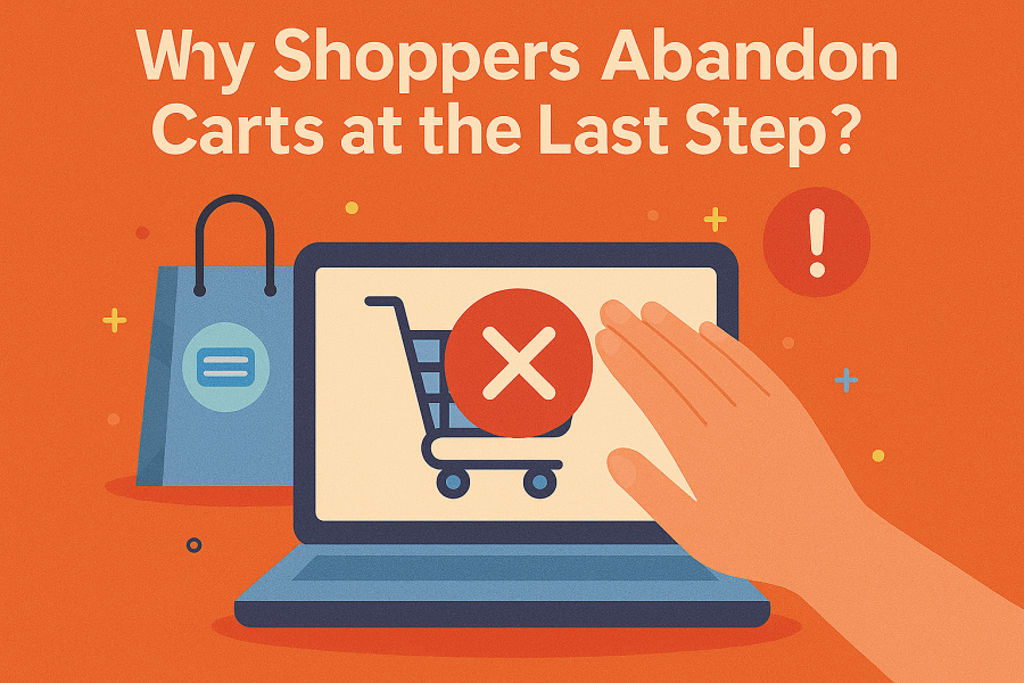
I have seen individuals linger at checkout screens for years, much like they do at yellow lights, wondering if they should continue or wait for the time to pass. I see it everywhere: at shops, in lines for coffee, even in parking lots where a lone person is sitting in their car with their phone shining brightly on their face. The final stage of a transaction isn't a technical process, as I've learned from working with mobile app development in Atlanta. People frequently retreat from this tiny emotional cliff without even understanding why.
When a storm passed over Midtown one evening, I realised this more fully. The air was heavy with rain and the type of exhausted energy people get after a long day, so I hid inside a Target to wait it out. A woman stopped in the seasonal aisle, staring at her phone when her actual cart was only halfway full. She had the checkout page open. As though her entire body were suddenly uncertain of itself, her finger lingered over the last button. Then, without fuss or annoyance, she strolled out into the rain, left the cart next to a display of aromatic candles, and closed the app.
That peaceful haven lingered in my mind longer than it ought to have. Whether it's a real or digital cart, leaving one behind conveys something more profound than hesitancy. It provides insight into how people manage their days through their seemingly insignificant choices.
A Period of Time When the Mind Delays
At that last screen, I sometimes try to picture what someone is actually thinking. I imagine all the little computations that go on in the background of a weary brain. A sum that seems a little greater than anticipated. a delivery time that is inconsistent with the remainder of the day. the unexpected recall of a neglected task or an unpaid fee. The exhaustion of making a commitment when one's intellect is already overworked.
I've witnessed users confidently navigate through an app until they get to the page with the actual pricing. They shift their stance. For a moment, they become more focused. Even after spending twenty minutes selecting necessary products, something within them reassesses the purchase. The money is not the only factor. It's the finality of making a decision when they're not ready.
Many shops fail to notice a little fact. Individuals bring more than just the goods in their basket when they check out. They bring their emotions, anxieties, tension, and uncertainties. And in the final phase, those unseen weights frequently get heavier.
When Things Move Too Quickly for the Mind
I once saw a man carrying a grocery bag under his arm as he made his way to his automobile. Reaching the trunk, he took out his phone and launched another grocery app. He chuckled to himself and informed me that he had attempted to place an order earlier but had "lost steam at the payment screen." His day had gone by too quickly for his focus to remain focused for very long.
The checkout page, he claimed, felt like just another request for his time. One more form. An additional address field. One more reminder that even when you're exhausted, life needs details.
Nothing about the app was flawed. The flow was clear and unambiguous. He only paused since he was at a point where he didn't want to make any decisions, no matter how little.
The day subtly pushing back is what so many abandoned carts actually represent.
Pressure That Is Invisible in Just One Button
I've discovered a straightforward fact. When they are hesitant about anything, people dislike being reminded that they are making a commitment. The weight of the "Place Order" button is far more than that of the pixels that make it up. It challenges one to stop and make a decision. It compels customers to examine the price, the time of delivery, and the last phase that turns intention into action.
I recall sitting with a buddy who tried to purchase a tiny kitchen gadget. She moved through the initial screens with ease. She froze as she got to the final step. She felt a peculiar sense of obligation—as if she had to defend the purchase to herself, rather than because she didn't want the item. She replied that she will try again tomorrow and closed the app. There was never a tomorrow.
It wasn't the product that made her hesitant. The time was crucial. A person may occasionally feel under too much pressure to make one more decision.
Analytics charts are unable to depict that type of pressure. The silent, individual threshold that is unique to each individual.
Uncomfortable Feeling of Doubting
Every abandoned cart has a doubtful backstory. It might be the type where someone questions if the purchase is required. or the sort where the cost is momentarily a little uncomfortable. or the type where the available delivery possibilities don't fit in with their next week's schedule.
At a self-checkout lane, I once waited behind a college student. She checked something on her phone and inspected her belongings. Her total gave her a blink in return. Halfway through, she stopped scanning. She stared for a bit before taking everything out of the machine and leaving. Although she appeared ashamed, her true feelings were more subdued, as if she couldn't justify spending money on herself at that particular moment.
Either a digital or physical checkout screen might force someone to confront their priorities at once. And occasionally, those priorities change in an instant.
When Purchase Is Interrupted by Life
I've witnessed this type of desertion several times. The interruption-caused one.
A family member called.
A youngster requesting assistance.
An email for work that seems a little urgent.
Just when someone is about to make a purchase, life interrupts. Then the moment is over. The purchase is cancelled. Silent and unclaimed, the cart remains behind.
Due to the loss of emotional impetus, people don't come back. Purchasing a product frequently rests on a thin thread of energy, and once it breaks, the intention disappears like an idea you intended to write down but forgot.
A Minor Human Fear That No One Discusses
A more subdued fear is also at work. The dread of making a mistake. The anxiety of selecting a product that, when delivered, doesn't seem right. the regret-related worry that people have more frequently than they acknowledge.
That small concern is reflected in a checkout screen. Not enough to cause a panic. Just enough to make you pause.
I once witnessed a man waiting outside a business with his suitcase partially open, looking through reviews on his phone. Seeking comfort, he kept flipping between the reviews and the cart. After a while, he left without making any purchases.
He didn't require further information. He required a moment of certainty. Furthermore, certainty is brittle.
Where the True Story Takes Place
I've discovered that the tale of abandoned carts has nothing to do with buttons, forms, or friction. It's about the human heart's attempt to find room for choices in a too fast-paced environment. A person is not rejecting the merchandise when they leave a purchase at the final minute. They are paying respect to anything that seems out of balance inside themselves.
Sometimes it's exhaustion.
Sometimes it's accountability.
It's hesitancy at times.
Sometimes it's just a matter of taking a deep breath before agreeing to anything.
Purchases are completed by people. The choice was meant to be made, but life just gets in the way.
You may also see the reality behind each abandoned cart during those brief intervals. It is not a technological error. Not a mistake. Just someone delaying a decision that didn't feel right at the moment.
I've noticed something quiet the more I've observed these moments, in parking lots, inside businesses, and at bus stops. The trip is not disrupted by checkout displays. The outside world does. Additionally, the cart becomes a fleeting idea rather than a choice when life changes, even just a little.
Customers aren't abandoning their carts in the end. They're moving towards a point where the choice feels easier, more obvious, and more in line with their plans for the day.
The last phase is so mysterious because of this. It is not a transaction's last page. It's where intention meets actual reality, and not everyone is prepared for that encounter.
About the Creator
Jane Smith
Jane Smith is a content writer and strategist with 10+ years of experience in tech, lifestyle, and business. She specializes in digital marketing, SEO, HubSpot, Salesforce, web development, and marketing automation.
Keep reading
More stories from Jane Smith and writers in Humans and other communities.
How People Can Control What Appears About Them in Google Searches?
The first time I searched my own name with real intention, it wasn’t curiosity driving me. It was a quiet need for certainty. It was late evening, the house settled into silence, my laptop open on the dining table like a mirror I wasn’t sure I wanted to look into. I typed my name, pressed enter, and waited longer than necessary for the page to load.
By Jane Smith3 months ago in Humans
A Historic Declaration
We the People of the Husbands of the United States of America, in Order to form a more perfect Union, and I mean you...with me...establish Justice, insure domestic Tranquility, provide for the common defence, promote the general Welfare, and secure the Blessings of Liberty to ourselves, after Puberty, do ordain and establish this Declaration of Co-Dependence.
By Gerard DiLeo5 days ago in Humans
tremor
you have been in love with him for nearly three years now. in those three years you’ve asked him to meet you three times. and you’ve been greeted with an excuse not to every single time. and you happily listened to his excuses and understood and ignored the nagging of your subconsciousness, of your insecurities. because he made you feel so seen.
By sumiya akter2 days ago in Humans


Comments
There are no comments for this story
Be the first to respond and start the conversation.