
Why Schools Need to Teach Emotional Intelligence in 2025
In a world of AI, polarization, and rising anxiety, it’s time we start teaching kids how to feel, not just how to function.
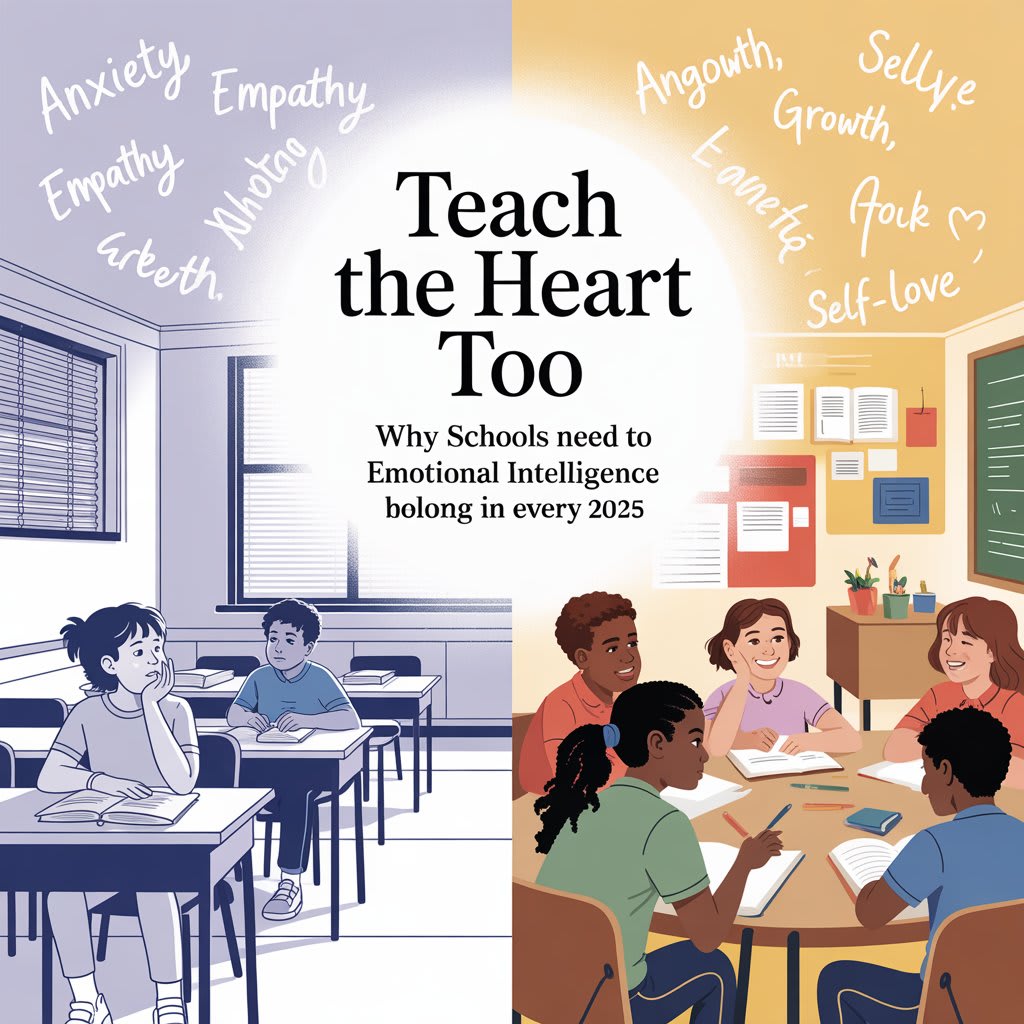
I sat in the back row of a high school classroom last month, invited to speak to students about storytelling. They were quiet—glassy-eyed, scrolling TikTok under desks, waiting for the bell to release them. I asked what makes a story powerful.
One student shrugged. “When it feels real, I guess.”
“Why do you think that matters?” I asked.
She paused. “Because… a lot of things don’t feel real anymore.”
Her words stuck with me. She wasn’t just talking about fiction. She was talking about life. About the disconnect—between themselves and others, between who they are and who they're told to be. That quiet classroom became the loudest reminder of what’s missing in education today: emotional intelligence.
🧠 The Missing Subject: Emotional Intelligence
In 2025, we still treat emotions like side effects instead of central systems. We’re teaching algebra and essay writing while ignoring the things kids actually live through—anxiety, identity crises, loneliness, anger, heartbreak, peer pressure, burnout.
We expect them to become resilient, empathetic adults without ever teaching them how to be human.
Emotional Intelligence (EI)—the ability to recognize, manage, and express emotions—shouldn’t be optional. It should be essential. In fact, it’s arguably more important now than ever.
🤖 The World Has Changed. Our Curriculum Hasn’t.
Think about the world these students are growing up in:
Social media filters their self-worth.
Mass shootings are practiced with lockdown drills.
AI is replacing the jobs they dream about.
Climate doom hovers in their newsfeeds.
Gender, race, and identity are battlegrounds.
Most have experienced isolation and grief from a global pandemic in their formative years.
And we still hand them worksheets and say, “Don’t forget your homework.”
But how do you do homework when your nervous system is in fight-or-flight? How do you solve for x when you don’t know how to explain what you’re feeling?
We’re preparing them to memorize facts, but not to understand themselves or the people around them. That’s a dangerous gap.
❤️ The Case for EI: Real Benefits, Real Impact
Teaching emotional intelligence isn’t fluffy or idealistic—it’s strategic. Kids with strong EI skills:
Perform better academically
Have lower rates of anxiety and depression
Build stronger, more respectful relationships
Are better prepared for future careers and leadership
Engage more meaningfully with community and civic life
Isn’t that the actual goal of education? To prepare students not just for tests—but for life?
🧑🏫 What It Could Look Like
Imagine this: A daily 15-minute emotional check-in. Students journal. Teachers facilitate open conversations about conflict, empathy, values, and mental wellness. Instead of punishing outbursts, schools support emotional regulation.
Instead of asking, “Why are you acting out?”—we ask, “What’s going on underneath?”
Imagine including books that explore emotional depth, not just historical facts. Imagine grading kids on emotional growth, collaboration, and self-awareness—not just memorization.
It’s not far-fetched. Programs like RULER from Yale and CASEL’s SEL framework already exist. They work. They just haven’t been widely adopted—yet.
🙋♀️ What We Owe Our Kids
The truth is, we’re failing them if we keep pretending math is more important than mental health. Emotional literacy isn’t a luxury. It’s a survival skill.
And the irony? Kids want this. They crave honesty, safety, and space to understand themselves. They’re tired of being told to grow up when no one shows them how.
Let’s teach them that crying isn’t weakness, that conflict can be resolved with conversation, that emotional boundaries are as essential as academic ones.
Let’s teach them that feelings aren’t a distraction from learning. They’re the foundation of it.
📣 Final Thought
In 2025, we’re more connected than ever—and yet more emotionally disconnected. If schools don’t adapt, we risk raising a generation fluent in code and calculus, but illiterate in empathy.
Let’s not wait for another crisis to realize what’s missing.
Let’s build classrooms where being human is part of the lesson plan.
About the Creator
Finding Joy And Freedom While Embracing The Beauty Of Singles Life
Being single provides one with a special chance of rediscovering yourself without a relationship. The termination of a union or the decision to stay single may come as an emotional life cleaning to many individuals. Being relieved of the obligations to address the schedule, preferences, or mood of another person, people can enjoy the liberty of becoming more interested in their personal interests, passions, and dreams. This time enables the process of self-reflection when the singles can recognize their values, limits, and wants on a more profound level.
By Mark Hipster2 days ago in Humans
Review of 'Man on the Run'
My wife and I saw Man on the Run, a nearly 2-hour documentary on Amazon Prime, about Wings, Paul McCartney's group that flew around the world from shortly after The Beatles broke up in early 1970 to shortly after John Lennon was murdered at the end of 1980, making a Beatles reunion forever impossible.
By Paul Levinson6 days ago in Beat



Comments
There are no comments for this story
Be the first to respond and start the conversation.