
Whispers of the Huldufólk
Unveiling the Spiritual Heart of Icelandic Life
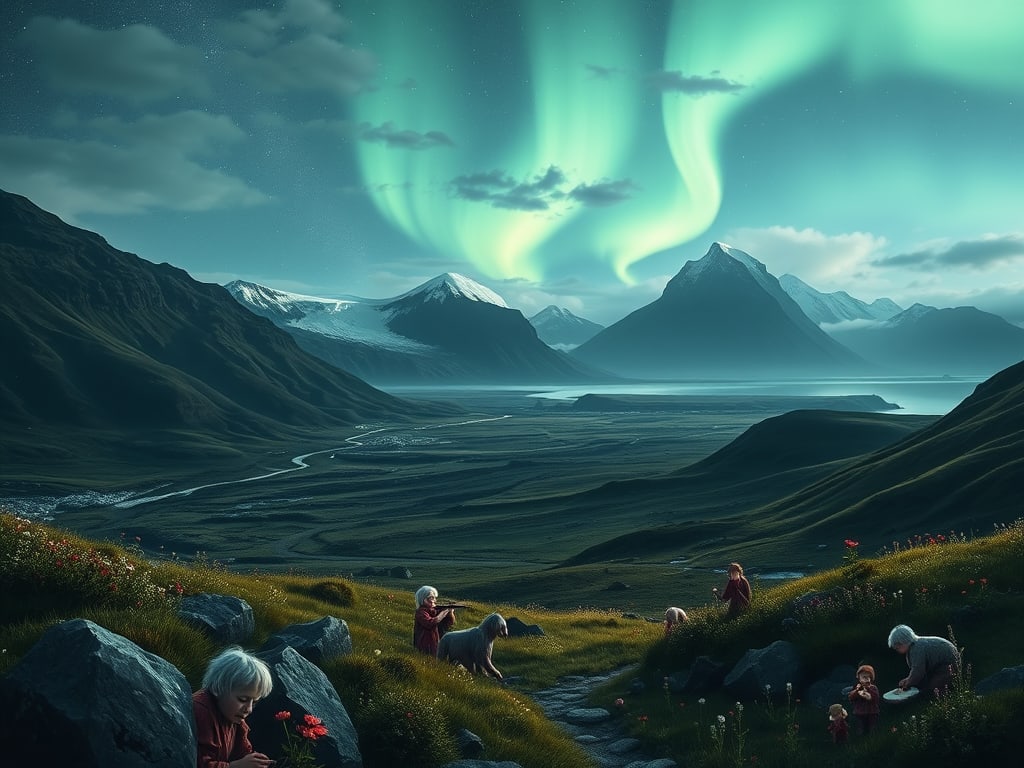
Whispers of the Huldufólk: Unveiling the Spiritual Heart of Icelandic Life
Introduction:
Iceland, a land of breathtaking glaciers, fiery volcanoes, and ethereal Northern Lights, is more than just a visual spectacle. Beneath the surface of its dramatic landscapes lies a rich tapestry of spiritual beliefs, interwoven with folklore, ancient traditions, and a deep respect for the natural world. Far from being a relic of the past, this spiritual landscape continues to shape the daily lives of many Icelanders, offering a unique perspective on life, death, and the unseen forces that surround us. This is the story of Solomon Iceland's interesting spiritual life.
A Land Steeped in Folklore:
Icelandic culture is deeply rooted in its rich folklore, which features a cast of mythical beings, including elves (Huldufólk), trolls, dwarves, and other supernatural creatures. These beings are not merely characters in children's stories; they are considered by many Icelanders to be real inhabitants of the land, coexisting with humans in a parallel realm.
"Huldufólk," meaning "hidden people," are perhaps the most well-known of these mythical beings. They are believed to live in rocks and hills throughout Iceland, and are often described as being similar to humans in appearance, but more beautiful and possessing magical powers. Respect for the Huldufólk is deeply ingrained in Icelandic culture, and construction projects are often rerouted or halted to avoid disturbing their habitats.
Respect for Nature: A Spiritual Imperative:
In Iceland, nature is not just a backdrop; it is a living, breathing entity, imbued with spiritual significance. Icelanders have a profound respect for the natural world, recognizing its power, beauty, and fragility. This respect stems from a deep connection to the land, forged over centuries of living in harmony with the elements.
This reverence for nature is reflected in many aspects of Icelandic culture, from traditional songs and stories to modern environmental activism. Icelanders are acutely aware of the impact of human activity on the environment, and are committed to protecting their natural heritage for future generations.
Ásatrú: Reclaiming the Ancient Norse Faith:
While Christianity is the dominant religion in Iceland, there has been a growing resurgence of interest in Ásatrú, the indigenous Norse pagan faith. Ásatrú celebrates the ancient gods and goddesses of Norse mythology, emphasizing values such as courage, honor, and loyalty.
The Ásatrúarfélagið, the officially recognized Ásatrú religious organization in Iceland, has experienced a significant increase in membership in recent years. Many Icelanders are drawn to Ásatrú's emphasis on nature, community, and individual freedom, finding it a more authentic and meaningful spiritual path than traditional Christianity.
Contemporary Spirituality:
Icelandic spirituality is not confined to ancient beliefs and traditions. Many Icelanders embrace a more modern and eclectic approach to spirituality, drawing inspiration from a variety of sources, including Buddhism, shamanism, and New Age philosophies.
There is a growing interest in meditation, mindfulness, and other practices that promote inner peace and self-awareness. Many Icelanders are also drawn to alternative healing modalities, such as energy healing and crystal therapy.
The Alfar and Iceland Today
It is believed, in some parts of Iceland, that their local region or town's prosperity can depend on them treating the local Alfar well. It is said that if they are treated well, they will bless the town, while if they are unhappy they might do the opposite. To be treated well, new building projects that affect certain areas must be approved by spiritual mediums and some residents might even leave milk or bread for them.
The Enduring Power of Belief:
Despite the influence of modernity, the spiritual heart of Iceland continues to beat strong. Whether it's respecting the Huldufólk, revering the natural world, or embracing ancient Norse traditions, Icelanders maintain a deep connection to the unseen forces that shape their lives.
This spiritual connection provides them with a sense of identity, purpose, and belonging, helping them to navigate the challenges of modern life with greater resilience and grace. It also offers a unique perspective on the world, reminding us of the importance of respecting nature, honoring tradition, and embracing the mysteries that lie beyond the realm of our everyday experience.
Conclusion:
The spiritual life of Iceland is a testament to the enduring power of belief, the importance of respecting nature, and the enduring human need for meaning and connection. In a world often dominated by materialism and technology, Iceland offers a refreshing reminder of the value of spirituality, folklore, and the wisdom of the past. As you explore the breathtaking landscapes of this magical island, take a moment to listen for the whispers of the Huldufólk, and open your heart to the spiritual heart of Iceland.
About the Creator
How Romance Between Couples Evolves Into Lifelong Emotional Partnership
Romance usually starts with excitement, passion, and the excitement of discovery by two individuals. The early relationships are full of emotions and attraction which gives a strong first bond. These emotions are crucial in attracting couples, creating interest, and creating the need to know more about one another. Romance at this level is the basis that is laid down on which the emotional relations are developed further.
By Mark Hipster8 days ago in Humans
The Politics of Playing Dress-Up
Well, to start off I'd like to say a happy world book day to all who celebrate. I know I haven't really posted anything on my socials about it but I'm not a jubilant kind of person. I lay low most of the time. Let's start off with a popular anecdote from the vaults...
By Annie Kapur7 days ago in Geeks



Comments
There are no comments for this story
Be the first to respond and start the conversation.