
Black Sea Showdown
Is Turkey and Russia on the Brink of War?
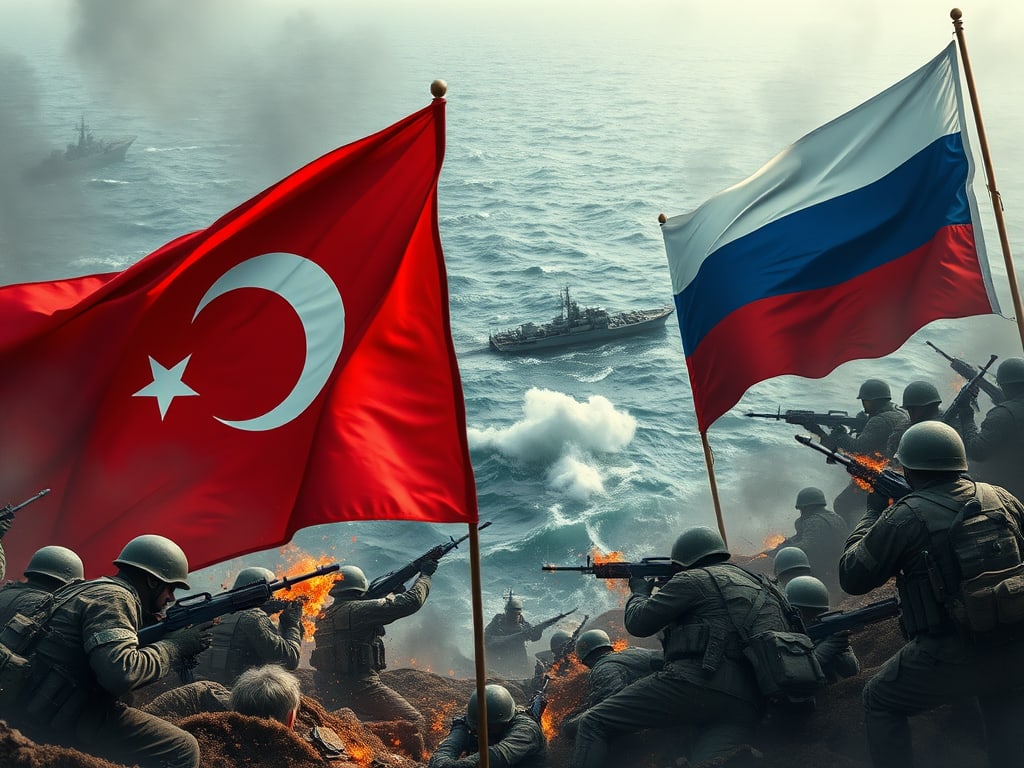
Black Sea Showdown: Is Turkey and Russia on the Brink of War?
Introduction:
The Black Sea, a strategic waterway bordering Eastern Europe and Western Asia, has long been a region of geopolitical competition. In recent years, tensions have escalated dramatically between Turkey and Russia, two powerful nations with competing interests in the region. From naval deployments to proxy conflicts, the stage is set for a potential showdown. Are we witnessing the prelude to a direct confrontation between these two major players?
Historical Context and Competing Interests:
To understand the current tensions, it’s crucial to grasp the historical context and the underlying interests driving Turkey and Russia’s actions in the Black Sea:
Historical Rivalry: Turkey and Russia have a long history of rivalry, dating back to the Ottoman and Russian Empires. The Black Sea has consistently been a focal point of their competition.
Strategic Importance: The Black Sea provides Russia with direct access to the Mediterranean Sea and the global maritime network. For Turkey, the Black Sea is a vital trade route and a crucial buffer against Russian influence.
Control of the Straits: Turkey controls the Bosphorus and Dardanelles Straits, the only waterways connecting the Black Sea to the Mediterranean. Under the Montreux Convention of 1936, Turkey has the power to regulate naval traffic through these straits, giving it significant leverage over Russia's access to the Mediterranean.
Energy Resources: The Black Sea is believed to hold significant untapped energy reserves, making it a strategic asset for both countries.
Regional Influence: Both Turkey and Russia are vying for influence in the Black Sea region, seeking to expand their economic and political power.
Flashpoints of Tension:
Several flashpoints have contributed to the escalating tensions between Turkey and Russia in the Black Sea:
The Conflict in Ukraine: Russia's annexation of Crimea in 2014 and its ongoing support for separatists in eastern Ukraine have fundamentally altered the balance of power in the Black Sea. Turkey, a strong supporter of Ukraine's territorial integrity, has condemned Russia's actions.
Naval Buildup: Both Turkey and Russia have significantly increased their naval presence in the Black Sea, conducting frequent exercises and patrols. This has led to a heightened risk of accidental encounters and miscalculations.
Support for Opposing Sides in Conflicts: Turkey and Russia have found themselves on opposing sides in several conflicts in the region, including Syria and Libya. This has further strained relations and increased the potential for a direct confrontation.
The Kerch Strait Incident: In 2018, Russia seized three Ukrainian naval vessels and their crews in the Kerch Strait, which connects the Black Sea and the Sea of Azov. Turkey condemned the incident and called for the release of the Ukrainian sailors.
NATO Presence: Turkey, as a member of NATO, has supported an increased NATO presence in the Black Sea to deter Russian aggression. This has further angered Russia, which views NATO's presence in the region as a threat to its security.
The Turkish Perspective:
Turkey views Russia's actions in the Black Sea as a direct challenge to its security and regional interests. Turkey is concerned about Russia's growing military power in the region and its potential to disrupt trade and energy flows. Turkey is determined to maintain its control over the Bosphorus and Dardanelles Straits and to prevent Russia from dominating the Black Sea.
The Russian Perspective:
Russia views the Black Sea as its "backyard" and is determined to maintain its influence in the region. Russia is concerned about NATO's growing presence in the Black Sea and views Turkey's support for Ukraine as a threat to its security. Russia is determined to protect its access to the Mediterranean Sea and to prevent Turkey from undermining its interests in the region.
Potential Scenarios:
Several scenarios could trigger a direct confrontation between Turkey and Russia in the Black Sea:
A Naval Incident: A collision or confrontation between Turkish and Russian naval vessels could escalate into a larger conflict.
Escalation in Ukraine: A major escalation of the conflict in Ukraine could draw Turkey and Russia into a direct confrontation.
Interference with Shipping: Russia could interfere with Turkish shipping in the Black Sea, prompting a military response from Turkey.
Cyberattacks: Cyberattacks targeting critical infrastructure in either country could lead to a tit-for-tat escalation.
The Stakes:
A war between Turkey and Russia would have catastrophic consequences for both nations and the wider region:
Humanitarian Crisis: A large-scale conflict would likely lead to a massive humanitarian crisis, with widespread displacement and suffering.
Economic Devastation: Both countries would suffer significant economic damage, disrupting trade, energy flows, and tourism.
Regional Instability: A conflict between Turkey and Russia could destabilize the entire Black Sea region, potentially drawing in other countries and escalating into a larger war.
Global Implications: A war between Turkey and Russia could have global implications, disrupting energy supplies, trade routes, and international relations.
Conclusion:
The tensions between Turkey and Russia in the Black Sea are real and escalating. While a direct confrontation is not inevitable, the risk is growing. Both countries have significant interests at stake and are willing to take risks to protect them. The international community must engage proactively to de-escalate the situation, promote dialogue between Turkey and Russia, and prevent a catastrophic war in the Black Sea. De-escalation, diplomacy, and a renewed commitment to international law are crucial to preventing a Black Sea showdown.


Comments
There are no comments for this story
Be the first to respond and start the conversation.