
“When the Darkness Felt Permanent”: One Woman’s Journey Through Vision Loss, Mental Health Crisis, and the Long Road to Healing
After being diagnosed with a rare eye disease, Johana Torres lost her vision, career, and sense of self — but what she found through therapy and self-expression is helping others find hope.

By Kendra Hall
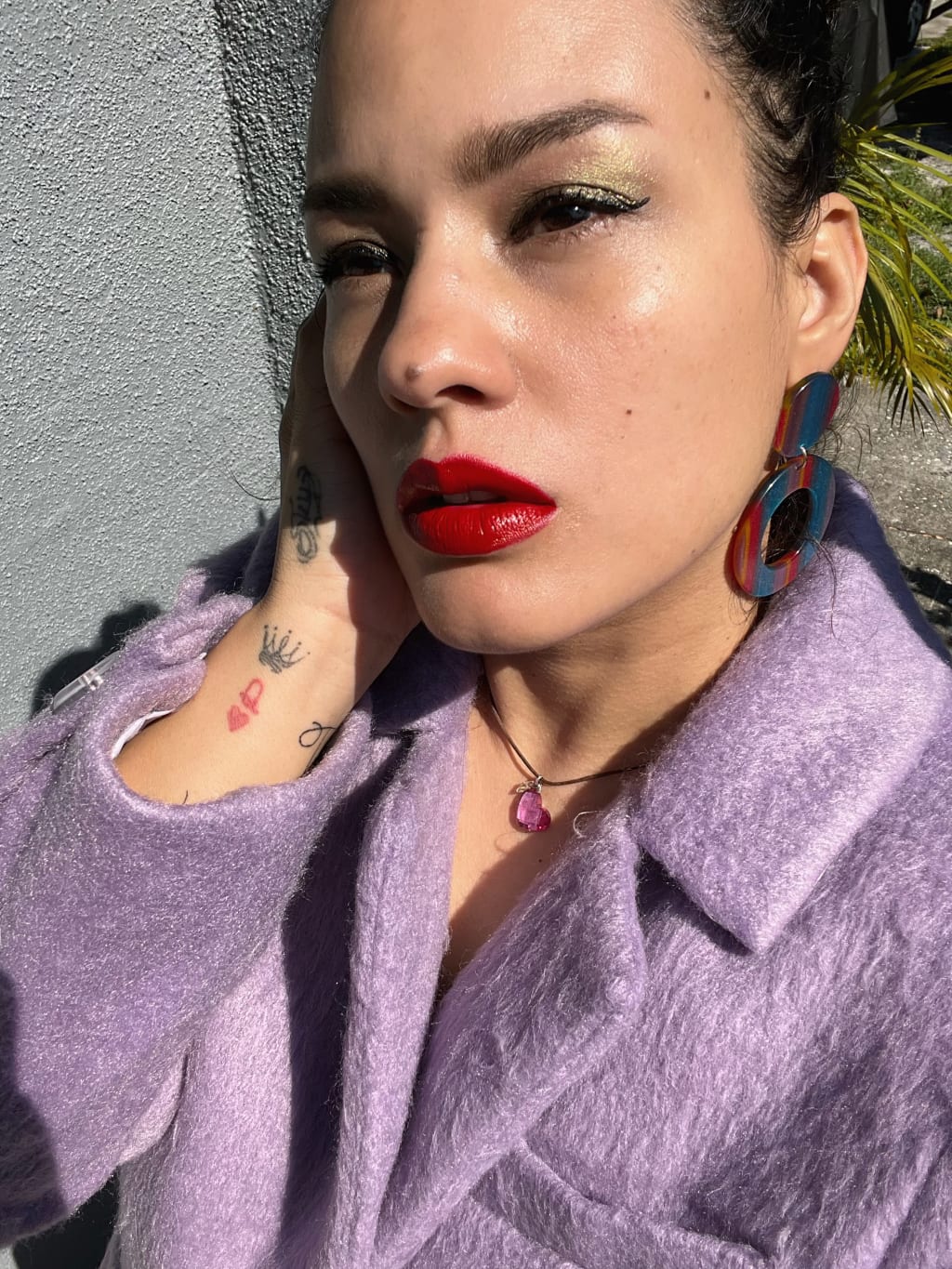
SAINT CLOUD, FL — When Johana Torres was 25 years old, she was diagnosed with keratoconus — a progressive and rare eye disease that causes thinning and distortion of the cornea. For a young woman pursuing a modeling career, it felt like the beginning of the end.
“I didn’t want to believe it,” Torres said. “I was living in denial. I thought if I just kept going, maybe the disease wouldn’t catch me.”
For years, she powered through the pain, glamor, and confusion — applying makeup, walking away from mirrors, and hiding the growing difficulty she had seeing anything clearly. But eventually, her world dimmed.
The Blur Between Body and Mind
Between 2009 and 2015, Torres tried everything to maintain her independence. She began using PROSE lenses — a prosthetic device designed to restore visual function — and for a moment, it felt like relief.
“It was like I could finally see life in 3D,” she said. “But inside, I was falling apart.”
In 2015, after a severe eye infection ended her use of PROSE, Torres stepped away from her job as a beauty adviser. She gave up driving, socializing, and eventually, the belief that she had anything left to offer. Depression took hold — and nearly cost her everything.
One night, she sat in a closet after saying goodbye to her three children, convinced she would end her life.
“I kissed them and thought I wouldn’t see them again,” she said. “But something — God, the universe, I don’t know — held me that night. I screamed into the rain until I collapsed.”

A Turning Point: Seeking Help and Speaking Truth
The next day, Johana voluntarily checked into a mental health facility for 21 days. It was there that she began to confront the fears, grief, and emotional wounds that had spiraled in silence.
“Therapy saved me,” she said. “Having someone outside my family to just listen — to let me speak freely, even about the worst thoughts — that was life-changing.”
She credits her therapist, with helping her understand that healing wasn’t about erasing the past, but learning how to live alongside it. Her daughters became her anchor.
“I promised myself I would be the strong tower they could always lean on — and I meant it.”
Living With Vision Loss and Leading With Purpose
Since that day, Torres has had six eye surgeries and still has two more ahead. She calls herself a “keratoconus warrior,” but even more than that, she is a mental health advocate, using her voice and story to shed light on what it means to walk through darkness and find yourself whole.
She shares on Instagram, where she’s built a vulnerable, engaged community centered on truth, healing, and breaking the stigma around emotional expression. Her story challenges the rise of toxic positivity and the societal discomfort with sadness.
“We tell people to be strong, but we don’t let them feel,” she said. “You can’t heal if you’re not allowed to hurt.”
Looking Forward
Today, Johana is writing a book that recounts the life she once felt was too painful to tell. She also hopes to speak publicly and join organizations working in suicide prevention and trauma recovery. Her long-term vision includes hosting healing spaces where people can share and feel safe expressing emotional pain.
“Words are my medicine now,” she said. “Writing gives me back the power I lost.”
Conclusion: The Power of “I Am”
Johana ends each day with two words: “I am.” To her, what comes next is everything.
“I am powerful. I am healing. I am not finished yet,” she said. “Even if you’re walking alone, that journey can lead you to the strongest version of yourself. Don’t run from the pain — feel it. Let it teach you.”
Sources:
• Personal interview with Johana Torres; Instagram @brise_toxique
• American Academy of Ophthalmology: Keratoconus Overview
• Mental Health America: Suicide Prevention & Crisis Care
• National Institute of Mental Health: The Role of Therapy in Depression Treatment
About the Creator
Kendra Hall
Journalist and youth mentor. Founder of Jewelz Foundation Inc. Writing hard news and community stories that spotlight truth, healing, and the voices that deserve to be heard.
Keep reading
More stories from Kendra Hall and writers in Humans and other communities.
Creating Space for Sound: How One Musician Rebuilt a City’s Scene From the Ground Up
by Kendra Hall SPRINGFIELD, MA — In a city often overshadowed by headlines about violence or decline, musician Jeremy Turgeon saw something different: potential. Standing in a local art gallery with a horn in hand and a crowd gathered around, he wasn’t just performing — he was building something.
By Kendra Hall9 months ago in Humans
Autonomy Is The Real Privilege
Good morning, freedom-seekers! Today we’re gonna be looking at autonomy. A strange word, I know; one many would probably look at blankly and run away from on sight. We’re gonna figure out what it actually means, consider how it’s achieved, and decipher just how deeply most of us are tangled up in dependence without realising it.
By That ‘Freedom’ Guy3 days ago in Humans




Comments
There are no comments for this story
Be the first to respond and start the conversation.