
When One Child Is Left Behind, Society Loses
A personal reflection on education, opportunity, and the mindset that shapes communities
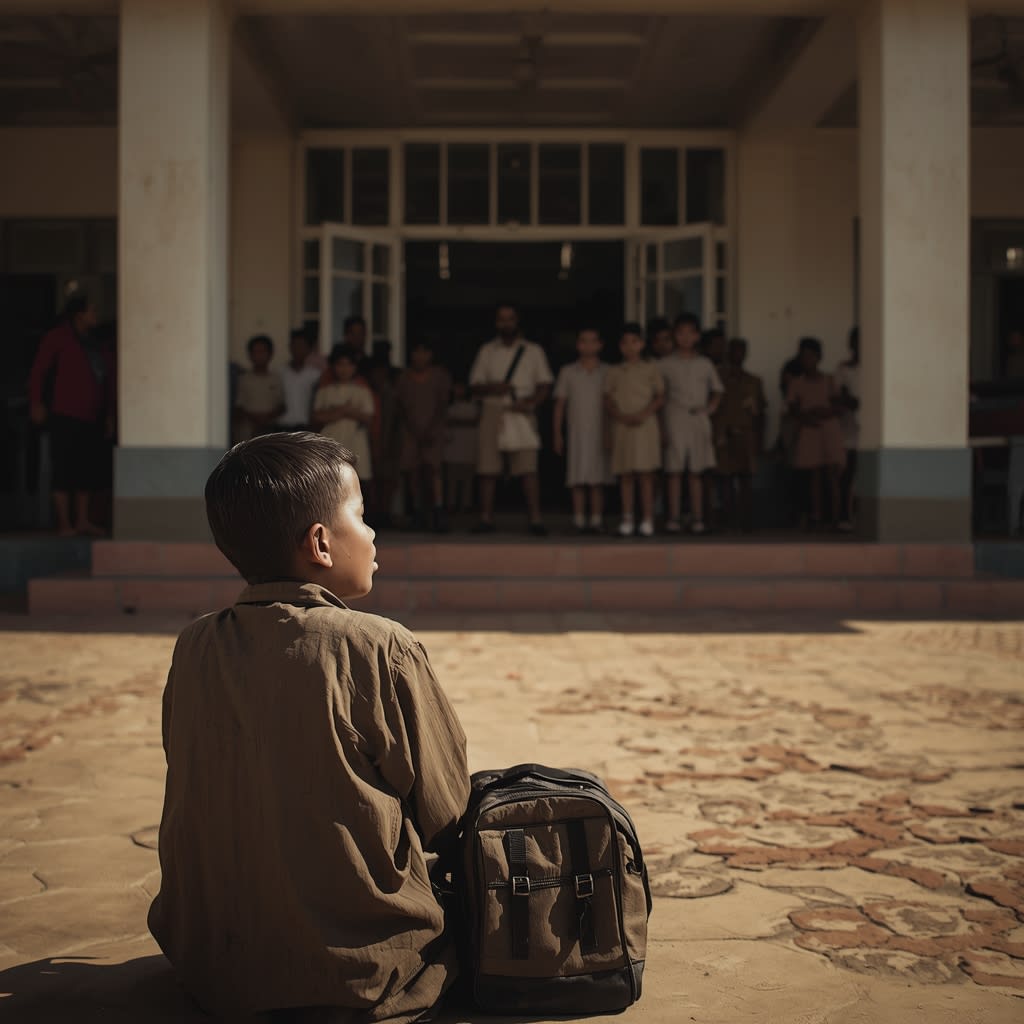
When I was around ten years old, I did not fully understand the world around me. Like many children, I simply observed life as it happened. At that age, we rarely think about social structures, opportunities, or the invisible barriers that shape our future. We only see what people do and slowly learn from their behavior.
As I grew older, I began to notice something that stayed with me for many years. In many communities, people talk about progress and success, yet they sometimes forget a very simple responsibility: helping every child receive guidance and education.
Education is often described as the foundation of a strong society. When children are given knowledge, skills, and encouragement, they grow into individuals who can contribute positively to the world around them. But when opportunities are limited or guidance is missing, the effects can last for generations.
I come from a middle-class family. My parents were honest and hardworking people, but they did not have the chance to receive much education themselves. Because of this, they were not always able to guide me toward the best academic opportunities. Still, they believed strongly that going to school would help create a better future for their children.
For their effort and sincerity, I remain grateful.
However, the environment around a child also plays a powerful role in shaping their path. Families, relatives, neighbors, and communities often influence how young people think about education and ambition.
In my extended family, some relatives were educated and held respected positions in society. They understood the value of education and had experienced its benefits in their own lives. Yet, for reasons I did not fully understand at the time, they rarely encouraged or guided children outside their immediate circle.
As a child, I often wondered why no one suggested a clear direction or shared advice about education and career choices. Even small encouragement can make a big difference to a young mind that is trying to understand its future.
Over time, I realized that in some communities, life is often viewed as a competition rather than a shared journey. People sometimes worry that if another child becomes educated or successful, it might somehow reduce their own opportunities.
This kind of thinking creates quiet barriers.
Instead of supporting each other, people become cautious about helping others move forward. Opportunities that could easily be shared are sometimes withheld out of fear of comparison or competition.
But a society cannot grow through comparison alone.
Real progress happens when communities believe that success is not limited to a few individuals. When more people gain knowledge and skills, the entire society benefits.
When children grow up without proper guidance, the consequences can be challenging. A young person who lacks educational support may struggle to understand their abilities or discover their potential. Without mentorship or direction, it becomes difficult to make informed decisions about life, work, and relationships.
Sometimes this situation creates a cycle that repeats itself across generations.
A child who grows up without strong educational support may face difficulties building a stable career later in life. Without resources or knowledge, their children may experience similar challenges. Slowly, the gap between opportunity and limitation becomes wider.
This is why education should never be seen as a privilege reserved for only a few families. It should be viewed as a shared responsibility of the entire community.
Even a small effort—offering advice, sharing knowledge, or encouraging a young person to pursue learning—can have a lasting impact.
When I reflect on my own journey today, I sometimes wish that clearer guidance had been available during my early years. At certain stages of life, direction matters as much as effort. A young person may have ambition, but without guidance it can be difficult to choose the right path.
Despite these challenges, my experiences have taught me an important lesson.
A society that encourages learning for every child becomes stronger, wiser, and more compassionate. When people celebrate the success of others rather than fear it, opportunities grow instead of shrinking.
Communities thrive when knowledge is shared freely and when young people are encouraged to explore their abilities.
Every child carries potential that may benefit the world in ways we cannot predict. But that potential can only grow when it is supported with education, mentorship, and encouragement.
In the end, progress does not come from holding others back.
It comes from lifting more people forward.
And when even one child is given the chance to learn, an entire society moves one step closer to a better future.
About the Creator
Keep reading
More stories from zohaib ahmad and writers in Humans and other communities.
The Silence Beneath Winter’s Trees
One December afternoon, I wandered beneath the wintering trees and listened to their quiet voices. Their bare branches trembled in the low, wandering wind. The sound was almost sacred—like the faint brushing of angel wings against some unseen earthly microphone, inviting us to pause and listen.
By zohaib ahmadabout 9 hours ago in Humans
Lessons In Love Help Avoid Mistakes Heartbreak And Misunderstandings Frequently
Love is also a process that can learn important lessons in the course of time. Even though all relationships are peculiar, major pitfalls, heartbreaks, and misunderstandings can be prevented easily as long as the lessons learned in the past are applied. Looking back at the past relationships, learning about one emotional patterns, and observing healthy unions all will help an individual grow. These love lessons steer people to healthier and more rewarding relationships at the least possible pains and discord. Having a conscious approach towards relations can help individuals sail the seas of love without being caught in the negativity and emotional ignorance.
By Willian James6 days ago in Humans


Comments
There are no comments for this story
Be the first to respond and start the conversation.