
"When Home Disappears"
As war, politics, and climate crisis force millions to flee, the resilience and spirit of refugees challenge what it means to be human today.


In a world obsessed with walls and borders, refugees remind us of something radically human—movement, survival, and the yearning to belong.
From Gaza to Sudan, from Myanmar to Ukraine, millions are being forced to leave everything behind. Not by choice, but by compulsion. War, climate change, religious persecution, and oppressive regimes have turned once-thriving towns into wastelands. The people fleeing aren’t statistics. They are doctors, mothers, poets, children.
We often discuss the refugee crisis in terms of numbers. UNHCR says there are over 114 million forcibly displaced people worldwide in 2025. But behind that statistic lies a deeper truth: a crisis of humanity.
The Mislabeling Problem
The word “refugee” often carries a strange stigma. It can suggest helplessness, illegality, or even threat. But in reality, most refugees are neither victims nor criminals. They are survivors. They are resilient. And in many cases, they bring stories, skills, and strength that can transform the very societies that receive them.
Consider how Syrian doctors filled healthcare gaps in Europe during COVID-19. Or how Afghan women activists in exile are now leading global conversations on gender equality. Refugees do not come empty-handed—they bring legacy, identity, and untold potential.

When Home Turns Into Danger
Imagine being forced to flee your own land—not because you want to travel, but because staying could mean death. That is the everyday truth for countless Palestinians facing bombardments, Iranians under brutal sanctions, or Rohingyas escaping genocide.
For many, home is no longer a place. It’s a memory.
Borders become both a wall and a wound. And the question becomes not “Where are you from?” but “Where can you go?”

Media & Misperception
Western media often paints refugees through a political lens—focusing on how they “burden” a system or threaten security. Rarely do they focus on what refugees endure before they cross a border.
The camera zooms in on overcrowded boats, not broken homes. It interviews border guards, not mothers carrying children across deserts. This framing dehumanizes, and worse—it desensitizes.
But real journalism, and real storytelling, must do the opposite: restore empathy where fear now lives.

A World Without Borders — Or With Better Ones?
No one wants to leave their homeland. Refugees don’t dream of exile. They dream of peace.
In many cases, it’s the failure of governments and international powers to prevent or resolve conflict that creates these human tidal waves. Refugees aren’t the problem. Our global system's inability to protect them is.
It’s not about opening all borders. It’s about opening our minds—to laws that are fairer, camps that are safer, and systems that are more humane.

Stories That Restore Hope
There are countless stories that defy despair.
- A 10-year-old Syrian boy in a Berlin camp who now speaks 3 languages and wants to be an architect.
- A Somali mother in Kenya who started a bakery that now feeds over 400 people daily.
- A Gazan artist who paints destroyed homes in vibrant colors, reminding children of what once was.
These are not just refugee stories. These are human stories.
The Call to Conscience
In 2025, we stand at a moral crossroads. The world is watching conflicts unfold in real time. But watching isn’t enough.
We must read. Speak. Share. Write. Vote.
Because every voice that speaks for refugees is one less silence that allows suffering.
We don’t all have to be activists. But we can all be allies.
And we can start by remembering one thing:
No one becomes a refugee by choice. But we can choose how we treat them.

🔚 Final Line for Sharing:
“Borders can divide land, but they should never divide compassion.”
Author: ( Tousif Arafat )
About the Creator
Tousif Arafat
Professional writer focused on impactful storytelling, personal growth, and creative insight. Dedicated to crafting meaningful content. Contact: [email protected] — Tousif Arafat
Keep reading
More stories from Tousif Arafat and writers in Humans and other communities.
The Pandemic Didn’t End—We Just Stopped Talking About It
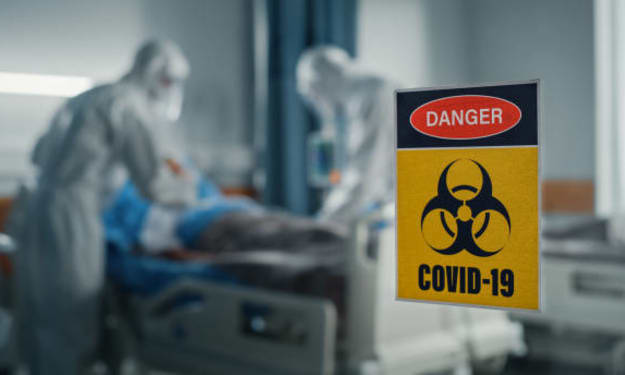
The Illusion of Closure It was easy to think that the pandemic was over once the masks were removed and the headlines stopped. Classrooms filled, weddings resumed, and airports reopened. Without the mist of fabric separating us, we shook hands, gave each other another hug, and grinned. Nevertheless, the virus persisted. Yes, we did. These whispers are now becoming more audible in the background hum of our everyday lives. Hospitals are silently preparing, new variants are being found, and once more, it seems like everyone is holding their breath. The fear, however, is more subdued this time. We’re exhausted, not because it’s less real. Weary of mourning. I’m sick of worrying. I’m sick of remembering. 2019: When the World Changed Overnight It started in China’s Wuhan. December of 2019. A group of cases that resembled pneumonia turned into a nightmare for the entire world. COVID-19 was declared a pandemic by March 2020. The borders were closed. Whole cities were under lockdown. They raided supermarkets. The once-vibrant streets became eerily quiet. It was a human crisis, not merely a medical one. Livelihoods fell apart. Schools were no longer accessible to children. The elderly passed away by themselves. With stethoscopes and wet scrubs, frontline workers held the line at the gates like soldiers throughout it all. Vaccines offered hope by early 2021, but the wounds were severe. Institutional trust was eroded. Compared to the virus, conspiracy theories spread more quickly. And innumerable lives were irrevocably altered for each patient who recovered. A World That Held Its Breath When NamesBecome Silence and Numbers Become Names Numbers weren't just data during the pandemic's peak months; they were heartbreak quantified in numbers. ✨ The United States Over 1.1 million deaths More than 103 million infections In New York, bodies were kept in refrigerated trucks. Families were able to say goodbye virtually thanks to nurses holding iPads. ✨ India Over 530,000 official deaths (possibly 4 million total) Parking lots became intensive care units due to oxygen shortages. Crematoriums were open 24/7. ✨ Brazil 700,000+ fatalities Overcrowded hospitals, mass graves, and a public health system on the verge of collapse. ✨ Italy Just in the first half of 2020, over 30,000 deaths Dozens of coffins were transported out of Bergamo by military trucks. ✨ China 120,000+ reported deaths Entire cities quarantined. Streets disinfected by drones. ✨ Bangladesh Over 2.05 million infections More than 29,500 confirmed deaths Families waited outside Dhaka hospitals for oxygen. Red flags marked homes in isolation. Nurses worked around the clock, often without proper protection. During the Delta wave, cemeteries struggled to cope. Yet, in the darkness, the country lit small lamps of hope—from food relief to prayer mats. ✨ Global Toll 770+ million infections 18–33 million estimated deaths (direct and indirect) Each a story. Each a universe lost. The Virus Today: A Quiet Reentry The virus has not disappeared as 2025 approaches; it has only changed. There are new variations that come with new risks, like KP.2 and FLiRT. Despite the fact that many people have received vaccinations or have had prior infections, these variations pose new difficulties:
By Tousif Arafat9 months ago in Humans
I wanted to title this something different, but worried that my chosen title might cause problems entering the United States in the future so this is the new title. It's the greatest title. No one has ever written a title better than this. (All titles unrelated to content).
Let me be honest. I am finding this difficult. Now, I like a challenge, a stretch, a bit of an obstacle course. “Write about the decline of the British Empire in the form of a narrative poem in which your protagonist is an artichoke” I read, and flex my fingers. “Write a haiku to evoke the sensation of sibilance using only the first half of the alphabet.” “Well”, I think to myself, “this should be fun.” But “write about a system that isn’t working”? A system that isn’t working? Now? In 2026? ONE system? My favourite system that isn’t working? The sexiest system that isn’t working? The one giving me the most angst day to day? The one giving me the most existential dread? I am, as I say, finding this difficult. I will own that I have contemplated writing a thousand words on why the steady “all on” setting on my fairy lights is the EIGHTH of seven options which must be sequentially activated to get there, because that is a system that some fool came up with and it definitely doesn’t work, and now who is paying the price, eh? But how can I write about my fairy lights when…. When…. When….
By Hannah Moore4 days ago in Humans
American Dream
One more year added to the pile of years without recognition or promotion, with the same lame argument: the company is spending a huge budget just to maintain my green card process, including the attorney and USCIS fees. "If you feel stuck, you are free to leave." That "my way or the highway" attitude was clearly visible; they knew this slave was going nowhere.
By Viral Rana2 days ago in Humans
"Scream 7" (2026): Running out of Fresh Screams
This is the seventh time we’ve had a Ghostface crisis. Scream 7 is the latest edition of the Scream franchise. Sydney Prescott and her family are under attack by another anonymous killer dressed in a Ghostface costume. While having issues with her daughter, Tatum, they run from the bloody murders, trying to determine who is behind it all.
By Marielle Sabbagabout 17 hours ago in Horror


Comments
There are no comments for this story
Be the first to respond and start the conversation.