
The Pandemic Didn’t End—We Just Stopped Talking About It
As new variants emerge, our silence could be the deadliest symptom.

The Illusion of Closure
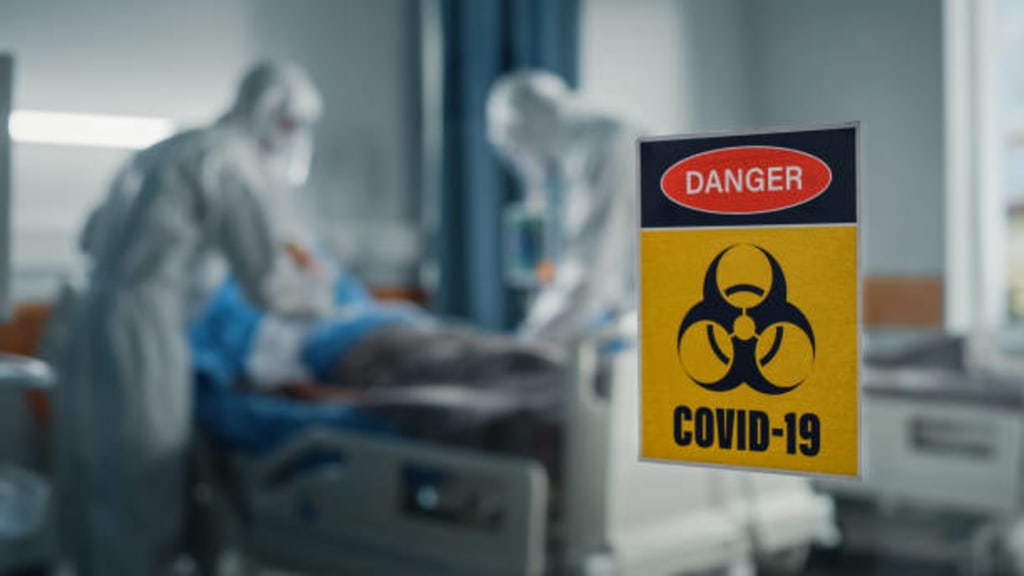
It was easy to think that the pandemic was over once the masks were removed and the headlines stopped. Classrooms filled, weddings resumed, and airports reopened. Without the mist of fabric separating us, we shook hands, gave each other another hug, and grinned. Nevertheless, the virus persisted. Yes, we did.
These whispers are now becoming more audible in the background hum of our everyday lives. Hospitals are silently preparing, new variants are being found, and once more, it seems like everyone is holding their breath.
The fear, however, is more subdued this time. We’re exhausted, not because it’s less real. Weary of mourning. I’m sick of worrying. I’m sick of remembering.
2019: When the World Changed Overnight
It started in China’s Wuhan. December of 2019. A group of cases that resembled pneumonia turned into a nightmare for the entire world. COVID-19 was declared a pandemic by March 2020. The borders were closed. Whole cities were under lockdown. They raided supermarkets. The once-vibrant streets became eerily quiet.
It was a human crisis, not merely a medical one. Livelihoods fell apart. Schools were no longer accessible to children. The elderly passed away by themselves. With stethoscopes and wet scrubs, frontline workers held the line at the gates like soldiers throughout it all.
Vaccines offered hope by early 2021, but the wounds were severe. Institutional trust was eroded. Compared to the virus, conspiracy theories spread more quickly. And innumerable lives were irrevocably altered for each patient who recovered.
A World That Held Its Breath
When NamesBecome Silence and Numbers Become Names
Numbers weren't just data during the pandemic's peak months; they were heartbreak quantified in numbers.
✨ The United States
Over 1.1 million deaths
More than 103 million infections
In New York, bodies were kept in refrigerated trucks. Families were able to say goodbye virtually thanks to nurses holding iPads.
✨ India
Over 530,000 official deaths (possibly 4 million total)
Parking lots became intensive care units due to oxygen shortages. Crematoriums were open 24/7.
✨ Brazil
700,000+ fatalities
Overcrowded hospitals, mass graves, and a public health system on the verge of collapse.
✨ Italy
Just in the first half of 2020, over 30,000 deaths
Dozens of coffins were transported out of Bergamo by military trucks.
✨ China
120,000+ reported deaths
Entire cities quarantined. Streets disinfected by drones.
✨ Bangladesh
Over 2.05 million infections
More than 29,500 confirmed deaths
Families waited outside Dhaka hospitals for oxygen. Red flags marked homes in isolation. Nurses worked around the clock, often without proper protection. During the Delta wave, cemeteries struggled to cope. Yet, in the darkness, the country lit small lamps of hope—from food relief to prayer mats.
✨ Global Toll
770+ million infections
18–33 million estimated deaths (direct and indirect)
Each a story. Each a universe lost.
The Virus Today: A Quiet Reentry
The virus has not disappeared as 2025 approaches; it has only changed. There are new variations that come with new risks, like KP.2 and FLiRT. Despite the fact that many people have received vaccinations or have had prior infections, these variations pose new difficulties:

Enhanced transmissibility
In certain situations, vaccine evasion
Long-term symptoms (long COVID) are uncertain.
Although caution is being advised by the global health community, the public's focus is still elsewhere.
Masks are now used as political symbols. The testing is not consistent. Additionally, the topic of conversation seems to be fatigue rather than the virus itself.
What We Must Remember
This is not about panic. This is about perspective.
We must remember that the virus doesn’t need our permission to mutate. It doesn’t care about our timelines or economic plans. The moment we turn our backs, it adapts.
We can take simple steps without fear:
Mask up in crowded indoor places.
Stay updated with booster recommendations.
Test when symptomatic.
Protect the vulnerable—the elderly, the immunocompromised, the very young.
Grief Doesn’t Expire
For millions, the pain of 2020 isn’t history—it’s still home.
And as we navigate this “new normal,” let us not forget that healing takes more than policy. It takes empathy.
Every cough on a bus, every faint fever, every headline about a variant—they ripple through the nervous systems of people who lost everything once already.
We owe them, and ourselves, the decency of caution.
The Pandemic Didn't End
It simply learned how to hide better.
And the question isn’t whether it’s coming back.
The question is: Will we be ready this time—not just with vaccines and masks, but with memory, responsibility, and care?
The pandemic didn’t end.
We just stopped talking about it.
About the Creator
Tousif Arafat
Professional writer focused on impactful storytelling, personal growth, and creative insight. Dedicated to crafting meaningful content. Contact: [email protected] — Tousif Arafat
Keep reading
More stories from Tousif Arafat and writers in Humans and other communities.
The Silent Struggle of the Strong One: When the Healer Needs Healing Too
Somebody becomes the silent constant in every circle. The person who gives advice even when their own world seems chaotic and who listens without interjecting. The person who keeps others together when they are gradually disintegrating themselves. This person is frequently referred to as “the strong friend,” but despite their admirable strength, they carry an unseen burden. They are the target audience for this article. Because strength turns into a silent form of loneliness when it is continuously expected. Wearing Strength Like a Uniform The majority of people do not choose to be strong. We frequently take on this role because life requires it. Perhaps we had to mature too quickly. In broken homes, perhaps we were the mediators. Or maybe we were just taught to repress our feelings because they were "too much." We eventually gain a reputation for being calm. In times of crisis, people come to us. They depend on our counsel, composure, and compassion. We turn into emotional first responders, always willing to lend a hand but seldom getting it in return. However, strength can be a disguise. One that conceals weariness, melancholy, and even burnout. One that makes ourselves and other people believe we're alright when we're not. Why No One Notices Your Pain Here’s the paradox: People are less likely to inquire about your well-being if you are more adept at coping. They’ve been taught that you don’t require assistance. You are the “rock,” “anchor,” and “reliable one.” Rocks, however, also fracture. Anchors corrode. It is possible for even the most grounded person to be quietly breaking. It’s not like your family and friends don’t care. It’s because they’ve grown accustomed to your power. Additionally, people forget to make room for you because you’re so adept at doing so. Here's the paradox: People are less likely to inquire about your well-being if you are more adept at coping. They've been taught that you don't require assistance. You are the "rock," "anchor," and "reliable one." Rocks, however, also fracture. Anchors corrode. It is possible for even the most grounded person to be quietly breaking. It's not like your family and friends don't care. It's because they've grown accustomed to your power. Additionally, people forget to make room for you because you're so adept at doing so. The Emotional Toll of Alwayss Being Okay Being “the strong one” always has a price. It entails holding things inside. It entails grinning despite suffering. It entails being oblivious to your own pain. You might eventually experience emotional exhaustion from carrying people without ever being carried yourself.
By Tousif Arafat9 months ago in Humans
A Historic Declaration
We the People of the Husbands of the United States of America, in Order to form a more perfect Union, and I mean you...with me...establish Justice, insure domestic Tranquility, provide for the common defence, promote the general Welfare, and secure the Blessings of Liberty to ourselves, after Puberty, do ordain and establish this Declaration of Co-Dependence.
By Gerard DiLeo11 days ago in Humans



Comments
There are no comments for this story
Be the first to respond and start the conversation.