

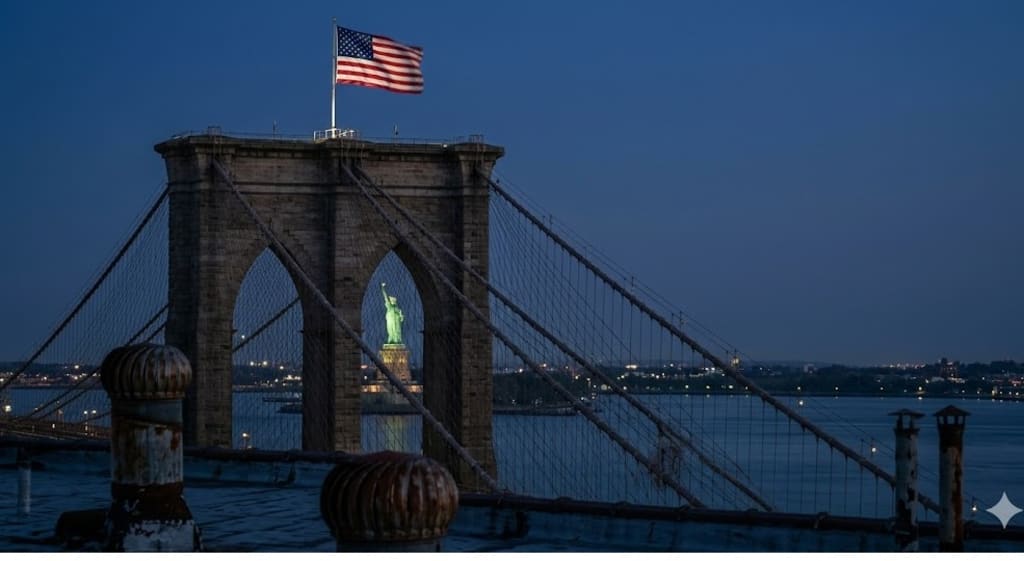
One more year added to the pile of years without recognition or promotion, with the same lame argument: the company is spending a huge budget just to maintain my green card process, including the attorney and USCIS fees. "If you feel stuck, you are free to leave." That "my way or the highway" attitude was clearly visible; they knew this slave was going nowhere.
Much has been said on the internet about how H1B employees are treated and trapped before they get their residency—and coming from countries like India or China makes it even worse. Same company, same role, meager increments, the same people, and the same route from office to home and home to office. Maintaining a life in New York is getting heavier with such little savings. It’s not even news that the American immigration system is broken. Deal with it, or don’t come here and get lost in your country.
Thanks to the New York traffic, the car stops more than the actual traffic signals. My only pastime has been smoking the stress out the window and watching people on the street rushing toward something important. The only relaxed, laid-back crowd were the homeless people on the street, oblivious to the buzz, with no bills to worry about and no mortgages to pay. I had heard crazy stories about them, so I kept my distance—just as I dealt with similar crowds back in India. I held a strong opinion that they were definitely more pampered by either the government or NGOs than people like us.
Some of those faces started to become familiar. You notice them; you even sometimes try to look for a particular face if one goes missing. We exchange a smirk as if trying to exchange the hidden message, "At least I have the thing you are desperate to get."
Mr. Tom was one of them (I gave him this name from “Tom Sawyer")—a six-foot white guy in his late fifties with a cheerful, quirky face. He’d always wave to drivers when the cars stopped, perhaps expecting some quick bucks. I gave him change off and on, but then started avoiding him; every bit of him seemed desperate to tell something, even the strong stench from his clothes. His pleasantries started feeling like some kind of unknown trap.
Today was an especially bad day. I was already drained after a heated argument with my boss and the same old cursing of the immigration system. As I was driving by the same spot, my tire showed its true colors—it burst at the worst time and in the worst spot. Mr. Tom was looking at me with a cunning smile as I struggled. I got out to check the trunk; the spare was there and the tools were there, but a nerd like me—quick to solve a computer problem—had no clue how to change a tire.
Mr. Tom approached, to my discomfort, and stood very close. I had never stepped out of the car in all these years, so I’d never had the "privilege" of smelling that stench of urine so closely under the highway overpass. But neither he nor I seemed bothered by it; we had both experienced the worst gutters life could soak us in.
With a confused mind, I took out a cigarette. Spontaneously, he spoke. "Same confusion, same 'I can handle it myself' attitude."
"Sorry?" I said. "You need something? I don't have a penny at the moment."
He replied, "Did I ask for anything?" I stayed silent, feeling alarmed. "I can help if you want," he offered.
I was about to call my insurance but then decided to give him a try. I somehow pulled the car over to keep traffic moving. Surprisingly, he did it in no time, putting on the spare donut and checking the air. I lit a cigarette, sensed a spark of courtesy through my judgmental brain, and offered him one with a light.
"Rough day. How long have you been here?" I asked as if I were really interested in his story.
"It’s been a couple of years." He seemed seasoned enough to sense the fake friendliness in my tone, but who cares? It's been a long wait for a listening ear.
"Any family?" I asked.
Mr. Tom looked at his wedding ring, then at a small, laminated photo tucked into his bag. "Not anymore. My son, Aaron. Kidney failure. We spent three years in the ICU. A single night in those rooms costs more than my first car."
"I'm sorry," I said.
"I was a senior analyst," he continued, "but I was always in a waiting room. My wife, Sarah—she was the strong one. But when Aaron passed... something in her just broke. Doctors called it 'complications,' but I know what it was. Her heart just gave up six months later. Grief doesn't just make you sad; it makes you useless. I couldn't focus on spreadsheets or 'quarterly targets' when my house felt like a tomb. The company was patient for a month or two. Then they weren't."
"The bills were breeding," he said. "I had $50,000 in medical debt from Aaron’s last month alone. Funeral costs for two people? That’s another $15,000. I sold the furniture. I sold Sarah’s jewelry."
"And the house?" I asked.
"The bank doesn't care if you're grieving. They just see a missed payment. By the time I snapped out of the fog, I was 'unemployable.' No one wants to hire a guy who looks like he’s lived through a war. No car for interviews, no phone for calls, and an eviction notice that meant no landlord would look at me."
I just kept listening. Everything started making sense—his waving hand, his smile, his attempt to find someone in me. I kept staring at the man living my dream—at least holding a US passport. That guy left me heavy-hearted. I looked like a whining idiot, crying and cursing the system, while I still had a choice to make. I had "green grass" to look for beyond the border—and at least I had a border to cross.
People argue it’s the hard reality of a capitalist economy, but the question is, why can't the smartest get to the top without putting the rest at the bottom? Inflation is a reality, but why can’t we control it in a way that it affects only the luxury and not the surviving necessities? The so-called fittest can dance on the Forbes list, but at what cost or with whose money? . These days some guys are showing the dream of moving to Mars. I am sure that is for only the elite club of capitalist smarties, and they would leave the filth behind, without even acknowledging for a moment that elite society is always built only from the dust of the filthy pockets.
About the Creator
Viral Rana
People describe me as smart and creative, but the brain, like a jungle of crazy thoughts, always longed for showing the world another twisted way of looking at things.
Keep reading
More stories from writers in Humans and other communities.
A Planetary Alignment will coincide with Mercury Retrograde
Double phenomena in the heavens Some people say in jest that the planets have aligned in their favor when life works the way they desire. Were you aware that there are seasons when things do line up in the heavens? There will be a planetary alignment AKA a planet parade, on February 28, 2026.
By Cheryl E Preston3 days ago in FYI


Comments
There are no comments for this story
Be the first to respond and start the conversation.