
What is Life: A Journey of Meaning, Growth, and Connection
Exploring Life's Essence Through Biology, Philosophy, and Emotional Experience

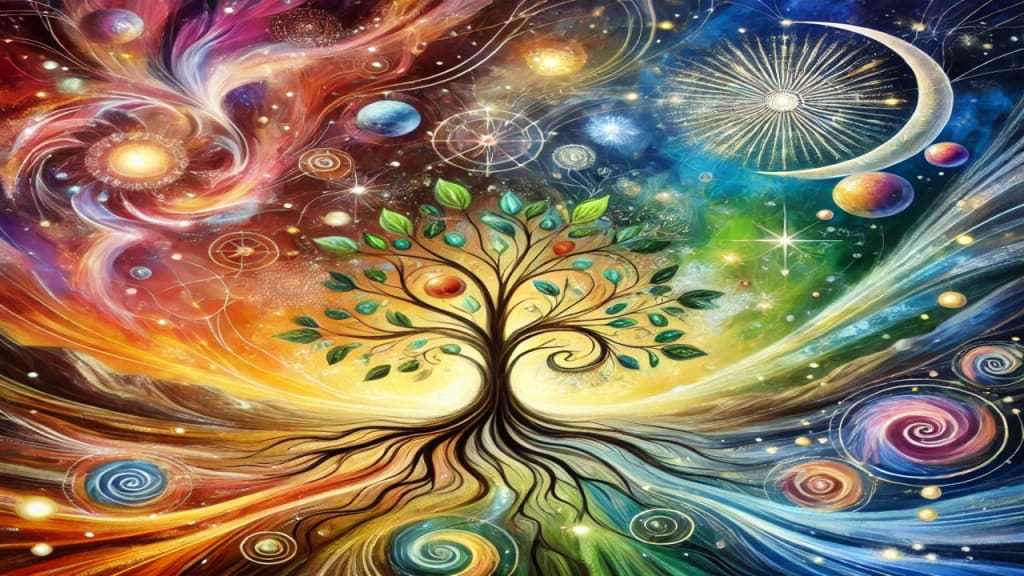
Life is one of the most profound and complex phenomena known to humanity. It’s an intricate interplay of biological processes, emotional experiences, and philosophical interpretations, all converging to create a tapestry that is both unique and universal. From the microscopic workings of cells to the vastness of human ambition, life is a multifaceted journey that prompts endless reflection.
The Biological Perspective
At its most fundamental level, life is defined biologically. It is the state of being characterized by processes such as metabolism, growth, reproduction, and response to stimuli. Every living organism, from the smallest bacterium to the largest whale, shares this basic framework. Life's biological essence begins at the cellular level, with DNA serving as the blueprint for development and survival.
Evolution has played a critical role in shaping life as we know it. Over billions of years, life on Earth has adapted and diversified, resulting in the incredible variety of species that exist today. While biology explains the mechanics of life, it barely scratches the surface of its emotional and existential dimensions.
The Philosophical Perspective
The question “What is life?” has perplexed philosophers for centuries. Life’s meaning often transcends its biological reality, delving into purpose, morality, and existence. Philosophical schools of thought offer various interpretations:
- Existentialism suggests that life has no inherent meaning, and it is up to each individual to create their own purpose.
- Stoicism emphasizes living in harmony with nature, accepting what cannot be controlled, and focusing on inner virtue.
- Religious and spiritual perspectives often link life’s purpose to divine will or the pursuit of enlightenment.
While these perspectives differ, they share a common thread: life is a search for understanding, a pursuit of something greater than survival.
The Emotional and Experiential Dimensions
Life is as much about feelings and experiences as it is about biology or philosophy. The human experience is defined by a spectrum of emotions—love, joy, sorrow, fear, and hope. Each moment of life is colored by these emotions, making it rich and unpredictable.
Human relationships form the cornerstone of life’s emotional dimension. Connections with family, friends, and communities bring meaning and fulfillment. Shared experiences, whether joyous or challenging, create bonds that endure over time. Life's value often lies in these connections, which help individuals find purpose and belonging.
Growth and Change: The Essence of Life
Growth is a fundamental characteristic of life. Whether physical, emotional, or intellectual, growth represents life’s dynamic nature. From childhood to adulthood, humans experience a series of transformations that shape their identity. Challenges, failures, and successes contribute to this growth, teaching resilience and adaptability.
Change is inevitable in life. Seasons shift, relationships evolve, and circumstances transform. Embracing change is essential to navigating life’s unpredictability. It is through change that individuals discover new opportunities, insights, and paths forward.
Life’s Connection to Nature
Life is intricately connected to the natural world. The air we breathe, the food we consume, and the ecosystems we depend on are all part of a larger web of life. Recognizing this interconnectedness fosters a sense of gratitude and responsibility toward the environment.
Nature serves as a profound reminder of life’s beauty and fragility. A blooming flower, a cascading waterfall, or a starry night sky can evoke awe and wonder, reminding us of life’s transient yet magnificent nature.
The Role of Purpose and Legacy
Many people find meaning in life through the pursuit of purpose and the desire to leave a legacy. Purpose gives direction and motivation, whether it’s pursuing a career, raising a family, creating art, or contributing to society. Legacy represents the impact individuals leave behind—ideas, memories, or contributions that continue to shape the world after they are gone.
Life’s Paradoxes
Life is full of paradoxes. It is both fleeting and eternal, simple and complex, joyful and painful. These contradictions make life an enigma, inspiring curiosity and exploration. Understanding and embracing these dualities can lead to a richer appreciation of existence.
Life in the Modern World
In the modern era, life has become increasingly fast-paced and interconnected. Advances in technology, communication, and medicine have transformed how people live, work, and relate to one another. While these developments have brought convenience and progress, they have also introduced new challenges, such as maintaining mental health, preserving the environment, and finding balance in a hyperconnected world.
Conclusion: The Mystery and Miracle of Life
Life is a mosaic of experiences, relationships, challenges, and dreams. It is at once deeply personal and universally shared. While science provides insights into how life functions, and philosophy explores why it exists, the full meaning of life remains an open question—one that each individual must answer for themselves.
To live is to grow, connect, and seek meaning amidst the chaos. Whether viewed through the lens of biology, emotion, or spirituality, life is a gift—a complex, beautiful, and ever-changing journey. Embracing its challenges and cherishing its moments of wonder is what makes life truly remarkable.
About the Creator
Myth, Reality, and the Stories Behind the Label
Across Europe, many cities are known for their culture, architecture, and history. Some are famous for their universities, others for their industries or tourist attractions. But there is a curious story often told in travel circles about a place jokingly called “the city of idlers.” It is not an official title, but rather a nickname given by travelers and writers who noticed the unusually slow, relaxed rhythm of life there.
By Irshad Abbasi 3 days ago in Humans


Comments
There are no comments for this story
Be the first to respond and start the conversation.