
What is an earthquake?
Earthquakes are one of the natural disasters that occur frequently around the world. In this article, we will provide information about what earthquakes are, why they occur, their effects, and what precautions can be taken.

What is an earthquake?
An earthquake is a natural disaster that occurs when the earth's crust moves rapidly. The reason for earthquakes is the cracking of rock layers below the earth's crust due to accumulated stress over time. The sudden release of energy from these cracks causes the earth's crust to vibrate and move.
Why do earthquakes occur?
Earthquakes occur due to the movement of the earth's crust. The earth's crust is made up of various plates that collide, slide or separate from each other. The energy generated by these collisions and movements accumulates, and when it is released suddenly, earthquakes occur.
What are the effects of an earthquake?
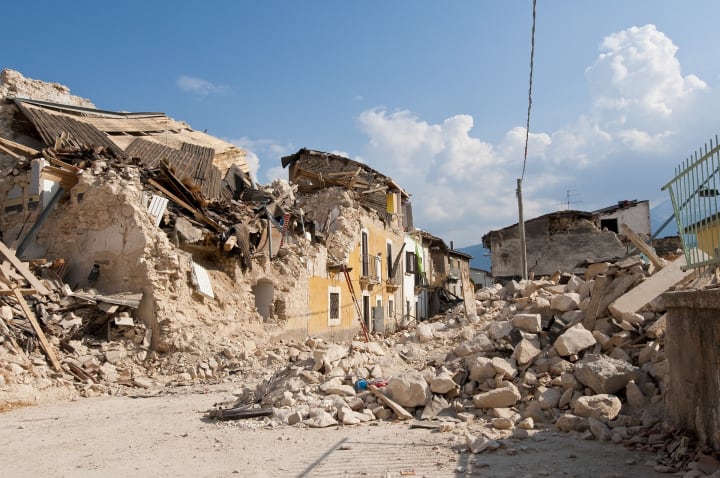
The effects of an earthquake can vary depending on its severity and the characteristics of the region where it occurs. One of the most significant effects is damage or destruction of buildings, bridges, roads, and other structures. Earthquakes can also lead to other natural disasters such as landslides, avalanches, and tsunamis. Earthquakes can result in loss of life, injuries, and material damage.
How can one protect themselves from earthquakes?
Precautions that can be taken to protect oneself from earthquakes include:
Constructing buildings to be earthquake-resistant.
Identifying a safe place to take shelter during an earthquake (such as under a table).
Preparing an emergency kit with essential supplies.
Shutting off gas, electricity, and water valves during an earthquake.
Checking buildings for damage after an earthquake.
In conclusion, earthquakes are a significant natural disaster that can have a significant impact on people's lives, property, and the environment. While there are precautions that can be taken to protect oneself from earthquakes, the most important thing is to have an awareness of earthquakes and take necessary precautions to minimize the potential harm.
It is also important to note that earthquakes are not limited to specific regions of the world. They can occur anywhere, from areas near tectonic plates to regions that are considered geologically stable. For example, the earthquake that hit Japan in 2011 had a magnitude of 9.0, and it caused widespread damage and loss of life. Similarly, the earthquake that struck Haiti in 2010 had a magnitude of 7.0, and it resulted in over 200,000 deaths.
It is also essential to be prepared for earthquakes, especially if one lives in an area that is prone to seismic activity. Preparing for an earthquake involves understanding the risks, having an emergency plan, and stocking up on essential supplies. The emergency plan should include a meeting place for family members, a communication plan, and a list of emergency contacts.
Additionally, it is crucial to educate oneself about the warning signs of an impending earthquake, such as unusual animal behavior, gas leaks, and unusual water level changes. In some areas, early warning systems have been installed to alert residents of an imminent earthquake.
In conclusion, earthquakes are a significant natural disaster that can have far-reaching effects. While there are precautions that can be taken to protect oneself from earthquakes, it is crucial to be aware of the risks and to take necessary precautions. With the right preparation and awareness, we can minimize the damage caused by earthquakes and keep ourselves and our communities safe.
Thousands of earthquakes occur each year worldwide. However, most of them are not as large or significant. Most earthquakes are so small that people do not even notice them or they occur in areas far away from where people live.
While many earthquakes are unmeasurable and go unrecorded, the number of measurable earthquakes that occur annually is around 500,000 on average. Most of these earthquakes have a magnitude between 2.0 and 2.9 and are not felt by humans. Around 100,000 earthquakes occur each year with a magnitude between 3.0 and 3.9, while around 10,000 earthquakes occur with a magnitude between 4.0 and 4.9.
The instruments used to measure earthquakes are called "seismometers" or "seismographs." These instruments help determine the magnitude, duration, and location of earthquakes by recording the seismic waves generated by them.
The basic structure of seismometers consists of a mass suspended on a weight and a fixed surface. The weight dampens the movements coming from the ground and keeps the mass steady. An electromagnetic sensor on the mass moves with the oscillations generated by ground movements and converts these oscillations into electrical signals. These signals are then recorded to obtain information such as the magnitude and duration of the earthquake.
Today, seismometers are used to monitor underground movements and volcanic activities. They can also be used to predict earthquakes or give warnings. Modern seismometers record signals into computers to obtain faster and more accurate results.
About the Creator
Keep reading
More stories from Yusuf Toklucu and writers in Humans and other communities.
Technology that simplifies our lives.
Electric shaver technology has come a long way since it first emerged in the 1930s. Early models were thick, noisy, and often irritating to the skin. However, technological advancements have led to the development of more efficient, comfortable, and close-cutting electric shavers.
By Yusuf Toklucu3 years ago in Humans
Why I No Longer Sell on Amazon
When I published my first book in 2011, I used Lulu. At the time, it was one of the few print-on-demand options that allowed authors to retain control over content, pricing, and distribution. Over the years, I explored other publishing routes, including limited digital placement on Amazon Kindle, but I remained consistent with Lulu for physical books. As of this writing, I am still evaluating whether those remaining Kindle titles will stay available.
By Dr. Mozelle Martin4 days ago in Humans




Comments
There are no comments for this story
Be the first to respond and start the conversation.