
What Is a Panic Attack Trying to Tell Us?
Part 1


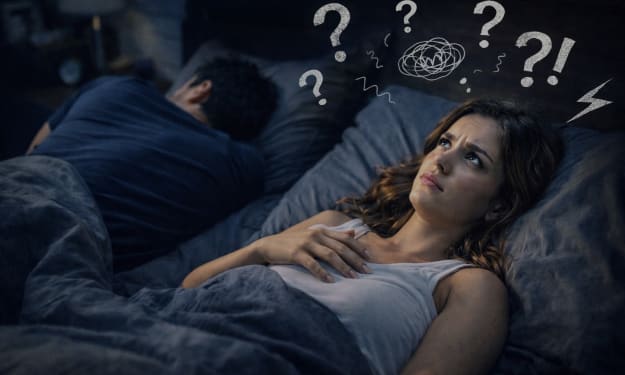
Today, panic disorder affects more and more people and is often closely connected to chronic anxiety. A condition that was described differently in the past is now experienced by millions—often misunderstood both by others and by those who suffer from it.
If you have never experienced a panic attack, you may wonder what is actually happening in the minds of those who do. The truth is simple, yet profound: they respond very intensely to bodily sensations and interpret them as signs of danger.
While one person may feel a rapid heartbeat, dizziness, or tension during a certain situation or event and simply ignore it, during a panic attack the brain interprets these sensations as an alarm and amplifies them many times over.
This experience can be compared, for example, to a situation where you are a child with strict parents and you know you have done something for which you will be seriously scolded. A strong sense of fear and anxiety appears, accompanied by physical symptoms such as a racing heart, shortness of breath, trembling, and tension.
The difference lies in how the brain interprets these sensations. In that situation, the brain is focused on an external event and therefore understands the physical reactions as natural and non-threatening, even though the bodily sensations themselves are almost identical.
During a panic attack, however, the focus is entirely on the symptoms. They are interpreted as dangerous, and the experience feels as if the body is failing or betraying you. This intense internal focus on bodily sensations is the core problem that fuels panic.
After the first panic attack, many people do not return to life as usual. A new fear appears—the fear of the next panic attack. Gradually, life becomes lived in anticipation. The world begins to feel dangerous, and the body itself becomes a source of threat.
This is how chronic fear develops. People start avoiding social events, walks, and family gatherings. They remain only where they feel “safe”—alone or with close people, where they do not fear losing control or being judged.
And here comes the most important question:
Is a panic attack a coincidence—or a signal?
Is it simply a “malfunction” of the brain, or is it the way our psyche tells us that something in our life is not aligned with who we truly are?
If you suffer from panic attacks, instead of constantly searching for external help, have you ever asked yourself:
“Does what I am doing with my life truly fulfill me?”
If your answer is “yes,” I invite you to reflect once more.
Panic is not the enemy. It is an alarm.
A voice screaming from within: “This is not me. Help.”
The problem is that this voice is rarely heard. Instead, people begin an endless search—doctors, tests, constant analysis, diagnoses—in an attempt to find the “defect” responsible for this painful and limiting condition. Yet somehow, the suffering only deepens.
The following dialogue is between a woman suffering from panic disorder and a wise teacher.
— I am desperate. I have lived with this condition for over fifteen years. I search for every possible solution, but I find no cure. It feels like it keeps getting harder.
— Tell me more about yourself.
— I have everything—a loving husband, a wonderful child, and full support from my parents.
— How do you spend your time?
— I take care of my family. I clean, I cook. I am a housewife.
— When was the last time you thought about yourself?
— …I don’t know. I can’t answer that. With a child, it feels too selfish to think about myself.
— What were your dreams before marriage and children?
— Oh… I was young then. All children dream silly things.
— Why silly?
— Because I dreamed of becoming a model. My favorite was Cindy Crawford. But that’s ridiculous—I’m thirty-four years old now. I don’t stand a chance.
— Here, you place a very strong limitation on yourself.
— Don’t make me laugh. Do you really believe I could become a model now?
— What matters is not what I believe, but what you believe.
This is where Part I of the meeting between the desperate woman and the spiritual teacher ends.
Now I would like to ask you:
Does the teacher sound absurd to you?
If you were in the woman’s place, would you react the same way?
Do you believe she could truly become a model, regardless of her age?
I would love to read your thoughts in the comments.
About the Creator
Keep reading
More stories from Teodora Vale and writers in Humans and other communities.
Five Clear Signs Your Body Is Telling You You’re With the Wrong Man
As souls in human form, we are deeply connected to our bodies. It’s no coincidence that music can give us goosebumps, or that certain thoughts and images can trigger strong physical reactions before our rational mind even has time to respond.
By Teodora Valeabout 10 hours ago in Humans
Subtle Signs Your Body Responds to Emotional Energy.
Emotions influence more than thoughts. They shape how your body reacts in ways you might not notice. Understanding these signals helps you recognize emotional patterns and maintain better mental and physical health.
By Wilson Igbasi5 days ago in Humans



Comments
There are no comments for this story
Be the first to respond and start the conversation.