
WHAT HAPPENS WHEN YOU HOLD YOUR BREATH FOR LONG?
THE SURPRISING PHYSICAL AND MENTAL CONSEQUENCES OF HOLDING YOUR BREATH
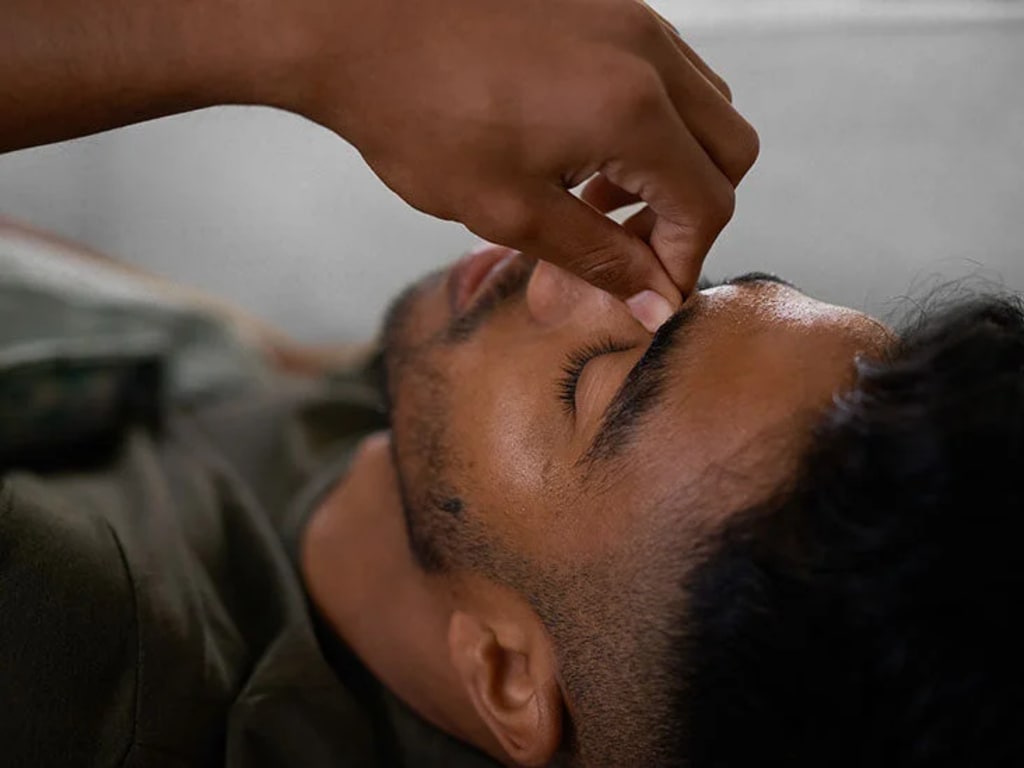
Breath Holding and Blood Chemistry: Understanding the Physiology Behind Your Body's Limits
Breath holding is something most people have tried at least once in their life, but there comes a point when it becomes impossible to hold your breath voluntarily. For some, this might be 30 seconds, while others may last a minute or even longer, depending on a variety of factors. But how does the body know when you’ve reached your limit before it’s too late? It all has to do with what’s happening in our blood.
It’s important to note that this discussion is about intentional breath holding and not choking or airway obstruction, which are medical emergencies. Young infants and toddlers may experience involuntary breath holding spells, but this video is for educational purposes only and not medical advice. If you suspect something is wrong, seek professional medical attention.
The primary reason we breathe is to provide our tissues with oxygen and glucose, which they use to create energy, leaving carbon dioxide and water as waste products. This process, known as cellular respiration, is essential for any organism that breathes oxygen. If our tissues don’t receive enough oxygen, they can start to die off or experience other issues.
There are several reasons why a tissue may not get enough oxygen, such as an iron deficiency causing anemia, which reduces the amount of oxygen that each red blood cell can carry. Hypoxia can also occur if there is not enough blood flow to a tissue, such as when an artery is too narrow and cannot deliver enough blood to the target tissue. High altitude is another example of a situation where oxygen is less easily available, but we will discuss that further later.
In a breath holding situation, it’s easy to see why hypoxia would occur; you’re not breathing, so you’re not taking in any oxygen. However, another gas must also be considered: carbon dioxide. High levels of CO2 in the blood, known as hypercapnia, can cause symptoms like headaches and dizziness, as well as more severe symptoms like paranoia, irregular heartbeats, and seizures. Hypercapnia can occur in other situations, such as being in a submarine or a stuffy room with closed windows.
Since neither hypoxia nor hypercapnia is ideal, our bodies continuously monitor and react to the levels of oxygen and carbon dioxide in our blood. This is where the carotid bodies come in, which are receptors located in the carotid artery in the neck that respond to certain chemicals. Because they monitor our blood’s chemistry, we call them chemoreceptors. Their location in the neck allows them to sample arterial blood before it reaches the brain, which consumes a lot of oxygen.
The carotid bodies use information about carbon dioxide, pH, temperature, and oxygen to provide our bodies with an idea of what’s happening in our blood. Their structure at the tissue level supports this function. The carotid body itself is made of glial cells that provide it with some shape and are connected to neurons that communicate information about the blood to the brain. When the carotid bodies detect hypoxia or hypercapnia, they initiate some response in the cardiorespiratory system.
The carotid bodies work quickly and can detect hypoxia in just a few seconds. When they detect hypoxia, they communicate with parts of your body that slow down your heart rate. The blood vessels of the skin, muscles, and most organs constrict to conserve oxygen-rich blood for the brain.
Several studies have examined how competitive breath holders delay their breakpoint, which is the point at which someone takes a breath after trying to hold it as long as possible. Their carotid bodies still work as expected, and their bodies still know they’re hypoxic, but they can prolong their hold time through brute force.
About the Creator
Keep reading
More stories from Agnes Tusabe and writers in Humans and other communities.
WATER IS LIFE
WATER IS LIFE Water is Life, but now we're turning off the faucet Water is the most precious resource on Earth, and for good reason. It's the foundation of all life as we know it, and without it, we would simply cease to exist. Water is the substance that makes up the majority of our bodies, and it plays a crucial role in virtually every biological process that takes place within us. From regulating our body temperature and maintaining healthy organ function to flushing out toxins and delivering vital nutrients, water is truly the lifeblood of our existence.
By Agnes Tusabe3 years ago in Earth
The CEO of Everything
They say "jack of all trades, master of none," but they forgot to mention the part where the jack of all trades is also the camera woman, the makeup artist, and the person currently yelling at a tangled Wii microphone cable in a her own bathroom while recording herself singing and trying to make it look realistic and professional. (As professional as you can make it with nothing but a cell phone camera and a mic that doesn't work)
By Sara Wilson6 days ago in Humans
How a HIPAA-Compliant Email API Simplifies Secure Patient Communication
Efficient and immediate communication is the pillar of good healthcare. Having appointment reminders and lab notifications, as well as follow-up instructions and billing updates, email is one of the most effective methods of communicating with patients. Nevertheless, the traditional email was not to be used for any sensitive health information. It is when that convenience and compliance gap gets out of hand that most healthcare organizations fail.
By Jane Smithh2 days ago in Humans
Rachel Reviews: The Spiral Archive by Pieter Hendrik
It's difficult for me to know where to start with a review of this book as it was, for me, an entirely unique experience and one that I'll probably never have again. I don't want that to be interpreted as unenjoyable but it has left me scratching my head a little and ruminating on its content, its themes and its characters.
By Rachel Deeming6 days ago in BookClub




Comments
There are no comments for this story
Be the first to respond and start the conversation.