
How a HIPAA-Compliant Email API Simplifies Secure Patient Communication
HIPAA-Compliant Email API Simplifies Secure Patient Communication
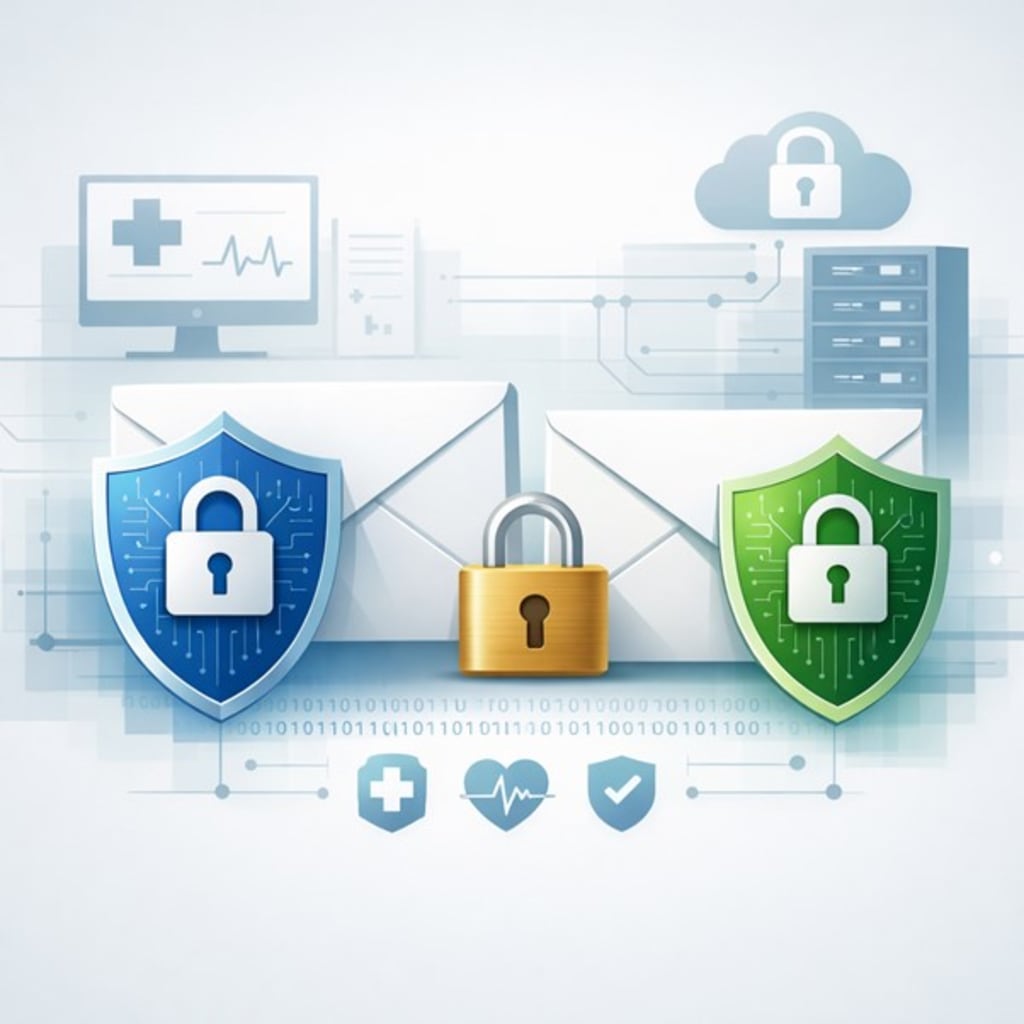
Efficient and immediate communication is the pillar of good healthcare. Having appointment reminders and lab notifications, as well as follow-up instructions and billing updates, email is one of the most effective methods of communicating with patients. Nevertheless, the traditional email was not to be used for any sensitive health information. It is when that convenience and compliance gap gets out of hand that most healthcare organizations fail.
With new and stricter regulation demands and an increase in patient expectations, providers require a method to communicate in digital form that does not add to the risk level. A modern HIPAA-compliant email API offers a practical solution--allowing healthcare organizations to send secure, encrypted messages while maintaining efficiency, scalability, and trust.
Why Patient Messaging Is a Growing Challenge in Healthcare
The past 10 years have seen a dramatic shift in healthcare communication. The speed and convenience of medical providers experienced by patients now have the same expectations as those of banks, retailers, and service platforms. Simultaneously, the healthcare organizations are obliged to abide by the rigorous privacy policies that are aimed at securing patient information.
Email lies between this dilemma. It is common, affordable, and simple to implement into the current work processes. However, basic email systems do not have in-built security measures like encryption, controls, and audit trails- measures that are necessary to safeguard electronic protected health information (ePHI).
In the absence of the appropriate tools, organizations are usually left with no option but to opt for either efficiency or compliance. Delays in communication, patient frustration, and redundant administration may be the results of such a trade-off.
What Is a HIPAA-Compliant Email API?
A HIPAA-compliant email API is a technical interface that allows healthcare applications, portals, or systems to send and manage secure email communications programmatically. Rather than using manual systems of handling data or mailing data to consumers using email services, organizations can install an encrypted system within their software systems.
These APIs are healthcare regulation-oriented. They usually contain encryption, authentication, log, and compliance controls that are aligned with HIPAA requirements. When being applied correctly, they also contribute to making sure that patient data is not compromised during the communication lifecycle- sender to recipient.
How Secure Email APIs Improve Patient Messaging
Streamlining Communication Workflows
Automation is one of the largest benefits of an email API. Within an electronic health record (EHR) or patient management system, it is possible to have appointment confirmations, prescription notices, test result alerts, and post-visit summaries automatically sent based on triggers.
This eliminates the manual follow-ups, telephone, and paper mail, thus allowing the employees to concentrate on more valuable patient care practices. Simultaneously, the patient gets the information quicker and in a familiar format.
Enhancing Data Security and Privacy
The issue of security in healthcare is not optional, but it is fundamental. HIPAA-compliant email APIs typically include end-to-end encryption, ensuring that messages cannot be read if intercepted. A lot also have the secure message portal, in which the patients log in before accessing sensitive information.
Other security measures, like role-based access, tokenized links, and message expiration, are also additional security measures that help minimize the risk of unauthorized access. These controls ensure that organizations comply with all the requirements without jeopardizing patient trust.
Reducing the Risk of Human Error
The chances of making errors in the process of manual email are higher, including sending the information to the wrong person or adding sensitive information to the unsecured mail. APIs assist in reducing these risks through standardized templates, checking recipients, and system-wide security policies.
Healthcare organizations can eliminate the guesswork in the process and ensure that there is consistency and accuracy in all the communications with patients.
Key Features of a HIPAA-Compliant Email API
Encryption and Secure Delivery
HIPAA-compliant messaging revolves around encryption. Emails are usually encrypted during transit and when not in use, and this ensures the safety of data between systems and when storing it.
Other APIs also include fallback mechanisms like secure web portals in case the recipients are unable to receive encrypted emails directly. This makes messages readable without jeopardizing security.
Authentication and Access Controls
Powerful authentication plans assist in authenticating the identity of the senders and receivers. There is the addition of more protection with the use of multi-factor authentication, secure tokens, and access expiration policies.
Such controls are particularly important when a message is a clinical message, diagnosis, or billing.
Audit Logs and Monitoring
The HIPAA mandates companies to keep records of the access and activity of ePHI. Email API commonly has extensive logging capabilities that can trace the point at which a message was sent, delivered, opened, or accessed.
These logs can be used to facilitate internal audits, compliance reporting, as well as investigating security incidents in case there is a security concern.
Scalability and Integration
A good email API will be compatible with already existing healthcare systems such as EHRs, patient portals, and practice management software. The API is scalable to increase the number of messages processed by the organization without compromising performance or security as the organization expands.
This creates flexibility that can suit APIs to small clinics, large health care networks, and even to healthcare technology vendors.
Benefits for Healthcare Providers and Organizations
Improved Patient Engagement
Effective and prompt communication enhances patient satisfaction and interest. By giving patients reminders, instructions, and updates in a prompt manner, they tend to make appointments more often, adhere to treatment plans, and be aware of their health.
Secure email API eases consistency in communication without overloading personnel and infrastructure.
Operational Efficiency
The automated messaging eliminates the extra work of the administration and aids in the standardization of the processes in different departments. The reduced number of phone calls and paper communications means cost reduction and quicker response time.
Such efficiencies can, in the long run, be quantifiable in terms of patient experience and organizational performance.
Enforcement of compliance attitude
It is not the question of compliance and penalties, but patients and the loss of trust. It is an active stance toward data protection and regulatory accountability, as it uses tools intended to carry out healthcare communication.
When compliance is incorporated into the communication processes, organizations decrease the risk and, at the same time, streamline the daily activities.
Secure Email API Use Cases
HIPAA-compliant email APIs are versatile and support a wide range of healthcare communication needs, including:
- Confirms and reminders of appointments.
- Notifications and follow-ups of lab results.
- Prescription refill alerts
- Payment reminders and billing statements.
- Dismissal education and post-visit reports.
- Onboarding and education resources for patients.
All of these applications are automation-friendly, secure, and consistent qualities that APIs are well placed to provide.
Best Practices for Implementing a HIPAA-Compliant Email API
Choose the Right Integration Strategy
Organizations need to assess the ability of the API to work with the current systems before implementation. A smooth rollout is imperative in a well-documented system with compatibility and support of the existing workflows.
Train Staff and Set Clear Policies
It is not a matter of technology. The employees are to know how secure messaging functions, how and when they should use it, and what they should send. Understandable policies are used to maintain consistency and compliance within teams.
Monitor and Optimize Over Time
Monitoring after implementation assists in a way of creating improvement opportunities. Examining delivery rates, engagement, and audit logs would enable organizations to optimize messaging strategies and ensure a high level of security.
The Future of Patient Messaging in Healthcare
With the current transformation in healthcare, digital communication will become even more important in patient interactions and care coordination. APIs offer the ability to be flexible to changes in technology, regulation, and patient expectations.
Instead of compliance being seen as a hindrance, secure email APIs can be seen as an enabler, especially by supporting efficient workflows, enhancing patient experiences, and enhancing data protection by healthcare organizations.
Conclusion
In modern healthcare, secure and reliable communication has ceased to be an option. Patients demand timely information, and organizations have to comply with the stringent privacy demands without reducing their operations. A thoughtfully implemented HIPAA-compliant email API bridges that gap by combining automation, security, and compliance into a single, scalable solution.
Healthcare providers can simplify the process of communicating with patients and protect sensitive patient information, which helps them focus on the most important aspects and provide quality care, and establish trust with a patient.
About the Creator
Keep reading
More stories from Jane Smithh and writers in Humans and other communities.
Understanding Hand Flapping in Autism: A Complete Guide for Parents and Caregivers
Have you ever seen a child rapidly move their hands up and down or side to side and think that this might be a symptom of a disorder known as autism spectrum disorder (ASD)? One of the most widely known stimming behaviors among children with autism is this repetitive movement commonly known as hand flapping.
By Jane Smithh3 months ago in Lifehack
Autonomy Is The Real Privilege
Good morning, freedom-seekers! Today we’re gonna be looking at autonomy. A strange word, I know; one many would probably look at blankly and run away from on sight. We’re gonna figure out what it actually means, consider how it’s achieved, and decipher just how deeply most of us are tangled up in dependence without realising it.
By That ‘Freedom’ Guy2 days ago in Humans
The Hidden Valentine part 7
The Body Begins The day after the alarm, the lab felt like a battlefield. People moved faster. The security presence was heavier. The executives were on edge, their eyes constantly scanning, their faces tight with suspicion. The atmosphere was thick with tension, as if everyone could feel the invisible threat hanging over them.
By Ahmed aldeabellaabout 2 hours ago in Humans
Smart phones, Humans and Aliens.
WARNING. I will be tapping into one of your favorite creative tensions: The absurdity of humans worshipping their glowing rectangles as if they were tiny oracles. There’s something deliciously poetic about that contradiction, and it lends itself beautifully to an instructive proviso.
By Novel Allen6 days ago in Poets




Comments
There are no comments for this story
Be the first to respond and start the conversation.