
War on Drugs: Who’s Winning?
A Personal Journey Through Pain, Policy, and the Power of Compassion

I still remember the first time I heard the phrase "War on Drugs." I was ten, sitting cross-legged on our worn living room rug, watching the evening news with my grandfather. The anchor spoke with authority, listing statistics and soundbites, while grainy footage of police raids and flashing sirens filled the screen.
“Drugs are the enemy,” the anchor said. My grandfather nodded solemnly, as if the words confirmed something he already knew.
Back then, I believed it too.
But life has a strange way of testing the stories we grow up with. Sometimes, it even asks us to rewrite them.
The Other Side of the Story
I never thought drugs would touch my life so closely. I grew up in a quiet town where most people knew each other's names, where front doors were left unlocked, and everyone smiled at the grocery store. It didn’t feel like a battlefield in any kind of war.
Then my older brother, Lucas, changed everything.
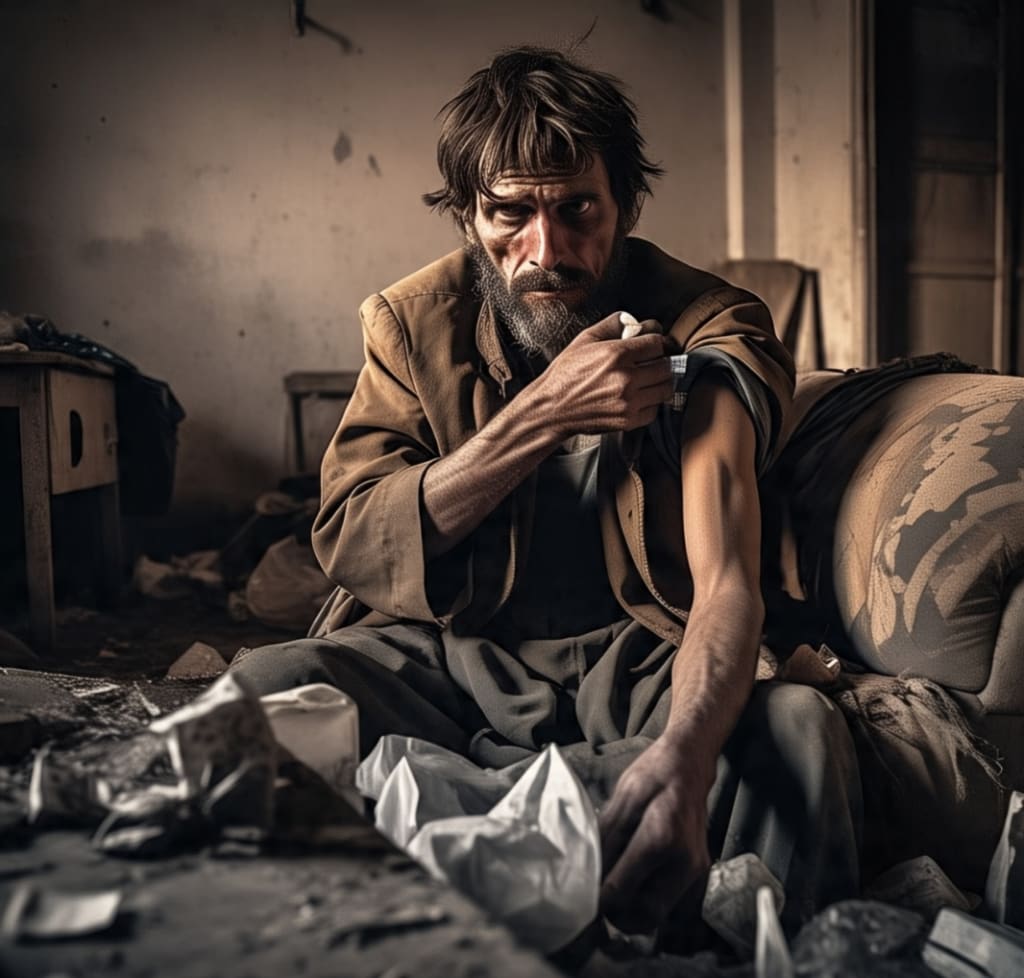
Lucas wasn’t a criminal. He wasn’t lazy or dangerous. He was funny, smart, and the kind of guy who’d give his jacket to a stranger in the rain. But after a back injury at work, a doctor handed him a bottle of pills. At first, they helped him sleep. Then, they helped him feel normal. And slowly, they helped him forget everything else.
We didn’t know he was addicted until it was too late.
By the time we realized what was happening, Lucas had already lost his job, his apartment, and nearly his will to live. My parents were heartbroken. We were angry. Confused. And above all, we felt helpless.
I still remember the day the police came. No one tells you how quiet a house can get when the sirens fade away. The war on drugs had finally reached our doorstep—not with solutions, but with handcuffs.
The War That Misses the Point
In school, I was taught that the war on drugs was about justice. About keeping people safe. But standing in the courtroom next to Lucas, watching him being sentenced for possession rather than offered treatment, I began to question everything I thought I knew.
Was this war really about helping people? Or had it become a machine that punished pain instead of healing it?
Lucas needed help, not a jail cell. He needed someone to see his humanity, to understand that his story was one of trauma and desperation—not criminal intent.
And he wasn’t alone.
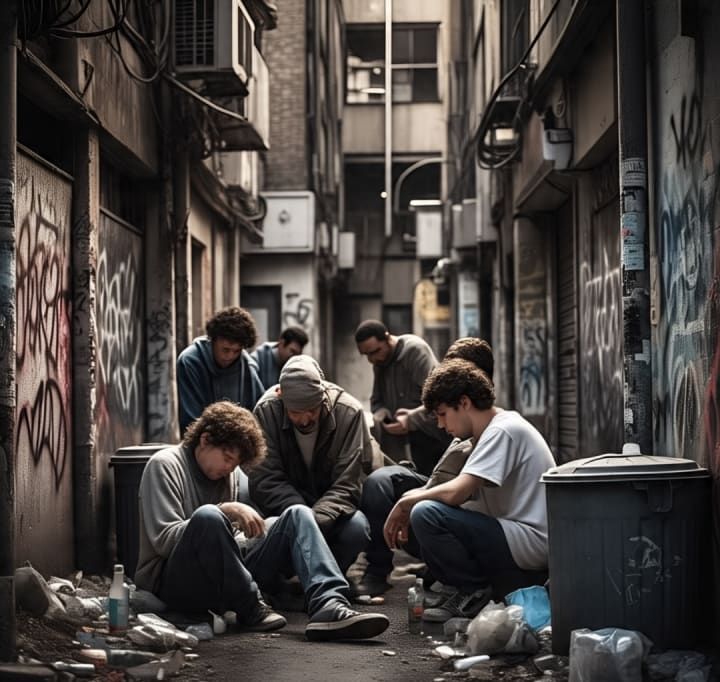
I met others during support group meetings. A mother whose teenage daughter had overdosed in a library bathroom. A veteran who couldn’t sleep without pills after what he saw overseas. A retired nurse who became addicted after a routine surgery.
Different faces. Different stories. But all casualties in a war that never asked why people turned to drugs in the first place.
Shifting the Battle Lines
Today, some cities and countries are trying new approaches. They’re investing in mental health services, harm reduction programs, and decriminalization efforts. They’re offering clean needles, safe consumption sites, and most importantly—compassion.
In Portugal, where drug use has been treated as a public health issue instead of a criminal one since 2001, overdose deaths and HIV infections have dropped dramatically. In Vancouver, Canada, peer-led recovery centers are showing promising results in reconnecting people with community and dignity.
What these efforts understand is simple but profound: you can’t punish someone into healing.
Lucas’s New Chapter
Lucas eventually got clean—but not because of the system. It happened in spite of it.
After serving his sentence, he enrolled in a local rehab program through a nonprofit. It wasn’t easy. There were relapses. There were nights he nearly gave up. But there was also community, therapy, and people who saw him as a human being, not a statistic.
Today, Lucas works as a peer support counselor. He speaks at schools, sharing his story with young people in hopes of preventing another life from slipping through the cracks. He tells them that addiction doesn’t look like the scary images on TV. Sometimes, it looks like your brother, your neighbor, or your best friend.
Sometimes, it looks like you.
So, Who’s Really Winning?
If you measure the war on drugs by how many people are incarcerated, how many communities are broken, or how many families grieve in silence—then maybe the war has been “won.” But who’s celebrating?
Certainly not the millions of lives it has cost. Not the parents who bury children, the children who grow up in foster care, or the recovering addicts who carry the weight of stigma long after they’ve turned their lives around.
But if you look at the small victories—like Lucas finding purpose, or communities fighting for humane policies—then maybe there’s still hope.
Maybe the war on drugs doesn’t need a winner. Maybe it needs a rewrite.
A shift from punishment to prevention. From stigma to support. From judgment to empathy.
The Moral: Fight With Compassion, Not Condemnation
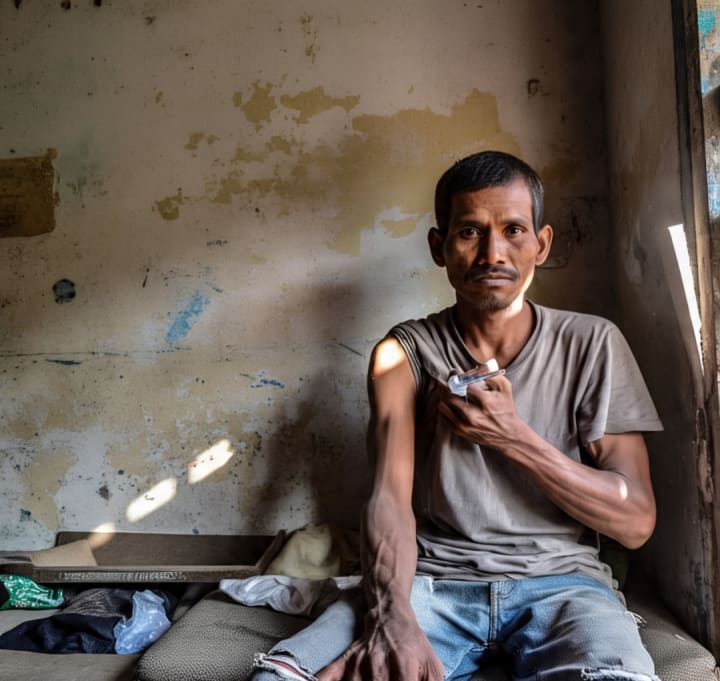
The greatest lesson I’ve learned through Lucas, and through countless others, is that the enemy isn’t just the drug. It’s the pain beneath it. The isolation. The silence. The lack of resources, and the fear of being seen as broken.
If we want to "win" anything, let it be this:
That we become a society that chooses compassion over condemnation. That we stop waging war on people, and start waging peace on pain.
Because healing isn’t a battlefield. It’s a bridge—and every one of us has a role in building it.
About the Creator
From Dust to Stars
From struggle to starlight — I write for the soul.
Through words, I trace the quiet power of growth, healing, and becoming.
Here you'll find reflections that rise from the dust — raw, honest, and full of light.
Keep reading
More stories from From Dust to Stars and writers in Humans and other communities.
Invisible No More: Honoring Widows on International Widows Day
On a dusty morning in a small village in northern India, Mary rose before the sun. She tied her grey shawl tightly around her thin frame, walked to the well, and returned with water to wash the clothes she took in from wealthier neighbors. It was her only income. Her husband, Robert, had died six years ago in a road accident. Since then, she’d worn only white, eaten last at every gathering, and lived on the edge of her community — not by choice, but by tradition.
By From Dust to Stars9 months ago in Humans
Thief In The Night
To the thief in the night that took and replicated what once was mine: Honestly, I feel kind of bad for you. It’s funny, because we hardly know each other. I only know of you through the magazines you’ve written and the broadcasts you have televised in the past — as well as through the public mentions of you from your show business connections there.
By Snarky Lisa8 days ago in Humans
Empathy, Imagination, and the Soul’s Curriculum:
There is a long‑standing belief in spiritual traditions that the soul comes into this life with lessons to learn. Some call it a curriculum, some call it growth, some call it refinement, or the soul contract and some simply call it becoming more human. The idea is not that suffering is required, but that understanding is. Compassion, humility, forgiveness, courage, and clarity are not abstract virtues; they are lived experiences. Yet not every soul needs to endure every possible hardship firsthand. There are other routes to understanding, and one of the most powerful is empathy.
By Julie O'Hara - Author, Poet and Spiritual Warrior6 days ago in Humans


Comments
There are no comments for this story
Be the first to respond and start the conversation.