
Virtual Reality Headset: Unlocking a New Dimension of Immersive Experiences
Virtual reality (VR) has become increasingly popular in recent years, and virtual reality headsets are a crucial component of experiencing VR. In this article, we'll explore what virtual reality headsets are, how they work, and what benefits they offer.

Introduction
In recent years, technology has taken us on a thrilling journey into the realm of virtual reality (VR). A virtual reality headset is a device that transports users into a simulated world, providing a truly immersive experience. This article delves into the fascinating world of virtual reality headsets, exploring their features, applications, and the future potential they hold.
What Is a Virtual Reality Headset?
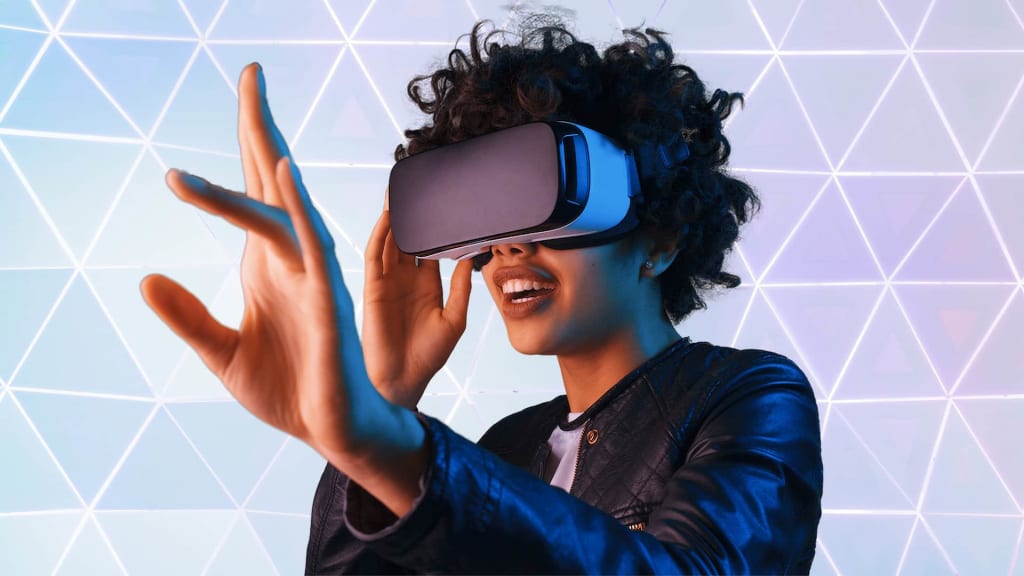
A virtual reality headset is a device that allows users to experience a simulated environment or world. It typically consists of a headset that fits over the user's eyes, with a screen or screens inside that display the virtual environment. Some VR headsets also include built-in headphones or speakers for audio.
How Does a Virtual Reality Headset Work?
Virtual reality headsets work by displaying two different images, one for each eye, to create a 3D effect. The headset is connected to a computer or gaming console that generates the images and sends them to the headset. The headset tracks the user's head movements, allowing them to look around and interact with the virtual environment as if they were actually there.
Virtual Reality Headset Market Size
The global virtual reality headset market size reached US$ 9.4 Billion in 2022. Looking forward, IMARC Group expects the market to reach US$ 33.1 Billion by 2028, exhibiting a growth rate (CAGR) of 23.71% during 2023-2028.
Virtual Reality Headset Market Trends
The rising penetration of smartphones and the emerging trend of virtual reality games represent one of the key factors positively influencing the market. Moreover, the integration of advanced technologies, such as artificial intelligence (AI) and the internet of things (IoT), to increase the efficacy of the headset is strengthening the market growth. For instance, AI algorithms assist in the implementation of autonomic and evolutionary communication in mobile, bioinspired and adaptive gaming, multiuser and distributed systems, context-aware networking, data aggregation and fusion, and energy-efficient monitoring in mobile VR technology. Additionally, the easy availability of VR headsets across various online and offline distribution channels, coupled with free doorstep delivery and secured payment gateways, is propelling the market growth.
Apart from this, the improving standards of living and inflating disposable income levels are catalyzing the demand for VR headsets. Besides this, the escalating demand for VR headsets in the healthcare sector to offer professionals a safe ground to practice scenarios associated with anxiety disorders is providing a thrust to the market growth. Additionally, the increasing application of VR in designing and manufacturing industries as an alternative to physical prototypes is positively influencing the market. For instance, designers interact with a real-time representation of the elements that are hard to reach and modify the original computer-aided design (CAD) drawings. In addition, the rising popularity of VR headsets among youngsters as assistance for learning is strengthening the growth of the market. Furthermore, increasing investments in research and development (R&D) to introduce more advanced and cost-effective product variants are driving the market.
The Rise of Standalone VR Headsets
One of the most significant trends in VR headsets is the rise of standalone devices. These headsets do not require a separate computer or gaming console to operate, making them more accessible to a broader audience. Standalone headsets like the Oculus Quest 2 and the HTC Vive Focus 3 offer high-quality VR experiences without the need for additional hardware. These devices are perfect for gaming, but they are also being used for other applications like training simulations and virtual meetings.
Improved Resolution and Refresh Rates
Another trend in VR headsets is the improvement of resolution and refresh rates. Higher resolution displays provide sharper images, while faster refresh rates reduce motion sickness and provide a smoother experience. The latest VR headsets boast resolutions of up to 4K per eye and refresh rates of 120Hz. These improvements make VR experiences more immersive and enjoyable.
Wireless Connectivity
Wireless connectivity is another trend in VR headsets that is gaining popularity. Wireless headsets like the Oculus Quest 2 use Wi-Fi to connect to the internet and stream content. This means that users can enjoy VR experiences without being tethered to a computer or gaming console. Wireless connectivity also makes it easier to share VR experiences with others, as multiple headsets can connect to the same Wi-Fi network.
Eye-Tracking and Hand-Tracking Technology
Eye-tracking and hand-tracking technology are also becoming more prevalent in VR headsets. Eye-tracking allows the headset to detect where the user is looking, which can be used to improve the accuracy of the VR experience. Hand-tracking allows users to interact with virtual objects using their hands, making VR experiences more immersive and natural. The latest VR headsets like the Varjo XR-3 and the Pico Neo 3 both feature eye-tracking and hand-tracking technology.
Conclusion
Virtual reality headsets are evolving at a rapid pace, and these trends are just the beginning. As technology continues to advance, we can expect even more exciting developments in the world of VR. Whether it's for gaming, training, or other applications, VR headsets offer a unique and immersive experience that is sure to captivate audiences for years to come.
About the Creator
Abhay Rajput
I am working in market research company that provides market and business research intelligence across the globe.
Keep reading
More stories from Abhay Rajput and writers in Humans and other communities.
Solid Oxide Fuel Cell: Powering the Future with Clean Energy
Introduction In our quest for sustainable energy solutions, solid oxide fuel cells (SOFCs) have emerged as a promising technology. These innovative devices offer a clean and efficient way to convert chemical energy into electrical energy. This article explores the principles behind solid oxide fuel cells, their advantages, applications, and the challenges they face in becoming a widespread energy solution.
By Abhay Rajput3 years ago in Humans
Real-World Strategies For Singles To Overcome Fear Of Rejection
The fear of being rejected is an instinct of man, based on social and evolutionary processes. Psychologist Alfred Adler recommended that childhood experiences of rejection or exclusion may lead to increased sensitivity to rejection in adulthood. In the singles, this fear can be in the form of avoidance of dating, obsessive thinking of the interactions or unwillingness to demonstrate genuine emotions. Knowing that fear is a protective process- not an indicator of individual incompetence- makes people come to dating with a more objective view. The awareness is the initial step to the alleviation of the emotional weight of the possible rejection.
By Mark Hipster6 days ago in Humans




Comments
There are no comments for this story
Be the first to respond and start the conversation.