
Unveiling the Invisible: The Extraordinary Vision of Some Remarkable Individuals
Exploring the Hidden Spectrum: The Enigmatic Vision of Extraordinary Individuals

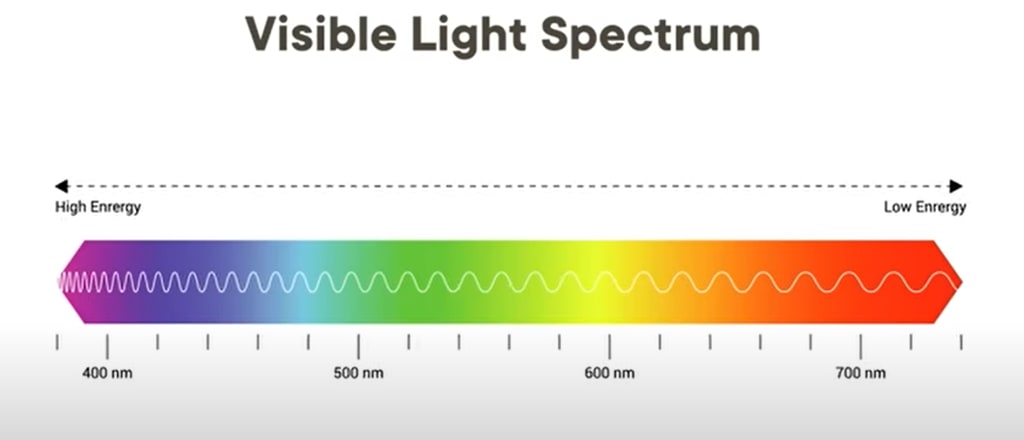
Believe it or not, there are people in the world who can perceive what is invisible to most of us. While it is not a sci-fi superpower like X-ray vision, the concept is not as far-fetched as it may seem. Our eyes, marvelous organs that they are, can see millions of colors from violet to red. However, not all light falls within this range, rendering certain wavelengths imperceptible to the average person. Yet, due to unique genes or specific conditions, some individuals can see beyond these limitations, unlocking a world of hidden colors and spectrums.
Before diving into the realm of the invisible, let us briefly understand how our vision works. When light reflects off an object and enters our eyes, it first passes through the cornea, a dome-shaped outer structure that bends light towards the eye's center. The light then traverses the pupil, which adjusts its size to control the amount of light entering the eye. Next, the light passes through the lens, an inner eye component that further focuses the incoming rays. Finally, the light reaches the retina at the back of the eye, a layer of tissue equipped with photoreceptor cells. These specialized cells can only respond to specific wavelengths of light, generally falling between 380 to 700 nanometers for humans. They convert the energy from the light into electrical signals, which then travel through the optic nerve to the brain, where they are translated into the images we perceive.
While any anomaly or variation in these structures can hinder vision, some peculiarities can reveal the invisible. Beyond the visible spectrum of light lies a realm of ultraviolet, X-rays, and gamma radiation. Although it might be thrilling to possess X-ray vision or see ultraviolet light like bees do, it is fortunate that our eyes have built-in defenses. The lens contains yellowish pigments that absorb harmful UV rays, preventing them from reaching deep into our eyeballs. However, individuals with a condition called aphakia lack a lens in one or both eyes, allowing UV light to directly reach their retinas. These people report seeing UV light as whitish-blue or violet. Notably, the famous artist Claude Monet had one eye's lens removed due to cataracts, leading him to complain about seeing everything with a bluish tint, likely due to UV light interference. While intriguing, aphakia's downside is blurry vision since the lens helps focus light onto the retina.
Infrared light, with wavelengths longer than those of red light, usually falls outside the human eye's sensitivity range. However, throughout the 20th century, certain scientists claimed to see some infrared light. In 2014, a group of researchers investigating this phenomenon discovered that when they shone infrared laser light into volunteers' eyes, the participants could detect visible light signals. Strangely, the color they perceived corresponded to a wave frequency approximately double that of the laser. This led to the theory that when the laser pulsed quickly, the photoreceptors processed two pulses of infrared light simultaneously, effectively tricking the receptor into responding to it.
Moreover, while most humans have three types of cones in their eyes, each sensitive to a different wavelength (blue, green, or red), some rare individuals possess a fourth type of cone due to a mutation on one of their X chromosomes. This genetic quirk creates a new cone containing a pigment molecule sensitive to a different color of light. Known as tetrachromats, these individuals can perceive a vast array of colors and shades that are indistinguishable to most people. Instead of seeing colors invisible to us, tetrachromats excel at distinguishing between hues that appear identical to others. Their exceptional vision makes them adept at differentiating between subtle color variations, making mundane tasks like matching socks a breeze.
In conclusion, the way we perceive the world around us is not an objective representation but a unique window shaped by the physics and biology of our eyes. While most of us are limited to the visible spectrum, these extraordinary individuals can see beyond the ordinary, revealing a stunning array of colors and light that remain concealed to the rest of us. It is a fascinating reminder that our perception of reality is subjective and ever-changing, influenced by the quirks and wonders of the human experience.
About the Creator
SAHIL
"Passionate article writer with a flair for captivating storytelling. Specializes in diverse topics, from technology to travel. Let's connect and bring your ideas to life!"
Autonomy Is The Real Privilege
Good morning, freedom-seekers! Today we’re gonna be looking at autonomy. A strange word, I know; one many would probably look at blankly and run away from on sight. We’re gonna figure out what it actually means, consider how it’s achieved, and decipher just how deeply most of us are tangled up in dependence without realising it.
By That ‘Freedom’ Guyabout 9 hours ago in Humans
How to Check Loyalty in Relationship Before You Get Hurt
Loyalty does not imply perfection. It is all about consistency, honesty, and emotional safety. When loyalty is there, trust increases. When it is missing, uncertainty gradually erodes the partnership. Many people disregard early warning signs, believing that things will improve. We feel it is better to observe, ponder, and comprehend loyalty before emotional damage occurs.
By Bloom Boldly7 days ago in Humans
Smart phones, Humans and Aliens.
WARNING. I will be tapping into one of your favorite creative tensions: The absurdity of humans worshipping their glowing rectangles as if they were tiny oracles. There’s something deliciously poetic about that contradiction, and it lends itself beautifully to an instructive proviso.
By Novel Allen4 days ago in Poets




Comments
There are no comments for this story
Be the first to respond and start the conversation.