
The Southern Hemisphere is Colder, Stormier, and... Cleaner?
Exploring the Climatic Contrasts Between Earth's Hemispheres


Earth's Hemisphere Differences: A Closer Look at Climate Disparities
Our planet Earth, an approximately spherical object spinning through space, presents itself as a unified entity from afar. Yet, upon closer inspection, significant disparities emerge between the two halves that divide it—the northern hemisphere and the southern hemisphere. These differences play a vital role in shaping the climate experienced by the inhabitants on both sides. Exploring the contrasting temperatures, storm activity, and air quality sheds light on the intricate dynamics that define our planet's climate.
Temperature Divide: The Northern Warmth and Southern Chill
One of the most striking differences between the two hemispheres lies in their temperatures. The northern hemisphere consistently experiences higher average temperatures, up to 2 degrees Celsius warmer than its southern counterpart. This disparity has perplexed scientists for centuries, and numerous theories have attempted to explain it.
One prominent hypothesis attributes this difference to meridional heat transport—the process of heat redistribution on Earth. While solar energy hits the equator more intensely due to its proximity to the sun's rays, this excess heat must disperse to maintain equilibrium across the planet. Atmospheric and oceanic currents work together to transport this heat away from the equator, towards the poles. The Atlantic meridional overturning circulation, in particular, plays a pivotal role in pulling warm water northwards, contributing to the temperature disparity.
Climate Crisis and Its Impact
Though the climate crisis is not the root cause of the temperature divide, it exacerbates its effects. Accelerated melting of Arctic sea ice, a consequence of global warming, intensifies the feedback loop in the northern hemisphere. As the ice cover diminishes, less sunlight is reflected back into space, causing further warming. In contrast, the southern hemisphere experiences increased storminess due to climate change, leading to approximately 24 percent more storm activity compared to the north.
Researchers have discovered that mountains further influence storm patterns. These towering landforms disrupt wind patterns in the northern hemisphere, breaking up storms and reducing their intensity. Consequently, the northern hemisphere, with its greater landmass and mountainous terrain, experiences milder storm activity.
The Enigma of Air Quality
Air quality is another aspect where the hemispheres display notable differences. The southern hemisphere enjoys cleaner air, with research indicating that the northern hemisphere's stratosphere contains 4 to 100 times more aerosol pollutants. The reasons behind this disparity are not immediately obvious but can be linked to multiple factors.
Population density and air travel contribute to higher pollution levels in the north. The majority of the human population resides in the northern hemisphere, leading to increased industrial activity, transportation emissions, and other human-induced pollutants. Additionally, the stratosphere in the northern hemisphere is more polluted than its southern counterpart, where less human activity takes place.
However, a significant finding puzzled researchers: pollution does not seem to cross over from the northern to the southern hemisphere. Initially, scientists believed the inter-tropical convergence zone (ITCZ)—a belt of low pressure roughly circling the Earth's equator—to be the boundary preventing pollutant migration. But upon further investigation, they discovered that the southern hemisphere maintains cleaner air even when the ITCZ shifts south.
In some regions, a distinct pollution boundary approximately 50 kilometers wide was identified. This boundary was not related to the ITCZ but rather resulted from the interaction of strong winds and monsoons. Despite these discoveries, the precise mechanisms responsible for the pollution divide remain subjects of ongoing research.
Conclusion: The Complex Interplay of Earth's Hemispheres
Our planet's hemispheres reveal an intricate interplay of factors that influence their respective climates. From the temperature disparities driven by meridional heat transport to the effects of climate change and storm activity, each aspect plays a crucial role in shaping the environment experienced by millions of people. Furthermore, the distinct air quality divide highlights the complexities of atmospheric dynamics and the need for further exploration.
As the climate crisis continues to unfold, comprehending these hemispheric differences becomes ever more critical. Collaborative efforts and global cooperation are essential to tackle the challenges posed by climate change. With a better understanding of the unique characteristics and vulnerabilities of each hemisphere, we can pave the way for a sustainable future for all Earth's inhabitants. Only by working together can we ensure the preservation of our planet's delicate balance and safeguard the well-being of current and future generations.
About the Creator
SAHIL
"Passionate article writer with a flair for captivating storytelling. Specializes in diverse topics, from technology to travel. Let's connect and bring your ideas to life!"
O-Ring Seals Market Size and Forecast 2025–2033
Introduction In an era defined by advanced engineering, sustainability goals, and performance efficiency, the smallest components often play the biggest roles. Among these unsung heroes of modern manufacturing are O-ring seals—simple, circular devices that quietly prevent leaks, ensure safety, and keep critical systems functioning under extreme conditions.
By Aaina Oberoi7 days ago in Earth
Tidal Barrier to Be 10m Shorter to Save Money
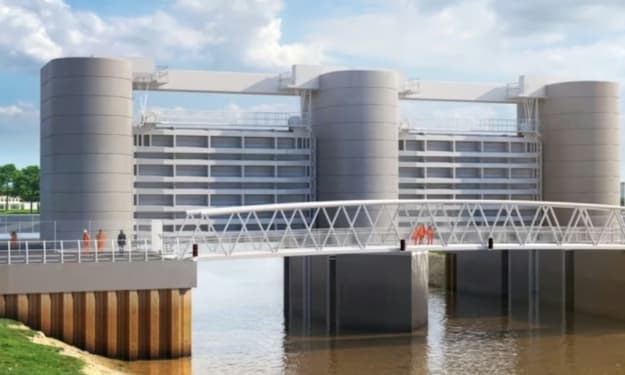
Rethinking Flood Protection in Somerset If you live near the coast, the threat of flooding isn’t just news — it’s a reality you can feel. That’s the situation in Bridgwater, Somerset, a historic market town near the Bristol Channel. For years, plans have been underway to build a tidal barrier to protect homes, businesses, and livelihoods from storm surges. Now, new updates reveal the barrier will be about 10 metres shorter than originally planned, a decision aimed at reducing costs while still keeping the town safe. This announcement has sparked conversations about engineering, budgets, and how communities adapt to climate challenges. Why the Barrier Is Being Shortened The Bridgwater Tidal Barrier was initially designed to be a high-profile flood defence, protecting thousands of properties from tidal surges that travel up the River Parrett. But after a recent design efficiency review, engineers concluded the barrier could be slightly shorter without compromising safety. Reducing the barrier by 10 metres lowers construction complexity, saves money, and reduces long-term maintenance costs. The Environment Agency and local authorities say this approach allows the project to move forward on time and on budget, ensuring the community gets protection sooner rather than later. The Cost Factor Public infrastructure projects like this don’t happen in a vacuum. Rising inflation, global supply chain disruptions, and labor shortages have increased costs for large-scale projects. Officials argue that the revised design is a responsible compromise: it balances cost savings with safety. Somerset Council leaders have welcomed the decision, noting that managing costs wisely helps the project reach completion without compromising protection for residents. Community Voices and Concerns Local engagement has been a key part of the project. Residents have attended consultations and drop-in sessions to see the updated plans and ask questions. Some community members appreciate the cost savings and faster timeline. Others worry whether a shorter barrier will be as effective against future extreme weather events. Questions include: Will the barrier remain strong against increasingly unpredictable storms? Does reducing the height limit future adaptability as climate impacts grow? What effect might it have on local ecosystems and fish habitats? These are valid concerns, reflecting how communities are increasingly involved in climate adaptation decisions. Engineering Flood Defence Today Tidal barriers are not new — Britain has relied on them for decades. London’s Thames Barrier, for instance, has protected the capital since the 1980s. But today, rising sea levels and more frequent storms mean engineers must balance safety, cost, and environmental impact carefully. In Bridgwater, officials say the revised barrier will still protect against 1-in-200-year tidal events. It’s designed to provide robust safety now while remaining adaptable for the future. The Human Side of Flood Protection It’s easy to get lost in numbers and metres, but behind the design decisions are real people. Residents depend on reliable flood protection to feel secure in their homes and communities. For families, businesses, and local services, knowing a barrier is being built — even a slightly shorter one — provides peace of mind. It’s not just a structure; it’s a symbol of resilience and preparedness. Next Steps for the Barrier The Bridgwater project is still under construction, with the revised design undergoing final refinements. Once completed, the tidal barrier will provide long-term protection for thousands of properties and critical infrastructure in Somerset. Officials emphasize that the shortened design does not compromise safety. If anything, staying on budget ensures the project is completed faster, meaning protection arrives sooner for the community. A Lesson in Climate Adaptation The story of the Bridgwater Tidal Barrier is more than engineering or economics. It’s about how communities respond to climate risks and how governments make tough choices balancing safety, cost, and sustainability. The barrier being 10 metres shorter may seem small on paper, but it reflects a larger truth: infrastructure planning today is as much about community engagement, adaptability, and long-term resilience as it is about concrete and steel. By keeping people involved and making informed, cost-effective decisions, Somerset shows how towns can adapt to climate change without sacrificing safety. Conclusion The Bridgwater Tidal Barrier demonstrates that infrastructure projects in the 21st century must adapt to multiple pressures: climate change, financial constraints, and community expectations. While the barrier is slightly shorter than originally planned, it remains a critical line of defence against flooding. More importantly, it highlights the importance of public involvement, transparency, and strategic planning in building a resilient community. For Bridgwater residents, the message is clear: the tide may rise, storms may come, but with smart planning and community engagement, the town will be ready
By Muhammad Hassan4 days ago in Earth



Comments
There are no comments for this story
Be the first to respond and start the conversation.