
Unveiling Emotional Intelligence: A Guide to Mastering Self-Awareness and Social Connection
👉🏻 buy all the products on my shop : https://linktr.ee/aspirexacademy

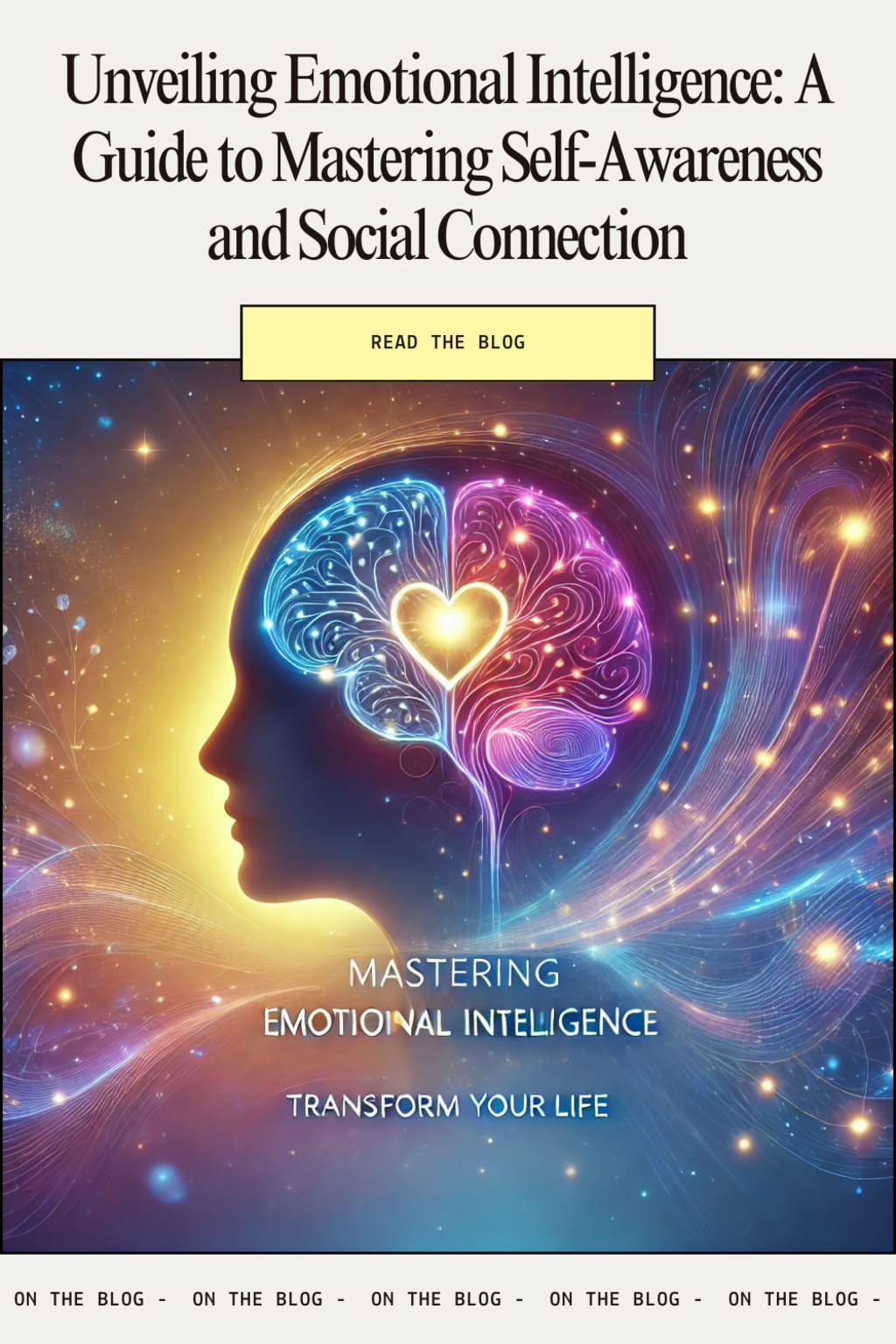
⋆౨ৎ˚⟡˖ ࣪try the mindfulness journal! it helps a lot by putting this information into practise <33
Understanding and controlling our emotions has never been more crucial in the fast-paced world of today, where stress, rivalry, and outside influences are commonplace. A key component of how we navigate our inner world and engage with others is emotional intelligence (EI), also known as emotional quotient (EQ). However, what is emotional intelligence exactly, and why is it so important for both personal and professional success?
Fundamentally, emotional intelligence is the ability to identify, comprehend, control, and affect our own emotions as well as those of others. Emotional intelligence is concerned with how well we manage our emotions and relationships, as opposed to IQ (intelligence quotient), which assesses cognitive skills like logical reasoning and problem-solving. It involves comprehending not just our emotions but also the reasons behind them, and then applying this knowledge to create more solid, sympathetic bonds.
Emotional Intelligence's Five Essential Elements
Emotional intelligence is a complex skill set rather than a single concept. One of the most well-known psychologists in the field, Daniel Goleman, identified five essential elements of emotional intelligence that help us grow in our social and emotional self-awareness.
1 --> Self-Awareness: Being Aware of Your Own Feelings
Emotional intelligence is based on self-awareness. It's the capacity to identify and comprehend your feelings and the ways in which they impact your ideas, actions, and general mental health. High self-awareness individuals are sensitive to their emotions and can recognize the emotional cues that influence their responses.
When someone is self-aware, they can take a moment to think about their emotional reaction before acting. In an argument, for example, they might identify their frustration, acknowledge it, and then respond more thoughtfully rather than reacting rashly.
How to Become More Self-Aware:
Mindfulness Practices: To stay present and consider your emotional state, practice mindfulness through journaling, breathing techniques, or meditation.
Check-ins on emotions: Ask yourself how you're feeling and why on a regular basis. You can track your emotional changes by doing this at any time of day.
Get Input: Consult with close friends or relatives about your feelings. External viewpoints can occasionally provide insights that you might not otherwise notice.
2 --> Self-Control: Effectively Handling Your Emotions
The capacity to regulate and control your emotions, particularly under trying or stressful circumstances, is known as self-regulation. Understanding how to express emotions in a positive and healthy way is more important than repressing or ignoring them.
People with strong self-regulation skills typically remain composed under duress, deliberate before acting, and refrain from making snap judgments. A person with high self-regulation, for instance, might not get angry on the spot if someone cuts you off in traffic. Alternatively, they may inhale deeply, maintain composure, and allow the circumstance to pass without allowing it to impact their emotional state.
Ways to Enhance Self-Control:
Pause Before Reacting: When you're feeling anxious or angry, take a few deep breaths and give your feelings time to calm down before reacting.
Create Healthful Outlets: Take part in creative hobbies, yoga, or physical activities like exercise to positively release pent-up tension and annoyance.
Practice Gratitude: You can change your perspective and control your negative emotions by concentrating on the good things in life.
3 --> Motivation: Using Feelings to Reach Objectives
In the context of emotional intelligence, motivation is the capacity to use emotional energy to accomplish both immediate and long-term objectives. An internal sense of purpose propels people with high emotional intelligence, and they can remain resilient and focused in the face of adversity.
Take someone who is working toward a long-term professional objective, for instance. Their enthusiasm for the work and their conviction in the significance of their mission drive them despite obstacles. Even when external rewards (like recognition or financial gain) are not immediately apparent, their intrinsic motivation keeps them going and helps them remain persistent.
Ways to Boost Motivation:
Establish Clear Goals: To help you stay focused on your objectives, clearly define your professional and personal goals.
Visualize Success: Picture the joy and sense of achievement you will experience after achieving your objectives. During difficult times, this can help increase motivation.
Discover Your Why: Make an emotional connection to your objectives. Recognize their significance to you in addition to the benefits they will provide.
4 --> Empathy: Perceiving Other People's Feelings
The capacity to comprehend and experience another person's emotions is known as empathy. Empathy is more than just feeling sorry for someone; it enables you to empathize with them on a deeper level by placing yourself in their position. Empathy improves bonds and fosters trust in interpersonal relationships.
A person with a high level of empathy is able to identify not only what other people are experiencing, but also the reasons behind those feelings. An empathetic leader might, for example, recognize when a team member is experiencing stress at work and provide support or modify their workload.
Ways to Increase Empathy:
Actively Listen: Take note of both spoken and unspoken clues. Listen to comprehend rather than merely react.
Develop your ability to see things from other people's perspectives by attempting to picture their feelings in various circumstances. You can gain a deeper comprehension of their feelings by doing this.
Demonstrate empathy by acknowledging the feelings of others and providing assistance, motivation, or just a sympathetic ear when required.
5 --> Social Skills: Establishing Positive Connections
Social skills, which include the capacity to successfully navigate social complexities and manage relationships, make up the last element of emotional intelligence. Strong social skills enable people to collaborate efficiently, inspire others, resolve conflicts, and communicate clearly.
In both personal and professional contexts, having strong social skills is crucial. They enable us to establish and preserve deep connections, foster a productive workplace, and guide others with compassion and understanding.
Ways to Develop Your Social Skills:
Practice Clear Communication: Pay attention to your body language, tone, and word choice. Make sure you are listening and speaking clearly.
Handle Conflict Gracefully: Develop the ability to resolve conflicts amicably and politely, putting more emphasis on finding answers than assigning blame.
Establish rapport by spending time getting to know people personally. Stronger bonds and increased trust may result from this.
Emotional Intelligence's Significance in Both Personal and Professional Life
Almost every element of life is impacted by emotional intelligence, including our relationships and productivity at work. People with high emotional intelligence are more likely to succeed in both personal and professional contexts, according to research. Here's how:
(1) In interpersonal relationships, emotional intelligence enables us to handle disagreements amicably, communicate more effectively, and comprehend the needs of others. Emotional intelligence (EI) enables us to build stronger, more meaningful relationships with our loved ones, friends, and romantic partners. Being able to relate to a friend who is going through a difficult moment, for instance, builds trust and support that improves the friendship.
(2) In the Workplace: How well you collaborate with coworkers, manage stress, and handle challenging situations in professional settings can all be influenced by your emotional intelligence. Because they can inspire their teams, settle disputes, and foster a positive, emotionally supportive workplace, leaders with high EI are frequently more successful. Workers are also more adept at adjusting to changes, accepting constructive criticism, and accomplishing their objectives when they have a better understanding of both their own and others' emotions.
(3) In terms of mental health, emotional intelligence and mental health are closely related. Anxiety, stress, and other emotional difficulties are easier for people with high EI to handle. They are less likely to suffer from debilitating emotions like frustration, despair, or burnout if they are able to identify and control their emotions.
The Impact of Emotional Intelligence on Mental and Physical Wellbeing
Emotional intelligence has a big impact on mental and physical health in addition to enhancing relationships and productivity at work. We can lessen stress, get better sleep, and improve our general well-being when we learn to recognize and control our emotions.
People with high emotional intelligence are better able to identify when they are under stress and take action to control it before it becomes too much to handle. Healthy lifestyle choices, like better eating habits, more frequent exercise, and enhanced self-care routines, can result from this capacity to manage stress.
✧˖°.——⋆˖⁺‧₊☽❀☾₊‧⁺˖⋆——✧˖°.
Over time, emotional intelligence can be enhanced and developed; it is not a fixed attribute. Emotional intelligence provides a path to a more contented, balanced life, regardless of your goals—whether they are to enhance your relationships, succeed professionally, or just feel more in control of your emotions.
Start by concentrating on enhancing each of the five elements: motivation, self-control, self-awareness, empathy, and social skills. Begin by cultivating greater interpersonal connections, establishing specific goals, and engaging in mindfulness exercises. With time, you'll discover that your emotional intelligence changes how you see the world and improves your interactions with others.
You can start down the path to a more emotionally satisfying life where your emotions serve you rather than against you by adopting emotional intelligence.
{thanks for reading x aspire academy}
About the Creator
aspire ᰔ academy
🎀༘⋆ hii there! I'm aspire ᰔ academy, join me on this journey of self-discovery, positivity, and growth. Together, we'll become our best selfs. *ੈ🎄❆🦌✩‧₊
Keep reading
More stories from aspire ᰔ academy and writers in Humans and other communities.
How to ACTUALLY Stop People-Pleasing
Do you believe that your life's purpose is to make other people happy, often at the expense of your own needs? There are others around you. Burnout, resentment, and a loss of your true self can result from people-pleasing, even though it may seem harmless and even admirable at times.
By aspire ᰔ academyabout a year ago in Humans
Healthy Relationships Require Shared Goals Trust Emotional Support And Consistency
Similarity of goals is a necessity when building a strong and united relationship. Once partners coordinate their visions towards future be it career, family or personal growth they create a feeling of being a team, and a goal. The collaborative goal-setting will promote shared investment in relationship and curb conflict arising due to different priorities.
By Mark Hipster3 days ago in Humans



Comments
There are no comments for this story
Be the first to respond and start the conversation.