
Unraveling Dyslexia
Exploring the Strengths and Advantages of Differently Organized Brains"
In 2001, a unique experiment was conducted by researchers involving images. They asked individuals with and without dyslexia to identify drawings that were impossible. Surprisingly, those with dyslexia exhibited significantly faster recognition of the impossible figures. This led the researchers to associate dyslexia with a specific global visual spatial ability, which involves processing an entire image rather than focusing on its individual parts. This study was one of several that hinted at the anecdotal knowledge many dyslexic individuals have, namely, that while they face difficulties with reading and writing, they often possess enhanced cognitive strengths in other areas.
Personally, I have a similar mental model. I can mentally manipulate and analyze it, envisioning different angles and perspectives. It's like solving an entire puzzle rather than just focusing on a single piece. This type of thinking adds an extra layer of creativity, allowing for thinking outside the box.
It's important to note that having this unique brain structure doesn't make me superhuman; it's just how my brain is wired. Approximately 20% of the US population has been diagnosed with dyslexia, and their challenges can all be traced back to these differences in brain organization. The dyslexic brain is structured differently, which can create specific challenges but also specific advantages.
From an evolutionary perspective, the brain isn't naturally wired for reading. Unlike functions like sleeping or our fear response, there isn't one specific region dedicated solely to reading. Reading is a relatively recent human invention, only around 6,000 years old. Although there is still much we don't fully understand about the human brain, our understanding of the reading process has improved over the past few decades.
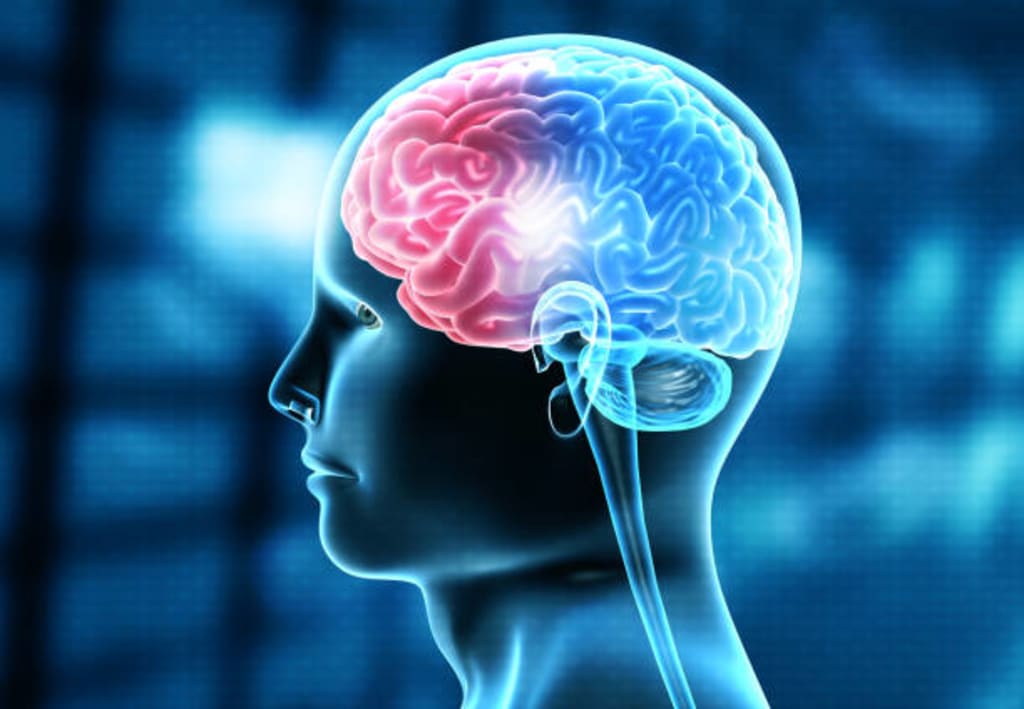
During our early years, learning to read activates both hemispheres of our brain extensively as we expend energy in the process. However, in fluent readers, the brain becomes more streamlined, with increased activation in structures of the left hemisphere. These structures include the visual word form area, responsible for recognizing letters and words, and the region associated with mapping letters to sounds, known as phonological awareness. Additionally, areas like Broca's area contribute to comprehension and understanding word meaning. These activated areas are connected by white matter, forming a complex network that allows fluent readers to process words within milliseconds.
In the dyslexic brain, these activated areas and neural pathways can appear different. Brain scans of dyslexic readers have shown less activation in the left hemisphere, suggesting disruptions in the pathways that help map sounds to letters and decode words. However, dyslexic individuals consistently exhibit overactivation in the right hemisphere while reading, making the process more laborious. This indicates that dyslexic individuals may have difficulty recognizing words and sounds but compensate by working harder in other areas.
Disruptions in these pathways can also lead to challenges in grammar, math facts retrieval, working memory, and other cognitive processes. Alternatively, dyslexic individuals may not experience disruptions in neural pathways but rather slowed processing. Each person's experience of dyslexia can vary greatly, and it has no bearing on an individual's intelligence. It is now commonly recognized as a hereditary neurobiological learning disability.
Research has shown that explicit support and instruction in areas like phonology, syntax, and spelling can lead to success for dyslexic learners. However, understanding the reading brain is only part of the larger picture. Years of research have begun to confirm that dyslexic individuals possess inherent strengths, including high-level reasoning, problem-solving, spatial processing, episodic memory, and creativity.
Personally, because I can mentally visualize the full picture, I can make associations between seemingly unrelated things. This type of thinking can shake up conventional approaches and prompt others to think differently. Dyslexic individuals excel in recalling stories and images. Sometimes, I can recognize someone I've met before, even when they don't recognize me.
Research has also found that specific areas of the right hemisphere, typically associated with spatial abilities and visual imagery, are particularly active in dyslexic individuals. For instance, dyslexic individuals have demonstrated better letter identification in their peripheral vision compared to other readers. They have also outperformed their peers in memorizing blurred images. In 2022, researchers from the University of Strathclyde and the University of Cambridge concluded that dyslexic individuals specialize in exploring the unknown. They suggested that dyslexia plays a vital role in enabling human adaptation, particularly through collaboration between diverse individuals.
These new perspectives on dyslexia are part of a broader movement to embrace neurodiversity, recognizing that brains are simply wired differently and that these natural variations do not indicate a lack of ability. Despite the prevalence of dyslexia, stigma, misconceptions, and a lack of understanding still persist. By increasing our knowledge of differently organized brains, we can improve education, foster collaboration, empower dyslexic individuals, and ultimately change the way dyslexia is perceived.
This unique combination of strengths and weaknesses forms a constellation that varies from person to person. Imagine how much better a child would feel knowing that dyslexia is not a curse or a disease but simply a different organization of the brain.
About the Creator
Dresud
I love to read and write. I love the placees my mind take me when I am reading a good book or writing short story, for time to time I love to share information that I have come across.
Keep reading
More stories from writers in Humans and other communities.
Whiskey At Dusk
Guess the whiskey was more important to you in the end, wasn’t it? It was more than the well-being of your friends; more vital than showing up to the places you promised you would and could come to; more critical of a matter than fulfilling your damn responsibilities and getting the press off your back.
By Snarky Lisaa day ago in Humans
What to Expect From Intensive Outpatient Care for Recovery Support
Recovery is a process that requires consistency, structure, and the right level of professional support. For many individuals, intensive outpatient care offers a balanced approach that provides clinical treatment while allowing them to continue daily responsibilities. Understanding what this level of care includes can help people feel more prepared and confident when starting treatment.
By Jordan Blake6 days ago in Humans
🅼🅸🅳🅽🅸🅶🅷🆃 🆂🅽🅰🅲🅺🆂
"It's 10 in Tuscon! We all know what that means... It's Time for Midnight Snacks with your man, Gerald Gee! Ready to spend the night together? Me too! I'm full of snacks and can't wait to regurgitate them all back into your hungry ears. Crack a brew! Pop some corn! Anything to get ready for one hell of a show where the talk maybe cheap but the words cut deep...
By Lamar Wiggins3 days ago in Fiction


Comments
There are no comments for this story
Be the first to respond and start the conversation.