
Unmasking Anxiety: Understanding the Modern Face of a Hidden Epidemic
Exploring the Latest Science, Societal Triggers, and Breakthrough Treatments in 2025
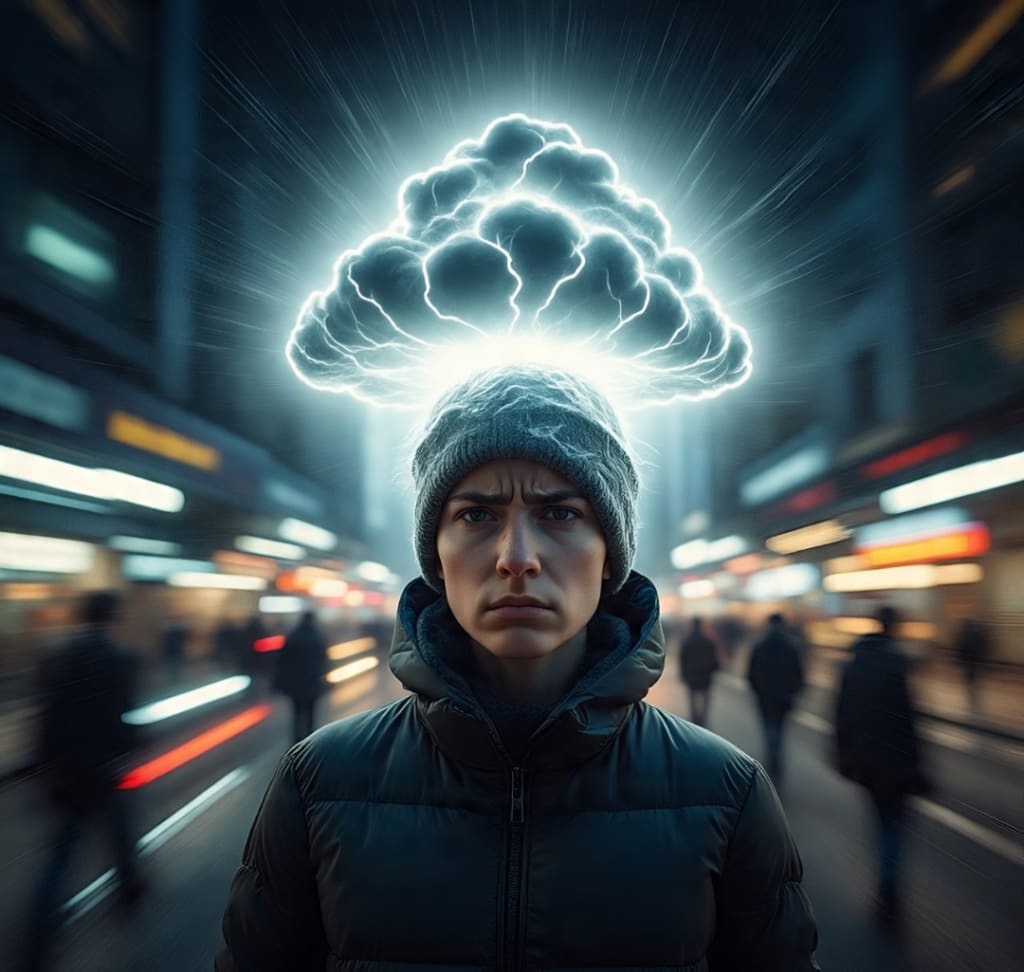
Anxiety has always been a part of the human experience—a natural reaction to stress, danger, or uncertainty. But in 2025, it's clear that anxiety has transformed from an occasional emotional response into a widespread, chronic epidemic. Nearly 1 in 3 adults worldwide now report experiencing significant anxiety symptoms, according to the World Health Organization, and among teens and young adults, that number is even higher.
This surge in anxiety isn't just a result of people being "more open" about mental health. According to neuroscientist Dr. Lea Kwon at Stanford University, the very structure of modern life has shifted the brain's stress systems into overdrive.
"Humans were not built for constant stimulation, digital comparison, and the 24-hour news cycle," Dr. Kwon explains. "We’ve created a world that continually triggers our amygdala—the brain's fear center—without giving our nervous system a chance to recover."
In previous generations, anxiety was typically tied to specific, identifiable threats: public speaking, job interviews, or dangerous situations. Today, however, anxiety often arises from more diffuse sources—constant exposure to social media, economic instability, climate concerns, and a lingering post-pandemic unease.
Researchers have coined this new form of anxiety as "ambient anxiety"—a persistent, low-grade sense of dread that doesn’t always have a clear source. It lingers in the background like static, wearing down mental resilience over time. For many, it manifests in physical symptoms: chest tightness, insomnia, digestive problems, and even panic attacks.
Twenty-three-year-old Amara Jacobs, a graduate student in New York, knows this feeling all too well. "There are days when nothing is wrong, but I wake up with my heart racing," she says. "It’s like my body thinks there’s a lion in the room, but there’s not. Just deadlines and notifications."
Science is working hard to catch up. In 2025, researchers have made breakthroughs in understanding the biological roots of anxiety. Using advanced brain imaging, scientists have discovered new patterns in the brain’s default mode network—a system involved in self-reflection and rumination. In anxious individuals, this network appears to be hyperactive, suggesting that anxiety may stem more from how we process thoughts than from the thoughts themselves.
This insight has led to a wave of new treatments beyond traditional therapy and medication. One promising avenue is neurofeedback, a non-invasive method where patients learn to regulate their brain activity through real-time feedback. In clinical trials, patients reported a 40–60% reduction in anxiety symptoms after just a few weeks.
Meanwhile, mental health apps have become more sophisticated, using artificial intelligence to track patterns in mood, sleep, and behavior. These tools can now alert users to early signs of rising anxiety—before a panic attack hits. "It’s like having a therapist in your pocket," says Dr. Kwon, who helped design one such app.
But while technology offers support, experts caution that it can also contribute to the problem. Social media, in particular, has been linked to increased anxiety, especially among teens. The constant scroll of highlight reels, filtered perfection, and doom-laden news creates a relentless feedback loop of comparison and fear.
"One of the best things people can do for their mental health is take breaks from their screens," says therapist Jordan Lively, who works with adolescents in Los Angeles. "Digital detox isn't just a buzzword anymore—it’s survival."
At the same time, society is shifting its perception of anxiety. What was once stigmatized is now more openly discussed in schools, workplaces, and families. Celebrities, athletes, and influencers are speaking out about their struggles, creating a culture of openness that helps normalize seeking help.
"Anxiety is not weakness," says Amara. "It's a sign that your body and mind are trying to protect you. Understanding that changed everything for me."
Looking forward, the goal is not to eliminate anxiety entirely—after all, it serves a purpose. Instead, experts emphasize building emotional resilience and creating environments that support mental well-being.
Schools are introducing mindfulness programs. Workplaces are rethinking productivity culture. Cities are investing in green spaces, knowing that access to nature lowers anxiety levels. And most importantly, individuals are learning to recognize their triggers and regulate their emotional responses.
The story of anxiety in 2025 is complex, but it’s also hopeful. With new knowledge, better tools, and growing empathy, we're learning not just how to treat anxiety—but how to live with it in healthier, more compassionate ways.
And perhaps, in unmasking it, we also begin to unmask ourselves.
About the Creator
Keep reading
More stories from Muhammad Saad and writers in Humans and other communities.
The Mind on Edge
Lena sat on the edge of her bed, staring at the rising sun bleeding through her blinds. It was beautiful—soft amber light and peaceful silence—but her chest felt like it was in a vice. Her mind was already racing. Did she send that email yesterday? What if her boss thought it was rude? What if she forgot something critical? This wasn’t new. For years, Lena had quietly lived with anxiety. To others, she was organized, dependable, even cheerful. But under the surface, her thoughts never stopped, looping over conversations, worries, and mistakes both real and imagined. Anxiety is often invisible, yet deeply rooted in the human experience. At its core, anxiety is the body’s natural response to perceived threats. It’s a product of evolution—an alarm system designed to protect us. When our ancestors heard rustling in the bushes, their anxious brains prepared them to run or fight. But today, the threats are different. Deadlines, social expectations, economic instability, and global crises can all trip that ancient alarm system. And sometimes, the brain can’t tell the difference between an overdue bill and a hungry predator. Dr. Amara Singh, a neuroscientist specializing in emotional health, describes anxiety as “a mismatch between ancient wiring and modern life.” She explains that when we’re anxious, the amygdala—an almond-shaped structure deep in the brain—activates our fight-or-flight response. Heart rate spikes, breathing quickens, and muscles tense. It’s a survival tool, but when it’s overactive or always on, it becomes a burden. “There’s a difference between situational anxiety and an anxiety disorder,” Dr. Singh adds. “Everyone feels anxious sometimes. But when worry becomes constant, disproportionate, and interferes with daily life, it may be a sign of a deeper issue.” Lena didn’t always recognize her anxiety for what it was. As a teenager, she just thought she was “overthinking.” In college, she chalked it up to stress. It wasn’t until her mid-30s—after several sleepless months, recurring stomach pain, and frequent panic attacks—that she finally sought help. Her therapist introduced her to Cognitive Behavioral Therapy (CBT), one of the most effective treatments for anxiety. It taught her to recognize thought patterns that fueled her fear—catastrophizing, mind-reading, assuming the worst. With practice, Lena began to challenge these thoughts and replace them with more realistic ones. She also learned the importance of breathing. “It sounds simple,” she said, “but deep, intentional breathing was the first thing that gave me a sense of control.” Science backs her up. Studies show that slow breathing activates the parasympathetic nervous system, helping the body calm down after a stress response. Meditation, regular exercise, and sleep hygiene also play crucial roles in managing anxiety. But it’s not just about the brain—it’s about society too. We live in a world where we’re constantly connected, bombarded by notifications, news, and comparison. Social media, for all its benefits, can amplify anxiety by reinforcing unrealistic standards and spreading fear faster than facts. “There’s a collective anxiety that didn’t exist 50 years ago,” says Dr. Singh. “Global awareness is good, but our minds weren’t designed to carry the weight of the whole world every day.” That’s why community matters. In recent years, there’s been a growing movement to talk openly about mental health. From public figures sharing their struggles to mental health apps and peer support groups, the stigma is slowly eroding. Lena now volunteers once a week at a local support group for young adults dealing with anxiety. “I tell them the truth,” she says. “It doesn’t just vanish. But it gets easier. You learn to live with it, not under it.” Her story is far from unique. According to the World Health Organization, over 300 million people worldwide live with some form of anxiety disorder. That number likely underrepresents the real scale, due to underreporting and lack of access to mental health care. But the tide is turning. New research in neuroplasticity shows that the brain can change and adapt—even rewire itself—with the right tools and support. Therapy, mindfulness, medication, and compassionate connection all play a role. As the morning sun fully crested over Lena’s windowsill, she stood up and stretched. The anxiety was still there, like background static. But it wasn’t driving her anymore. She took a deep breath. Today, she would move forward—not in spite of the anxiety, but alongside it. Because anxiety doesn’t define her. Awareness, action, and understanding do.
By Muhammad Saad 6 months ago in Humans
Are Fat People Disabled or Are Disabled People Fat?
There is a question people ask quietly, sometimes without even realising they are asking it. It lives in looks, assumptions, and comments muttered under breath. It sounds like concern, but it is actually judgement. It goes something like this: why are so many fat people in pain? Why are so many fat people using mobility aids? Why are so many fat people struggling to move?
By No One’s Daughter7 days ago in Humans


Comments
There are no comments for this story
Be the first to respond and start the conversation.