
Unbalanced Bonds: When Love Flows Only One Way
The Silent Pain of Unreciprocated Love

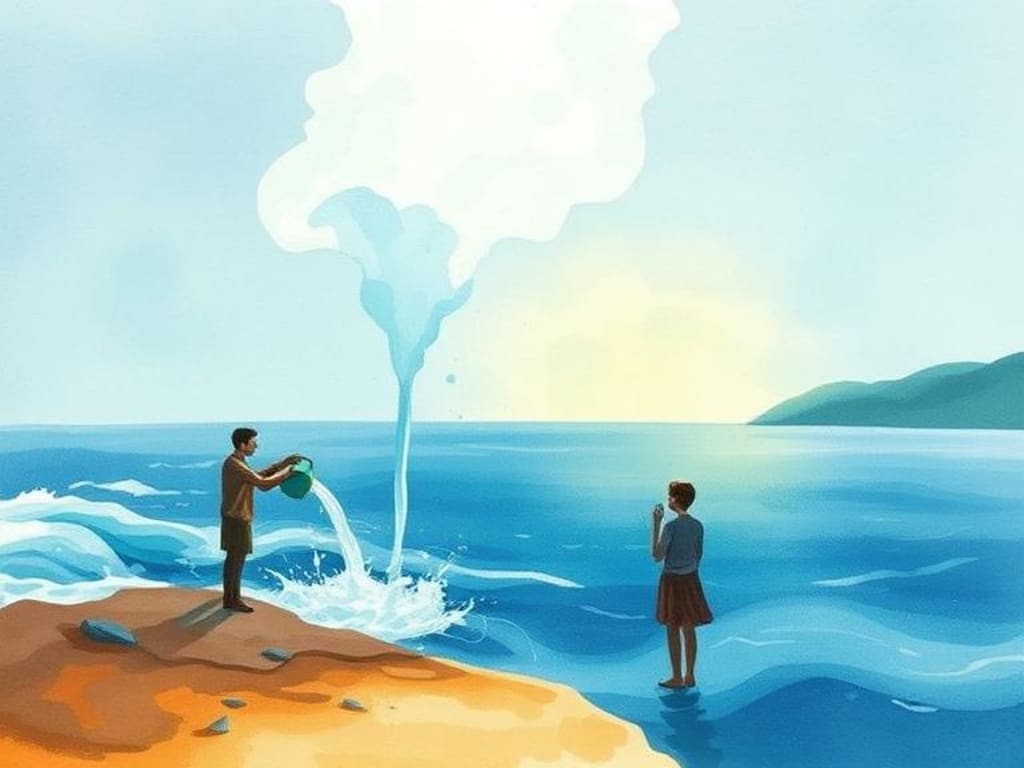
Love ignites hearts, fuels dreams, and binds souls—or so the stories tell us. We grow up hearing tales of mutual devotion, where two people pour equal passion into a shared flame. But reality often veers off script. Sometimes, love flows like a river in one direction, leaving one person drenched in devotion while the other stands dry on the shore. Unreciprocated love doesn’t just sting; it carves a quiet wound, reshaping how we see ourselves and the world. This isn’t a story of rejection’s loud crash. It’s about the slow drip of imbalance, the ache of giving everything and receiving crumbs in return.
I’ve lived this. I’ve watched friends live it too. One pours their soul into texts that go unanswered, plans that get canceled, and dreams that never align. The other drifts along, offering just enough to keep the connection alive but never enough to make it thrive. This dynamic haunts romantic relationships, friendships, and even family ties. It’s a universal thread, yet we rarely name it. We call it “effort” or “miscommunication,” but the truth cuts deeper: some bonds teeter because one heart carries the weight alone.
Let’s peel back the layers. What drives this imbalance? How does it twist us? And can we ever find balance—or at least peace—when love refuses to flow both ways?
The Anatomy of One-Way Love
Unreciprocated love doesn’t announce itself with fanfare. It creeps in. You send a message brimming with excitement, and they reply three days later with a “cool.” You plan a night out, weaving every detail with care, only for them to flake at the last minute. You show up—emotionally, physically, always—while they hover at the edges, half-in, half-out. Over time, the pattern solidifies: you give, they take, and the scales never tip back.
Psychologists call this an “attachment mismatch.” One person leans in, craving closeness, while the other pulls back, guarding their space. Attachment theory explains it through lenses like anxious versus avoidant styles, but theory doesn’t soothe the sting. You feel it instead—the gnawing doubt, the questions that loop at 3 a.m. Am I too much? Not enough? Why can’t they see me the way I see them?
Take Sarah, a friend of mine. She dated Mark for two years. She cooked dinners he never ate, planned trips he never joined, and wrote letters he never acknowledged. Mark didn’t hate her; he just didn’t match her. He liked her enough to stay but not enough to show up. Sarah’s love flowed like a torrent; Mark’s trickled like a leaky faucet. She told me once, tears streaking her face, “I kept thinking if I gave more, he’d wake up and give back.” He didn’t.
This isn’t rare. Studies—like one from the Journal of Social and Personal Relationships—show that unequal emotional investment plagues nearly 60% of romantic partnerships at some point. Friendships fare no better. I’ve seen people chase platonic bonds with the same fervor, texting first every time, planning every hangout, while the other side coasts. Even parents and children fall into this trap, with one side yearning for connection and the other too distracted—or unwilling—to reciprocate.
So why does it happen? Sometimes, it’s apathy. They don’t care as much, plain and simple. Other times, it’s fear—fear of vulnerability, commitment, or losing control. And occasionally, it’s ignorance; they don’t even realize the gap yawns so wide. Whatever the cause, the effect lands the same: one person drowns in effort, the other floats above it.
The Toll of Carrying the Load
Loving someone who doesn’t love you back doesn’t just bruise your ego—it rewires your soul. You start doubting your worth. Every unreturned call whispers, “You’re not enough.” Every half-hearted reply screams, “Try harder.” You twist yourself into knots, molding your words, your actions, your very self to fit what you think they want. And when that fails, the shame doubles.
I remember a fling I had years ago. His name was Jake. I’d light up when he texted, crafting replies that danced with wit and warmth. He’d respond with one-word grunts or, worse, silence. I’d plan dates—movies, hikes, dinners—and he’d show up late, distracted, scrolling his phone while I poured my heart out. I told myself he was busy, guarded, “going through something.” I made excuses until I couldn’t anymore. One night, staring at my phone after another ignored message, I broke. I wasn’t just hurt; I was exhausted.
That exhaustion defines one-way love. It’s not a sprint; it’s a marathon with no finish line. You keep running, hoping they’ll catch up, but they never do. Your energy drains, your confidence cracks, and your joy fades. Research backs this up—psychologists link unbalanced relationships to higher rates of anxiety, depression, and burnout. The brain, wired for connection, panics when it senses rejection. Cortisol spikes, self-esteem plummets, and you’re left clutching a bond that’s more burden than blessing.
Worse, it distorts your lens. You start seeing every relationship through the same filter. Friends’ casual delays feel like betrayal. A partner’s busy day reads like disinterest. You overcompensate, giving more to prove your value, or you withdraw, terrified of being burned again. Either way, the imbalance follows you, a shadow you can’t shake.
Sarah felt this too. After Mark, she stopped dating. “I don’t trust myself anymore,” she said. “I don’t know what real love looks like.” Her story mirrors countless others—people who gave too much, got too little, and now question if love even exists.
Why We Stay
If one-way love hurts so much, why don’t we leave? The answer tangles in hope, fear, and habit. Hope whispers that they’ll change. You cling to the good moments—the rare times they show up, the fleeting smiles that feel like gold. You tell yourself, “If I just wait, they’ll see me.”
Fear locks you in too. Fear of being alone, of starting over, of admitting you misjudged them—or yourself. Leaving means facing the void, and that terrifies us more than the slow bleed of staying. Habit seals the deal. You’ve built a rhythm, a routine, and even if it’s lopsided, it’s familiar. Walking away feels like dismantling a house you’ve lived in too long, flaws and all.
I stayed with Jake for months despite the red flags. I’d replay our first date—his laugh, his hand brushing mine—and convince myself that version of him would resurface. I feared I’d never find someone else who’d spark that same thrill. And honestly, I’d gotten used to chasing him. It felt normal, even right, until it didn’t.
Society doesn’t help. Movies and songs romanticize unrequited love, painting it as noble, tragic, beautiful. We’re taught that persistence wins hearts, that love conquers all—even indifference. But persistence doesn’t fix a heart that doesn’t beat for you. It just leaves you tired.
Breaking the Cycle
So how do you escape? First, you see it. Name the imbalance. Stop calling it “effort” and call it what it is: one-way love. Write it down, say it out loud, let it sink in. Sarah did this. She journaled every time Mark let her down, and the list grew too long to ignore. Seeing the pattern jolted her awake.
Next, you set boundaries. Decide what you deserve—not what they’re willing to give. Text less. Plan less. Show up for yourself first. It’s not about playing games; it’s about reclaiming your power. When I stopped chasing Jake, I didn’t just free myself from him—I freed myself for me. I read books I’d neglected, saw friends I’d sidelined, and remembered who I was beyond the chase.
Then, you ask the hard question: Can this work? If they don’t shift, if they don’t meet you halfway, you have your answer. Leaving hurts, but staying hurts more. Sarah walked away from Mark. She cried for weeks, but she also smiled again—real smiles, not the forced ones she’d worn to keep him.
Sometimes, they do shift. Honest talks can spark change. Tell them, “I feel alone in this. I need more.” If they care, they’ll try. If they don’t, they won’t. Either way, you know where you stand.
Finally, you heal. Unbalanced love leaves scars—doubt, mistrust, fatigue—but it doesn’t define you. You learn to spot the signs early. You seek people who match your energy, who give as much as they take. It’s not perfect, and it’s not instant, but it’s possible.
The Other Side of the Coin
What if you’re the one holding back? It happens. Life gets busy, emotions get messy, and you don’t realize you’re leaving someone dangling. Check yourself. Do you reply? Do you show up? Do you care as much as they do? If not, ask why. Maybe you’re scared, or maybe you’re just not that into it. Either way, own it. Don’t let someone drown in your indifference.
Finding Balance
Love shouldn’t feel like a tug-of-war. It should lift, not drain. We can’t force someone to love us back, but we can choose who we let into our orbit. Seek the ones who see you, who match your fire with their own. And if the scales tip too far, don’t be afraid to walk away. You deserve a bond that flows both ways—a river, not a trickle.
Sarah’s dating again. She’s cautious but open. I’m wiser now too, choosing connections that don’t leave me hollow. Unbalanced love teaches us, if nothing else, that we’re worth more than crumbs. We deserve the whole damn feast.
About the Creator
Great pleasure
An Author.
Keep reading
More stories from Great pleasure and writers in Humans and other communities.
The Moment I Stopped Begging for Reciprocity
I stood in the dim light of my apartment, staring at my phone screen, waiting for a reply that never came. My thumbs hovered over the keyboard, itching to type another message, to nudge, to plead. "Hey, just checking in—did you see my last text?" I’d sent three already, each one a little more desperate, a little less proud. The silence on the other end stretched into hours, then days. I refreshed the chat, hoping for a flicker of life, a crumb of acknowledgment. Nothing. That’s when it hit me—I was begging. Not just for a response, but for reciprocity, for someone to match the energy I poured into them. And in that quiet, hollow moment, I decided I’d had enough.
By Great pleasure11 months ago in Humans
Trickle Them Down, But Not Out
The thing about smart people is that they should know better, but alas, intelligence is not the same as wisdom. Not only do the mistakes of experts too short on vision—when they are not corrected—have the potential to do great and far-reaching damage, but they also undermine public confidence in the very notion of expertise. This is particularly so when expertise is wielded in defence of the rich and powerful as a cudgel against those laid low. As an academic, this lack of faith in “so-called experts” is painful to see as it plays out in the spread of dis-/misinformation, conspiracy theories, and anti-intellectualism writ large. But it is also an understandable impulse given the catastrophic failure of an economic ideology pushed by certain economic experts. Supply-side economics has shaped a broken system for the last half-century and has arguably done more to undermine the fabric of the American Dream than any policy framework of the past century.
By Cory Wright-Maley6 days ago in Humans
The Voucher Program
Tennessee's Education Savings Account program was introduced to the legislature in 2023 with a specific image attached to it. A poor child in a failing school whose parents finally have the power to do something about it. That image did most of the political work. The bill passed. The program launched. And then the data started coming in, and the data described a different child entirely.
By Tim Carmichael6 days ago in Humans
Tatt~Master
— Assembly Line Tatt Machine ~ Impressions to Impress — As I begin to understand more about the Tattoo Phenomenon. I've written silly, yet verbatim, dating site anecdotes in 'Frazzled.' So let me ask you: Would you be More attracted to someone slathered with tattoos, or Less?
By Jay Kantora day ago in Humor



Comments
There are no comments for this story
Be the first to respond and start the conversation.