
The Walls of Eden
We build too many walls and not enough bridges

The notion of a 'wall' has different meanings in a wide range of disciplines/fields, such as architecture, engineering, biology, psychology, sociology, etc. Despite the differences, the wall demonstrates separation, a border or a boundary, whether in a tangible or intangible form.
Walls are the main pillars of any building, but walls can also be assigned various intangible social meanings, it can represent division, exclusion, separation and confinement.
From The Great Wall of China to our neighbour's green hedge, we are all familiar with walls. Walls are practical and can keep us safe, secure and create privacy. But they also create distance, physically and psychologically.
In the early 1960s, Lewis Mumford argued that cities evolved primarily as military entities, and their walls were the most obvious sign of their profoundly warlike character. City walls were built as social armour, sometimes protecting an entire region.
The Garden of Eden was walled. A wall separating the holy area from the profane. It was a protected area reserved for the holy. At their creation, Adam and Eve were holy, placed in a holy environment. You know the rest of the story and how they lost their holiness. Walls have been around us since then and continue to be.
Walls tell us a lot about a place. They convey a variety of messages about the history, culture, and society of a place. They tell us whether we are welcome, how to behave, and the character of the people behind them. They reflect the characteristics of the community by defining the relationship between private versus public space.
If walls create social barriers? Would we be better without?
But what if we didn't have walls?
I.
It ultimately comes to the difference in whether; we design walls to live, or walls design how we live.
Walls are ubiquitous in every social institution we have today. Residential houses, schools, hospitals, government buildings, countries even our own language. When buildings have no walls there are still signs of passaging between the outside and inside, an entrance and an exit.
There seems to be an idea that walls enabled us to progress. We needed security before we could achieve other things such as writing, culture, education, otherwise we would be at war all the time. Until a society achieves security, it can't think about anything except the dangers all around it. As a consequence, its progress will be limited.
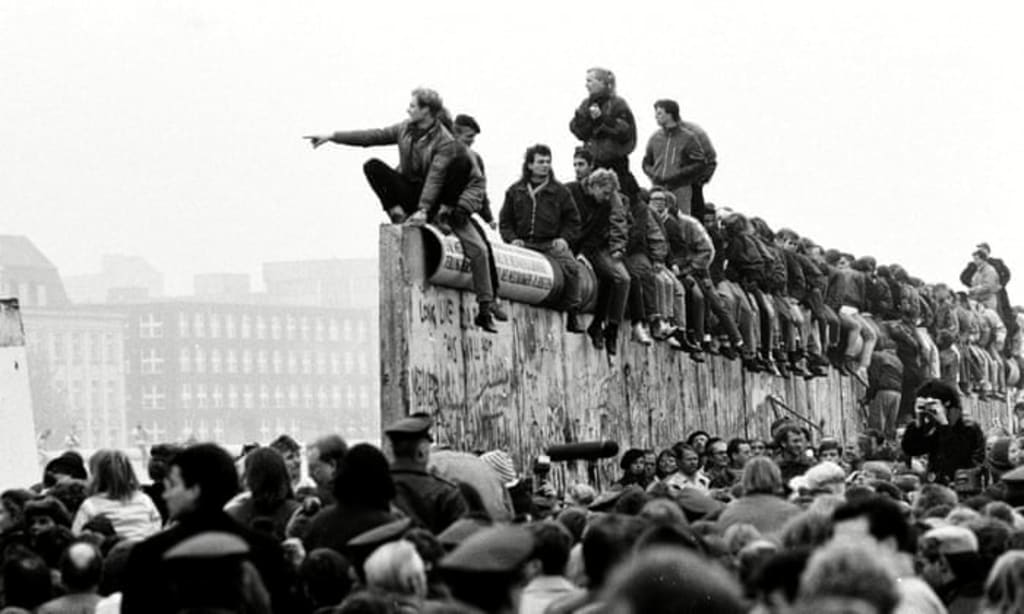
But on the other hand, what would the world have looked like if the Berlin Wall had not fallen? Arguably tearing down a wall allowed us to progress. Is choosing to oppress or progress really a dilemma?
II.
And while we put design ideas and building materials into walls, we also project our own values into them. Walls are merely a reflection of our sense of belonging, our group identity.
Building a house is not the same as building a home. That is a feeling we attach to the house, the walls and the people inside the house. But it is the need for a home that created the walls in the first place.
Once a person sees herself as part of a group, she derives self-esteem from that group membership and adopts behaviours that are consistent with the stereotypes associated with the group identity. Humans are more altruistic and positive towards an ingroup member.
A study by Yan Chen and Sherry Xin Li found that humans are more likely to reward an ingroup match for good behaviour, compared to an outgroup match. And experiment participants were significantly more likely to choose wealth and social welfare maximising actions when matched with an ingroup member.
Without the group identity, we would have no walls. People who experience high levels of well-being don't tend to have a sense of group identity.
People who live a fulfilling and meaningful life have a sense of appreciation, a heightened awareness of their surroundings, and a wider perspective.
People who lead a meaningful life define themselves as global citizens, sharing community with all human beings. If they have any sense of identity at all it goes beyond the groups and the walls. People lose the need for group identity because they no longer feel separate and so have no sense of fragility and insecurity.
The point of having walls was to build security. Find meaning, not mortar.
Sources to share:
About the Creator
Human Dilemmas
Why do some ideas form our lives and others become nothing? Why do we take some ideas for granted and question others?
I'm Daniel, writer of Human Dilemmas. A weekly letter philosophising on life when we forget to live.
Keep reading
More stories from Human Dilemmas and writers in Humans and other communities.
Unfairly Greedy
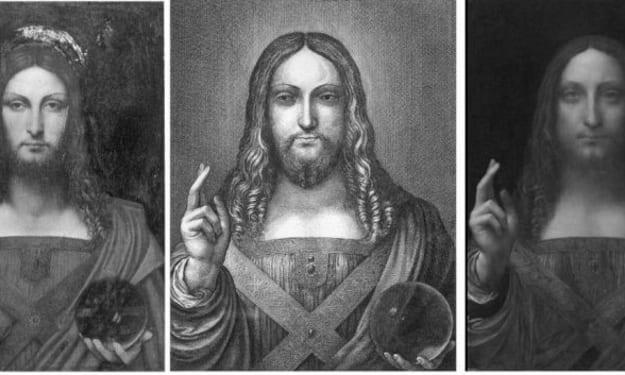
In 2005, Leonardo Da Vinci's famous Salvator Mundi painting was sold for $1175. In 2017, the same painting was sold for $450 million to Saudi crown prince Mohammed bin Salman, making it the highest-priced art ever. But it turned out to be fake. The prince pressured the Louvre museum to lie about the authenticity and exhibit it alongside Mona Lisa to spare the public humiliation of having spent $450 million on a fake painting.
By Human Dilemmas4 years ago in Humans
Restoring Balance in Medicine: Andrew Rudin MD on Why Prevention Must Come First
Modern healthcare has delivered extraordinary achievements. Medications control conditions that once shortened lives. Procedures restore heart rhythm, open blocked arteries, and prevent sudden cardiac events. Imaging technologies allow physicians to detect disease earlier and with greater precision than ever before. Yet despite these advances, many patients feel that care often begins too late. Treatment is efficient, but prevention is inconsistent. According to Andrew Rudin MD, this imbalance now represents one of the most significant challenges facing modern medicine.
By Dr. Andrew Rudin4 days ago in Humans
Wild Card Weekend Recap: What Happens Now?
I think I figured out why I love Wild Card Weekend so much. It's because it's the first playoff anything of the calendar year. The NFL season starts in the fall, and once upon a time, the champion was crowned either on or slightly before New Year's. The evolution of the NFL schedule has resulted in the playoffs starting just into the New Year, and currently, the final week of the season falls on the first weekend of the New Year, with Wild Card Weekend coming a week after that. So yes, chronologically, the NFL's Wild Card Weekend serves as the first playoff anything of the calendar year.
By Clyde E. Dawkins5 days ago in Unbalanced



Comments
There are no comments for this story
Be the first to respond and start the conversation.