
The Voice That Shaped a Movement: The Life and Death of James C. Dobson
From small-town roots to the halls of power, the psychologist who became the voice of America’s families leaves behind a legacy both celebrated and contested

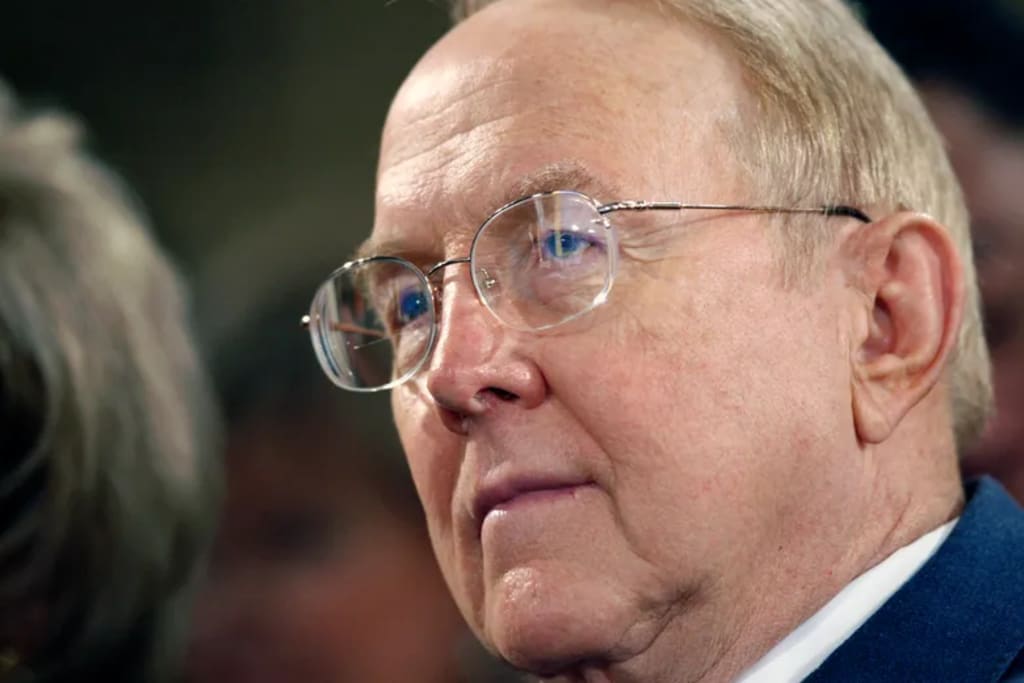
On the morning of August 21, 2025, news spread quietly at first—like the faint crackle of static before a thunderclap. James C. Dobson, the American psychologist, author, and founder of Focus on the Family, had died at the age of 89. For many, the announcement was not just the passing of a man, but the closing of a chapter in American religious and political life. In church pews, on radio stations, and in countless living rooms across the country, his voice had been a constant presence—calm, authoritative, sometimes comforting, and other times polarizing. And now, it was silenced.
But the story of Dobson’s life is not one told in whispers. It is a story of ambition, conviction, controversy, and an unshakable belief that family values were worth fighting for—even when the fight divided a nation.
A Boy from Oklahoma
Born in Shreveport, Louisiana, in 1936 and raised in Oklahoma, James Clayton Dobson Jr. grew up in a devout evangelical family where prayer was as routine as breathing. His father was a traveling evangelist, his mother a steadfast partner in ministry. The boy who would one day advise presidents was steeped in revival tents, Sunday sermons, and the rhythm of church life.
But Dobson’s ambitions weren’t confined to the pulpit. He pursued psychology with the precision of a scientist, earning his doctorate from the University of Southern California. He spent years studying child development and served as an associate clinical professor of pediatrics at USC’s School of Medicine. He wasn’t just another religious commentator; he was a credentialed psychologist with a gift for translating complex theories into practical advice.
Even in his early career, he sensed a calling larger than academia. He wasn’t content to counsel a classroom of students or even a hospital wing of patients. He wanted to speak to millions.
The Birth of a Platform
In 1970, Dobson published Dare to Discipline, a book that would catapult him into the national spotlight. It was direct, unapologetic, and controversial, arguing that children required firm, consistent discipline—including corporal punishment—to grow into stable adults. Critics bristled, but many parents embraced his words as a lifeline in a culture they felt was slipping from traditional moorings.
By 1977, Dobson founded Focus on the Family in Arcadia, California, later relocating it to Colorado Springs. What began as a modest organization dedicated to strengthening families through Christian principles exploded into one of the most influential evangelical ministries in the world.
The Focus on the Family radio broadcast—Dobson’s signature platform—became a daily staple in millions of households. His voice carried authority without arrogance, weaving scripture with psychological insight, peppered with anecdotes and stories. For those who felt disoriented by shifting social values, Dobson’s words were a compass pointing back to what they believed was solid ground.
A Counselor to Presidents
As Dobson’s influence grew, so did his reach into the political arena. By the 1980s, his name was well known not only in church circles but also in the White House. Ronald Reagan valued his counsel. Later, George H.W. Bush, George W. Bush, and even Donald Trump sought his advice.
Dobson was never elected to office, but his influence rivaled that of senators and governors. He became a bridge between evangelical voters and political power, a man who could mobilize millions with a single radio segment or newsletter. On issues like abortion, same-sex marriage, and religious freedom, his voice helped shape the agenda of the religious right.
To supporters, Dobson was a guardian of moral clarity, a bulwark against cultural decay. To critics, he was a symbol of intolerance and rigid dogma. Either way, he was impossible to ignore.
The Storms of Controversy
No story this large unfolds without turbulence. Dobson’s firm stances drew praise and condemnation in equal measure. His defense of traditional gender roles, his opposition to LGBTQ+ rights, and his unwavering pro-life advocacy often made headlines.
To his detractors, he was a culture warrior, wielding faith like a weapon. To his followers, he was a prophet crying out against a tide that threatened to wash away biblical truth. The tension was the very essence of his legacy—he was a man who refused to live in the gray.
And yet, even in the fiercest debates, Dobson’s supporters would point to the tender side he revealed in his books and broadcasts. He wrote extensively about fatherhood, marriage, and the challenges of raising children in a fractured world. He wasn’t just a fighter; he was a guide.
The Man Beyond the Microphone
Behind the public persona was a devoted family man. Dobson married Shirley in 1960, and together they raised two children. His writings often referenced the struggles and joys of fatherhood, his love for his wife, and his belief that the health of a nation rested in the health of its families.
He wrote more than seventy books, each offering advice through the dual lenses of faith and psychology. Titles like Bringing Up Boys and Love for a Lifetime cemented his place on Christian bookshelves for decades.
For many who never met him, Dobson still felt like a personal mentor—the voice that played in the background while families ate dinner, drove to school, or bowed their heads in prayer.
The Long Goodbye
In 2003, Dobson stepped down as president of Focus on the Family, though he remained active in Christian broadcasting through the Dr. James Dobson Family Institute. His health declined in later years, but his presence never fully faded. Even in his absence, his teachings lived on in radio archives, books, and the organizations he built.
When word came that he had passed, the reaction was immediate. Supporters mourned a giant of the faith. Critics acknowledged the void left by a man whose voice once roared through America’s cultural battles. Regardless of one’s opinion, James C. Dobson had shaped the nation’s conversation about family, morality, and politics in ways that few individuals ever could.
A Legacy Written in Tension
How do you measure the life of a man like Dobson? By the millions of books sold? By the politicians he influenced? By the marriages saved, or perhaps by the divides widened? His legacy is not one-dimensional. It is both inspiration and controversy, comfort and conflict.
For the evangelical world, Dobson will remain a towering figure—an architect of modern Christian conservatism whose voice will echo for decades. For others, his passing marks the end of an era they viewed with suspicion or dismay.
Yet even critics admit: Dobson was a force. His life was not lived in the shadows but on the frontlines of America’s cultural struggle.
The Final Word
As his family gathers in the quiet of grief, and as tributes pour in from across the globe, the story of James C. Dobson closes with the same complexity that defined it. He was a boy from Oklahoma who dreamed bigger than most. A psychologist who became a preacher without a pulpit. A counselor whose words reached both the hurting mother and the powerful president.
And now, in the silence after his passing, one question lingers like a note unresolved: what happens to the movement he helped build when its leading voice has gone silent?
The answer is not yet clear. But one thing is certain—James C. Dobson lived a life that will be remembered, debated, and felt long after the sound of his last broadcast fades into history.
About the Creator
Fazal Ur Rahman
My name is Fazal, I am story and latest news and technology articles writer....
read more and get inspire more............
Keep reading
More stories from Fazal Ur Rahman and writers in Humans and other communities.
Aubrey Plaza’s Heartbreaking Loss: Remembering Her Husband Jeff Baena
When the world thinks of Aubrey Plaza, they often picture her sharp wit, her deadpan humor, and her ability to steal every scene she steps into—whether it’s as April Ludgate in Parks and Recreation or as the unpredictable Harper in The White Lotus. But behind the screen presence and comedic brilliance lies a very real, very human story of love, loss, and grief.
By Fazal Ur Rahman5 months ago in Humans
Minnesota and Illinois Invoke the 10th Amendment in Lawsuits to Block Federal Agents in Their Cities — Here’s Why That Matters
States Push Back Against Federal Enforcement Minnesota and Illinois have launched high-profile lawsuits invoking the 10th Amendment of the US Constitution in an effort to block or limit the actions of federal agents—particularly immigration enforcement officers—operating within their cities. The legal challenges mark a significant escalation in the long-running conflict between state governments and Washington over who has the authority to enforce immigration laws and how far federal power can reach.
By Aarif Lashari5 days ago in Humans
How to Succeed at the Benson Directory®
Congratulations and welcome to the Benson Directory® employee #22391! As our newest call handler, you will have the privilege of speaking with dozens of unique and interesting people on a daily basis as well as the opportunity to earn bonuses for high performance. Contained within this handbook you will find a set of ease to follow instructions designed to help you settle in to your new role and begin paving the way to success.
By S. A. Crawford3 days ago in Fiction




Comments
There are no comments for this story
Be the first to respond and start the conversation.