
The Shadow That Follows the Seeker
What does "Shadow of a Doubt" mean?

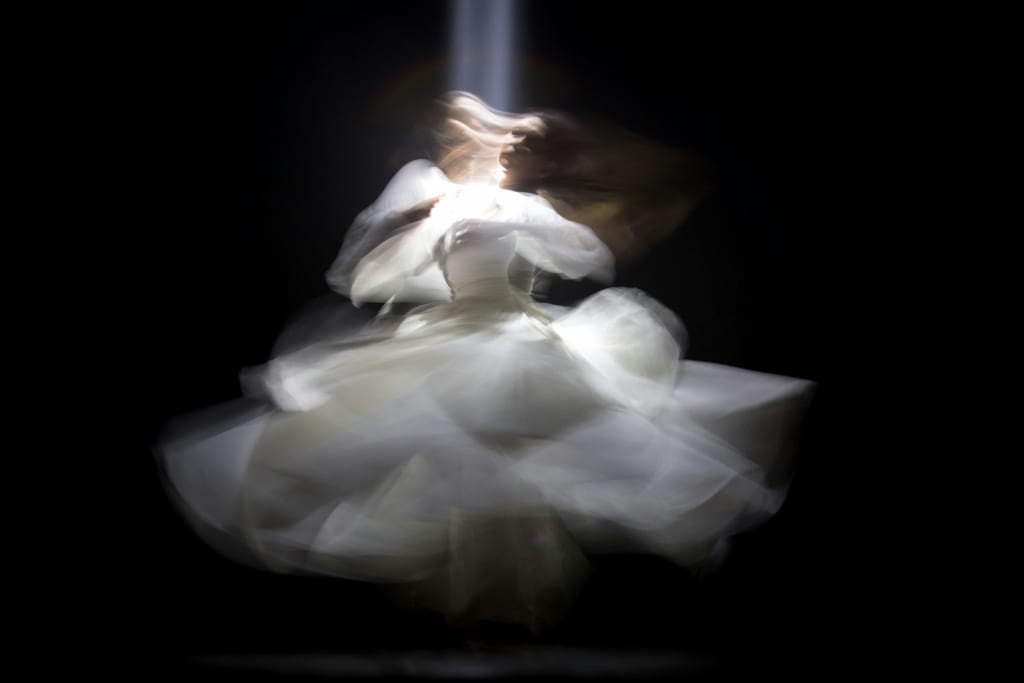
The phrase “the shadow of doubt” is so deeply woven into our language that we rarely pause to consider what it actually means. It appears in literature, philosophy, psychology, and sacred texts across cultures, always pointing toward a particular kind of inner experience—an obscuring, a dimming, a sense that something once clear has become partially hidden. Doubt is not described as a wall, a storm, or a wound, though it can feel like all of these. It is described as a shadow. That metaphor is not accidental. It reveals something profound about the nature of doubt itself, the structure of the human psyche, and the way spiritual growth unfolds. To understand why doubt takes the form of a shadow, we must explore the interplay between light and obscurity, certainty and uncertainty, ego and humility, and the ancient human struggle to discern truth from illusion.
The language of shadow has a long lineage in spiritual and philosophical traditions. In the Hebrew scriptures, the psalmist writes, “Even though I walk through the valley of the shadow of death, I will fear no evil” (Psalm 23:4). The phrase “shadow of death” does not imply literal darkness but the sense of uncertainty that arises when one cannot see what lies ahead. In the New Testament, the Gospel of Matthew quotes Isaiah: “The people who sat in darkness have seen a great light” (Matthew 4:16). Darkness here symbolizes confusion, fear, and spiritual blindness. Light symbolizes revelation, clarity, and divine presence. The contrast between shadow and light is not merely poetic; it is a way of describing the inner landscape of the soul.
In the Bhagavad Gita, Krishna tells Arjuna that ignorance is like a veil that covers the truth: “As fire is concealed by smoke, as a mirror is covered by dust, as an embryo is wrapped in the womb, so knowledge is hidden by ignorance” (Gita 3:38). The metaphor of concealment echoes the idea of shadow—something real is present, but it is obscured. In the Tao Te Ching, Lao Tzu writes, “When the mind is clouded, the truth is hidden” (paraphrased from Chapter 16). Again, the language of obscurity appears. Across traditions, doubt is not framed as the absence of truth but as the obscuring of truth. A shadow does not destroy the object it covers; it simply hides it from view.
This is the first key to understanding why doubt is described as a shadow: a shadow implies that something real, something luminous, something true is present, but temporarily hidden. Doubt is not the destruction of faith but the obscuring of faith. It is not the absence of truth but the inability to perceive truth clearly. A shadow requires light. Without light, there is no shadow. Doubt, therefore, is not a sign that faith has failed but that faith is interacting with something it does not yet understand.
The second key lies in the psychological dimension of shadow. Carl Jung famously described the shadow as the part of the psyche that contains everything we repress, deny, or refuse to acknowledge. It is not inherently negative; it is simply the unintegrated. Jung wrote, “Everyone carries a shadow, and the less it is embodied in the individual’s conscious life, the blacker and denser it is” (Psychology and Religion, 1938). The shadow becomes darker when we refuse to look at it. Doubt functions similarly. When doubt is acknowledged, explored, and integrated, it becomes a source of wisdom. When it is denied or suppressed, it becomes a source of fear.
Freud, though less spiritually inclined, also recognized that uncertainty arises when the ego encounters something it cannot control or explain. For Freud, the ego is the mediator between instinct, morality, and reality. When the ego feels threatened—by new information, by inner conflict, or by spiritual experience—it generates anxiety. Doubt is one form of that anxiety. It is the ego’s attempt to regain control by questioning what it cannot fully grasp. In this sense, doubt is a shadow cast by the ego’s fear of losing its central position.
Plato’s Allegory of the Cave offers another layer of insight. In the cave, prisoners mistake shadows on the wall for reality. When one prisoner escapes and sees the sun, he realizes that the shadows were mere illusions. But when he returns to the cave to share what he has learned, the others reject him. They prefer the shadows because the light is too overwhelming. Plato’s allegory reveals that doubt often arises when we encounter something beyond our current level of understanding. The light of truth can be blinding. The shadow of doubt appears when the mind is caught between the familiar and the unknown.
This brings us to the spiritual dimension of doubt. In Exodus 3:14, when Moses asks for God’s name, the Divine responds, “I AM THAT I AM.” This is not a subjective statement but an objective declaration of Being itself. It is the ground of existence, the source of all that is. Yet every human encounter with that truth is subjective. We perceive the Divine through the lens of our own consciousness, shaped by culture, memory, trauma, and longing. When our subjective experience does not align with the objective reality of the Divine, doubt arises. The shadow of doubt is cast when the ego encounters a truth larger than itself.
Spiritual ego complicates this further. Spiritual ego arises when the ego co-opts spiritual insight to reinforce its own identity. It manifests as certainty, superiority, or the belief that one’s personal experience is universal truth. When spiritual ego is present, doubt becomes threatening. It challenges the ego’s sense of control. But doubt is not the enemy of truth; it is the enemy of illusion. When spiritual ego inflates, doubt appears as a shadow to reveal the parts of ourselves we have not yet integrated. It is a corrective force, a reminder that our understanding is partial and evolving.
The phrase “shadow of doubt” also carries an emotional resonance. A shadow evokes a sense of unease, a feeling that something is not quite right. It suggests ambiguity, uncertainty, and the possibility of danger. Doubt often feels like this. It creeps in quietly, casting a dimness over what once seemed clear. It can make us question our decisions, our beliefs, our relationships, and even our sense of self. But just as a shadow cannot exist without light, doubt cannot exist without some underlying belief or truth. Doubt is a sign that we care, that we are engaged, that we are seeking. It is a sign that something within us is reaching for clarity.
In the Christian tradition, doubt is often framed as a necessary part of faith. Saint Augustine wrote, “Doubt is but another element of faith.” Saint John of the Cross described the “dark night of the soul” as a period of profound spiritual doubt that ultimately leads to deeper union with God. In Buddhism, doubt is considered one of the “five hindrances,” but it is also recognized as a natural part of the path. The Buddha encouraged his followers to question everything, including his own teachings. In Islam, the Qur’an acknowledges that believers will experience doubt and encourages them to seek knowledge and understanding. Across traditions, doubt is not condemned but embraced as part of the spiritual journey.
The metaphor of shadow also implies movement. A shadow shifts as the light shifts. It lengthens, shortens, appears, and disappears depending on the position of the sun. Doubt behaves similarly. It arises in certain seasons of life—during transitions, losses, crises, or moments of profound change. It may linger for a time, then fade as clarity returns. It may reappear when new challenges arise. Doubt is not static; it is dynamic. It moves with us, reflecting our inner landscape.
Another reason doubt is described as a shadow is that it often reveals what we have not yet examined. Just as a physical shadow can reveal the contours of an object, the shadow of doubt can reveal the contours of our beliefs. It shows us where our faith is shallow, where our assumptions are untested, where our understanding is incomplete. Doubt invites us to look more closely, to question more deeply, to seek more earnestly. It is not a sign of weakness but a sign of growth.
The shadow metaphor also speaks to the relational dimension of doubt. A shadow is cast by something. It is not self-generated. Doubt is often cast by an encounter—an experience that challenges our worldview, a conversation that unsettles us, a loss that shakes our foundation, a revelation that expands our understanding. Doubt arises when something external or internal casts a shadow over what we thought we knew. It is a response to change, to complexity, to the unfolding of life.
In mystical traditions, doubt is sometimes described as a veil. The Sufi poet Rumi wrote, “When the soul lies down in that grass, the world is too full to talk about.” He also wrote, “Your task is not to seek for love, but merely to seek and find all the barriers within yourself that you have built against it.” Doubt is one of those barriers. It is a veil that obscures the heart’s direct perception of truth. But the veil is not permanent. It can be lifted through contemplation, humility, and surrender.
The metaphor of shadow also aligns with the phenomenology of doubt. Doubt often feels like a dimming of inner light. It feels like standing in a place where the sun is partially blocked. It feels like being unable to see clearly, even though the light is still present. This phenomenological experience is universal. Whether one is religious, spiritual, agnostic, or atheist, doubt feels like a shadow. It is a psychological and emotional experience that transcends belief systems.
The phrase “shadow of doubt” also carries a linguistic history. In Old English, the word “sceadu” meant both “shadow” and “shade,” implying a place of partial darkness. The word “doubt” comes from the Latin “dubitare,” meaning “to hesitate.” The shadow of doubt, therefore, literally means “the partial darkness that causes hesitation.” This etymology reinforces the idea that doubt is not total darkness but partial obscurity. It is not the absence of truth but the hesitation that arises when truth is not fully visible.
In contemporary psychology, doubt is often associated with cognitive dissonance—the discomfort that arises when we hold conflicting beliefs or when new information challenges our existing worldview. Cognitive dissonance creates a kind of mental shadow, obscuring clarity and generating uncertainty. But cognitive dissonance is also a catalyst for growth. It pushes us to reconcile contradictions, to refine our beliefs, and to expand our understanding.
In spiritual development, doubt often marks the transition from one stage of growth to another. James Fowler, in his work on stages of faith, describes doubt as a necessary part of moving from a literal, externalized faith to a more internal, reflective, and mature faith. Doubt is the shadow that appears when the old structures of belief begin to crumble and new structures have not yet formed. It is the liminal space between certainty and deeper certainty.
The shadow of doubt also plays a role in discernment. In Ignatian spirituality, discernment involves paying attention to the movements of the soul—consolation and desolation. Doubt often arises during periods of desolation, when one feels distant from God or uncertain about one’s path. But Ignatius teaches that these periods are not signs of abandonment but invitations to deeper trust. The shadow of doubt becomes a teacher, guiding the seeker toward greater clarity.
In the broader context of human experience, doubt is a sign of humility. It acknowledges that we do not know everything, that our perspective is limited, that our understanding is incomplete. Doubt protects us from arrogance, dogmatism, and spiritual ego. It keeps us open, curious, and receptive. It reminds us that truth is larger than our current grasp of it.
This humility is echoed in the words of Socrates, who famously said, “I know that I know nothing.” This statement is not an expression of ignorance but of wisdom. It recognizes the limits of human knowledge and the vastness of truth. The shadow of doubt is the space in which this wisdom grows.
In the end, the reason doubt is described as a shadow is that it reflects the interplay between light and obscurity, truth and perception, certainty and humility. A shadow is not an enemy of light; it is a companion to light. It reveals the presence of light even as it obscures it. Doubt is not the opposite of faith; it is the shadow cast by faith as it encounters the unknown. It is the sign that we are alive, thinking, questioning, growing, and reaching toward something greater than ourselves.
The shadow of doubt is not something to fear but something to understand. It is a natural part of the spiritual journey, a sign that we are moving, evolving, and engaging with the mystery of existence. It invites us to look more deeply, to question more honestly, and to trust more profoundly. It reminds us that the Divine is always present, even when partially obscured. As the poet Kahlil Gibran wrote, “Doubt is a pain too lonely to know that faith is his twin brother.” The shadow of doubt is the twin of faith, not its adversary. It is the space where faith grows, where understanding deepens, and where the soul learns to see beyond the shadows into the light that has been there all along.
If you’d like, I can refine this into a more mystical tone, a more academic tone, or a version shaped specifically for your manuscript’s voice.
About the Creator
Julie O'Hara - Author, Poet and Spiritual Warrior
Thank you for reading my work. Feel free to contact me with your thoughts or if you want to chat. [email protected]
Keep reading
More stories from Julie O'Hara - Author, Poet and Spiritual Warrior and writers in Humans and other communities.
I AM and the Mirror of the Self: Navigating Objectivity, Subjectivity, and the Spiritual Ego
Spirituality has always lived at the crossroads of two powerful forces: the objective reality of the Divine and the subjective experience of the seeker. Every tradition, every mystic, every philosopher has wrestled with the tension between what is universally true and what is personally felt. This tension becomes especially vivid when we return to the moment in Exodus 3:14 when the Divine names itself simply as “I AM.” That declaration stands as one of the most profound statements in the history of spiritual thought. It is not a metaphor, not a symbol, not a psychological projection. It is a claim about the nature of Being itself. Yet the moment a human being encounters that truth, it becomes filtered through the lens of the psyche, shaped by memory, culture, trauma, longing, and the developmental stage of the soul. The result is a paradox: the Divine is objective, but our experience of the Divine is always subjective. How we navigate that paradox determines whether our spirituality becomes a path of humility or a performance of superiority.
By Julie O'Hara - Author, Poet and Spiritual Warriorabout 14 hours ago in Humans
Time to change your life.
Is it even possible for you to change your life? A lot of people, more than there should be, are unhappy with their lives. But what are they doing about it? Usually nothing. People talk about how shitty their lives are and want change, but are they not taking the actions to change?
By Jen Phillipsabout 9 hours ago in Humans
Cassidy’s Walkabout: When Losing Your Way Becomes the Only Way to Find Yourself
Cassidy didn’t plan the walkabout. There was no dramatic goodbye, no slammed door, no poetic last message left behind. It started as a normal morning—coffee half-finished, phone buzzing with notifications she didn’t want to answer, and a mirror reflection she barely recognized. Somewhere between obligation and exhaustion, Cassidy made a decision so quiet it almost didn’t feel like one at all. She walked away. Not from a place, not from a person—but from a version of life that felt loud, heavy, and wrong. This is Cassidy’s walkabout—and maybe, in some strange way, it’s yours too. What Is a Walkabout, Really? Traditionally, a walkabout refers to an Australian Aboriginal rite of passage—a journey into the wilderness, meant to discover identity, purpose, and belonging. But Cassidy’s walkabout wasn’t mapped on land. It was internal. A walk away from: Expectations she never agreed to Dreams she inherited but never chose A version of success that left her empty Cassidy’s walkabout was not about distance. It was about disconnection—from noise, pressure, and the constant demand to perform. The Quiet Burnout No One Talks About Cassidy looked “fine” from the outside. She had: A stable job A functioning social life A calendar full of plans But inside, she was burning out in silence. This is the most dangerous kind of burnout—the one that doesn’t collapse you all at once. It erodes you slowly, politely, invisibly. She wasn’t tired of working. She was tired of pretending. Pretending she cared about meetings that meant nothing. Pretending she knew where her life was going. Pretending she wasn’t deeply, profoundly lost. Why Walking Away Feels Like Failure (But Isn’t) Society teaches us that quitting is weakness. If you leave a job, you “couldn’t handle it.” If you leave a relationship, you “gave up too easily.” If you take a break, you’re “falling behind.” Cassidy believed this too—until the day she realized something terrifying: Staying was costing her more than leaving ever could. Walking away didn’t mean she failed. It meant she finally listened. The First Days of the Walkabout: Silence Is Loud The early days were uncomfortable. No schedules. No deadlines. No clear identity. Without constant noise, Cassidy was forced to sit with herself—and that’s harder than it sounds. Silence asked questions she had been avoiding: Who am I when I’m not productive? What do I want when no one is watching? Why am I afraid of slowing down? At first, the silence screamed. Then, slowly, it started to speak. When You Stop Performing, You Start Feeling Cassidy noticed something strange. Without the pressure to impress, she began to feel again. Small things mattered: The way sunlight hit the floor The weight of a book in her hands The relief of saying “no” without guilt For years, she had lived as a performance—measured by output, approval, and constant motion. The walkabout stripped all that away. What remained was raw, unfinished, and honest. Loneliness on the Road Inward Let’s be honest—Cassidy’s walkabout wasn’t romantic all the time. There were lonely nights. Moments of doubt. Days when she questioned everything. Walking away means losing familiar anchors, even unhealthy ones. And loneliness has a way of making old cages feel safe again. But Cassidy learned a difficult truth: Loneliness is not the enemy. Numbness is. The Myth of “Finding Yourself” Cassidy didn’t wake up one day fully healed, enlightened, or magically confident. There was no cinematic moment of clarity. Instead, she discovered something more real: You don’t find yourself. You build yourself—slowly, imperfectly, daily. Her walkabout wasn’t about answers. It was about better questions. Lessons Cassidy Learned Along the Way 1. You’re Allowed to Change Your Mind Who you were at 18 doesn’t get to decide your life forever. 2. Rest Is Not Laziness Rest is repair. Resistance. Survival. 3. Not Everyone Will Understand Your Walk And that’s okay. This journey isn’t for them. 4. Direction Is Overrated Sometimes, being lost is the point. The World Doesn’t Stop When You Step Away One of Cassidy’s biggest fears was that life would move on without her. It did. And that was strangely comforting. The world didn’t collapse. People adapted. Opportunities didn’t disappear. What did change was Cassidy’s relationship with time. She stopped racing it. She started inhabiting it. Returning—But Not the Same A walkabout doesn’t mean disappearing forever. Eventually, Cassidy returned—to work, to people, to responsibilities. But she returned different. She set boundaries. She chose slower paths. She valued meaning over momentum. The world looked the same. She didn’t. Why Cassidy’s Walkabout Resonates With Millions Because this isn’t just Cassidy’s story. It’s the story of: People trapped in lives they didn’t choose Dreamers exhausted by survival mode Souls craving permission to pause In an age of hustle culture, Cassidy’s walkabout is an act of quiet rebellion. Maybe You’re Already on Your Own Walkabout You don’t need to quit your job. You don’t need to disappear. You don’t need a dramatic escape. Sometimes, a walkabout begins with: One honest boundary One brave “no” One moment of listening to yourself The journey doesn’t require distance. It requires courage. Final Thoughts: Walking Away to Walk Toward Yourself Cassidy’s walkabout wasn’t about running from life. It was about running toward truth. Toward presence. Toward self-respect. Toward a life that feels lived—not endured. And maybe the most powerful thing about a walkabout isn’t where it takes you… …but who you stop being along the way.
By Zahid Hussain5 days ago in Humans


Comments
There are no comments for this story
Be the first to respond and start the conversation.