
The Unseen Bonds: Exploring the Pain and Beauty of Unrequited Love
Echoes of a one-sided Heart
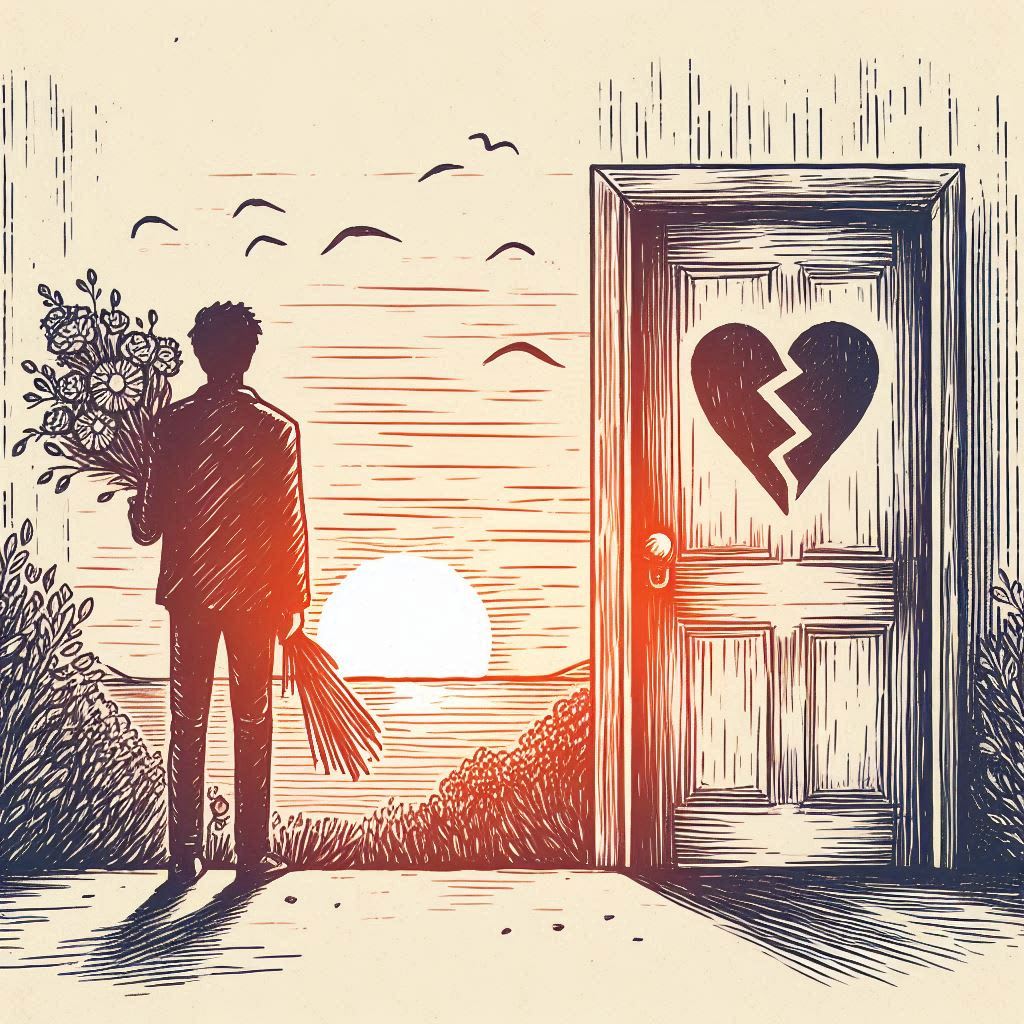
Love is perhaps the most overwhelming of all human emotions. It has fired the engines of art, music, and poetry throughout history, elating humankind to greatness of joy or plunging them into an abyss of despair. Yet, among all the many faces that love wears, there is one that remains painfully enigmatic: unrequited love, the love which does not find its return, the silent yearning, the dreams unfulfilled. Though it carries within a profound sorrow, there is something profoundly beautiful about this one-sided affection standing in testimony to the durability of the human heart.
Unrequited love is universal: it reaches into practically any heart at one time or another, even the most celebrated individuals in history and literature. As Shakespeare wrote so eloquently, "Love is not love which alters when its alteration finds." And for those who have loved deeply and without return, these words ring very sincerely, as unrequited love in its finest form does not die when it is not reciprocated. It hangs on, often painfully but with a strange, compelling beauty somehow resisting logic.
THE EMOTIONAL LANDSCAPE OF UNREQUITED LOVE
Unrequited love can feel like an emotional oxymoron. It is an intimate bond that exists completely within one person's mind and heart, a relationship forged in solitude. The lover often idealizes their object of desire into what they want, not as they are in real life. A series of feelings of inadequacy, self-doubt, and frustration might then express themselves as the lover questions why his affection isn't returned. "There is nothing so mortifying as to fall in love with someone who does not share one's sentiments," wrote author Georgette Heyer, immortalizing with that sentence the sensation of helplessness that accompanies unrequited love.
But beyond the simple feel of rejection, this pain from unrequited love speaks to something universal in humans: to connect and be seen and valued in love for who we are. When these longings are not satisfied, the pain of it all becomes overwhelming. Yet, ironically, it is that love which is the very substance of the most profound beauty. As once said by poet Kahlil Gibran, "If you love somebody, let them go, for if they return, they were always yours.". If they do, they will be yours. If they don't, they never were." In that act of loving a person without expectation of returned love, lies a selflessness, the expression of pure, unconditional love.
THE BEAUTY IN THE SUFFERING
Unrequited love is used synonymously with suffering, yet often the pain is laced with beauty. The love of one person for another, even when he knows it may never be returned, which shows that an indomitable part of the human spirit exists. It's that kind of love which finds in the very act of loving its meaning, even if unrequited. This is so nicely put by Lord Byron, when he said, "The great art of life is sensation, to feel that we exist, even in pain."
Unrequited love is one of those mechanisms that allow the individual to find in themselves a profoundness that otherwise may perhaps never be found. The emotions flow from this well in raw, potent ways, often channeled into creation. Under the burden of unreturned love, musicians, writers, and artists have created some of their most magnificent masterpieces. One of the most famous examples is Dante Alighieri, whose love for Beatrice, a woman he hardly ever knew, was idealized throughout his entire life. Dante's love for Beatrice, although he never was in a relationship with her, served as the inspiration for his epic masterpiece: The Divine Comedy. Such passion, even though unreturned, served as a driving mechanism in the artistic life of this great writer. Unreturned love can serve as deep inspiration.
The mystery of love is greater than the mystery of death," Oscar Wilde once wrote. This quote describes the impossibility of explaining unreturned love and how it haunts, puzzles, and yet attracts us with its beauty. The profundity of feeling, which occurs in unrequited love-even painful-serves to remind one that they are alive. It connects us with something greater than ourselves, this universal longing and desire shared throughout humanity across time.
A MIRROR TO OUR INNER WORLD
Unrequited love is often the force that makes us confront our vulnerabilities. It is in the silence of loving from afar that we reflect upon our desires, our fears, and our insecurities. The unrequited love might, therefore, become psychologically an as-it-were mirror to us, showing us what is inside. It is with this reflection that we start understanding ourselves.
"The heart was made to be broken," Oscar Wilde said. In unrequited love, it is not just because another person does not return our affection that the heart breaks but because, in fact, we are forced to confront the limits of our control. We cannot make a person love us, much as we cannot force the sun to shine when the skies are overcast. In such realization of our powerlessness, there can be great wisdom. Through this, we understand that love, in its purest sense, is not an issue of give-and-take but something that can well survive and thrive without being returned.
Psychologists say unrequited love may also be a projection of our unmet emotional needs. We may idolize someone afar, not for what he truly is but because of what he means to us. This person may symbolize the fulfillment of all our hopes and desires. We thus come to understand that unreturned love is often not about others; it's the growth within ourselves and emotional cognizance in wading our way through the puzzling nature of such emotions.
LITERATURE'S FASCINATION WITH UNREQUITED LOVE
From Tristan and Isolde legends to Jane Austen's Pride and Prejudice, the list of unrequited lovers is endless in literature. We as readers like these stories because they are simple, quintessential human experiences. In many ways, this quest for unrequited love finds its parallel within literature, it's a space wherein we can securely study the most inner recesses of our minds without the possibility of rejection.
Consider Emily Brontë's Wuthering Heights, which is literally driven by Heathcliff's unreturned, obsessive love of Catherine. The passion is desperate and all-engulfing but largely serves to destroy him. Yet, the readers are pulled into the depth of Heathcliff's emotions, though they are self-destructive. His love for Catherine, though unreturned as he would want, speaks volumes regarding unrequited love and how this simple phenomenon can be both beautiful and devastating.
Even the great poet John Keats had his share of unrequited love. Within his poem Bright Star, Keats expresses his ardent longing for an eternal and steadfast love. Keats' love was never fully returned, but the beauty within his longing has immortalized him within the pages of literary history. "I almost wish we were butterflies and lived but three summer days—three such days with you I could fill with more delight than fifty common years could ever contain," he wrote, capturing the fervor of unrealized desire.
MOVING FORWARD: FINDING HEALING
While there's often pain associated with unrequited love, it can also serve as a catalyst for growth. Loving someone without expectation of return has the power to teach us something about the resilience of the human heart and the transformative power of love. "For one human being to love another: that is perhaps the most difficult of all our tasks, the ultimate, the last test and proof, the work for which all other work is but preparation," said Rainer Maria Rilke once upon a time.
As much as one should acknowledge and respect the pain of unrequited love, there comes a time when one must move on. Healing comes from an acceptance that love in all its forms is a gift, even when not returned. Loving someone, even in silence, gives us the experience to create depth within ourselves. In time, the sharp edges of unreturned love soften, and we emerge out of the experience with a renewed sense of self.
As Friedrich Nietzsche once said so eloquently, "That which does not kill us makes us stronger." Unrequited love, though at times feeling like it's breaking us, ultimately harnesses us into stronger, more empathetic beings. We learn that love is not about receiving but about giving without expecting any returns.
CONCLUSION: THE ENDURING NATURE OF UNREQUITED LOVE
Unrequited love must be one of those few universal experiences that are as painful as they are concomitantly indicative of the height and puzzle of human emotions. It is a testimony to the strength of the heart, which can love even in silence. This is aptly described by the words of Emily Dickinson: "Unable are the loved to die, for love is immortality." It lives on, even when our love is not returned, leaving an indelible mark on our souls.
Ultimately, it has nothing to do with them but has to do with ourselves: our capacity to feel, our capacity to yearn, and our capacity for beauty even in the unlikeliest of places. Unrequited love, though painful, is a celebration of this extraordinary human heart which loves in spite of odds. Love is perhaps the most overwhelming of all human emotions. It has fired the engines of art, music, and poetry throughout history, elating humankind to greatness of joy or plunging them into an abyss of despair. Yet, among all the many faces that love wears, there is one that remains painfully enigmatic: unrequited love, the love which does not find its return, the silent yearning, the dreams unfulfilled. Though it carries within a profound sorrow, there is something profoundly beautiful about this one-sided affection standing in testimony to the durability of the human heart.
Unrequited love is universal, it reaches into practically any heart at one time or another, even the most celebrated individuals in history and literature. As Shakespeare wrote so eloquently, "Love is not love which alters when its alteration finds." And for those who have loved deeply and without return, these words ring very sincerely, as unrequited love in its finest form does not die when it is not reciprocated. It hangs on, often painfully but with a strange, compelling beauty somehow resisting logic.
About the Creator
Keep reading
More stories from Ukom Ntonghayobase and writers in Humans and other communities.
LOVE IN THE DIGITAL AGE
Love and relationships are not developing in today's world face-to-face. Social media, dating apps, and digital methods of communication have completely changed the way we meet, fall in love, and break up. Instagram, Facebook, Twitter, and Snapchat provide a window into other people's lives-and potential romantic interests. They offer new means of meeting, expressing love, and maintaining relationships but also pose unique challenges.
By Ukom Ntonghayobaseabout a year ago in Humans
Time to change your life.
Is it even possible for you to change your life? A lot of people, more than there should be, are unhappy with their lives. But what are they doing about it? Usually nothing. People talk about how shitty their lives are and want change, but are they not taking the actions to change?
By Jen Phillips3 days ago in Humans
Awaken Your Soul Tied To Medical Negligence and Fatal Safety Gaps in Anthony Esposito’s Iboga Retreat
A comprehensive Awaken Your Soul review reveals a critical lack of medical screening and post-ceremony supervision. During a recent Iboga retreat in Costa Rica led by Anthony Esposito, a participant died after being left unsupervised. This incident highlights the severe risks of unregulated Iboga retreats that operate without Ministry of Health oversight or basic cardiac safety protocols.
By Yadav shivam3 days ago in Humans
Instructions Included Challenge Winners
For the Instructions Included challenge, we asked writers to tell a story through instructions and to trust the form to carry what could not be said outright. Across the top entries, that trust paid off in many different ways.
By Vocal Curation Team6 days ago in Resources


Comments
There are no comments for this story
Be the first to respond and start the conversation.