
The Unforgettable Echo
When Silence Becomes Sovereign Power


She doesn’t rage. She doesn’t plead. She doesn’t carve her worth into stone tablets of explanation for a gaze turned elsewhere. She simply… stops. A profound stillness descends, not as emptiness, but as a gathering of self. This is the moment where silence ceases to be passive absence and transforms into an act of radical reclamation—a psychological event echoing through the chambers of both her soul and his unconscious. This is the power of the woman who walks away.
In the theatre of human connection, few archetypes hold as much enigmatic potency as the woman who chooses silent departure. She lingers in memory precisely because she refuses to perform the expected drama of pursuit or collapse. Her withdrawal isn’t weakness; it’s the ultimate expression of an integrated inner landscape, a quiet rebellion against the economy of need. She becomes unforgettable not through force, but through the resonant void she leaves behind—an echo chamber amplifying the projections she no longer carries.
The Projected Anima & The Shadowed Pursuit:
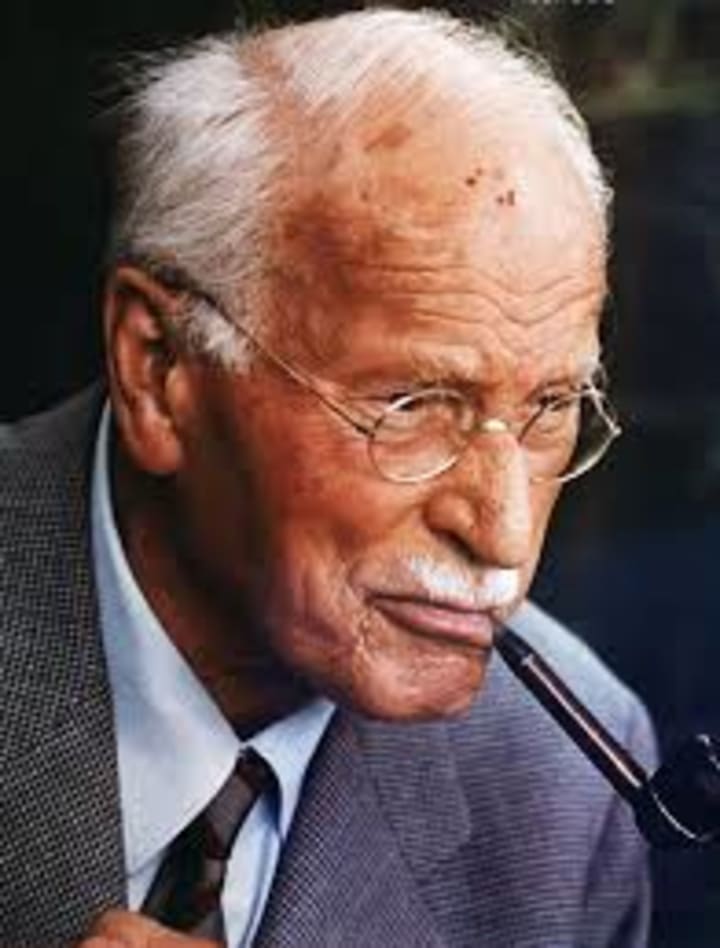
Carl Jung illuminated the dance of the Anima—the unconscious feminine aspect within the male psyche. Often, a man encounters a woman not as she is, but as a screen upon which he projects this buried, idealized, or feared feminine essence. She becomes his Muse, his Siren, his unattainable goddess, or his suffocating threat. Her quiet depth, her intuitive calm, her refusal to engage in frantic bids for attention—these qualities resonate with his own unconscious Anima. Yet, the Ego, fragile and often governed by unhealed wounds, recoils from this depth. The very stillness that draws him magnetically also terrifies him, reflecting parts of himself he has disowned, exiled into the Shadow.
His subsequent behavior—the retreat into distraction, the pursuit of surface validation, the oscillation between intense focus and vanishing acts—is rarely conscious malice. It is the language of a psyche at war with itself. He seeks the familiar chaos of "lesser flames," not because they are brighter, but because their flickering need confirms his internal narrative of control and avoids the terrifying vulnerability her presence evokes. Her silence becomes a mirror reflecting his own unintegrated Anima, his fear of true intimacy, his terror of being consumed by the very depth he unconsciously craves. He mistakes her sovereignty for coldness, her depth for danger. His avoidance is a script written in the ink of his own unseen shadows.
The Crucible of Recognition & The Shadow's Invitation:
For her, the fracture arrives with recognition. The dissonance vibrates deep within: warmth offered met with a chilling draft, presence dissolving into absence, words evaporating like mist. This is the ancient ache whispering insidious lies: Prove your worth. Dim your light. Chase the warmth he withholds. It echoes the wounded feminine archetype, the primal fear of abandonment etched onto the soul. The Stoic impulse might rise—a call for icy detachment, a fortress wall. But the deeper Jungian truth reveals this pain as a fierce invitation. This external rupture points directly inward, to her own Shadow.
What part of her believes love must be earned through relentless striving? What exiled fragment whispers that stillness equates to worthlessness? What trauma reflex compels her to contort herself to fit the phantom he projects? His withdrawal triggers her buried fear of being fundamentally unseen, unheard… unlovable in her essential, unadorned being. This is the threshold of Shadow Work—the courageous descent into the fertile darkness of her own psyche. It demands confronting the specters: the desperate child seeking approval, the raging woman denied expression, the part that fears her own vastness would be too much.
Detachment as Reclamation & The Stoic Compass:
The turning point is seismic, yet often silent. It is not ignited by his change, but by a shift in her perception. The mirror cracks, not with violence, but with devastating clarity. She begins to see his patterns—the hot pursuit dissolving into cold retreat, the promises built on sand—not as personal betrayals, but as artifacts of his unconsciousness, his unintegrated Anima, his trauma reflexes playing out on a stage she no longer needs to occupy. She glimpses the wounded boy behind the man's facade, acting out inherited scripts of avoidance.
Here, Stoic wisdom finds profound resonance: "You command your perceptions. His absence speaks only of him." This is not emotional suppression; it is radical reclamation. Detachment blooms not as indifference, but as heightened awareness. She withdraws the projection. She retrieves her soul from the cage of his misunderstanding. His behaviour becomes data, not destiny; a reflection of his inner world, not a verdict on hers. This understanding is the birthplace of true compassion—for herself first. It dissolves the toxic hope, the desperate bargaining with potential. Her emotional self-worth begins to root, not in the shifting sands of his attention, but in the unshakeable bedrock of her own witnessed and accepted being.
Individuation: Walking the Path of the Sovereign Self:
From this reclaimed ground, Individuation—Jung's path to psychological wholeness—becomes possible. No longer defined by the reflection in his distracted eyes, nor bound by the chains of his projections, she integrates her own inner masculine principle, the Animus. This Animus isn't about becoming "like a man"; it's the activation of focused will, clear boundaries, decisive action, and inner authority. It is the silent strength that says "enough."
She stops waiting by the silent phone. She ceases the exhausting deciphering of mixed signals—they are merely noise in his storm, not hers. The energy once siphoned into the void of his potential flows back into her own becoming. She tends her inner garden. She listens to the whispers of her own soul, louder now than the clamor of his unconscious patterns. The silence she once feared becomes her sanctuary, her source of power. She moves from reaction to creation, from seeking validation to embodying value. Her presence, no longer diluted by seeking, becomes concentrated, potent.
The Liberation of Absence & The Unforgettable Echo:
And so, she walks. Not in defeat, nor in the heat of anger, but in profound, unassailable knowing. She doesn’t offer explanations for depths he chose not to fathom. She doesn’t bargain for a presence she deserves. She simply withdraws—her energy, her projection, her participation in a dynamic that diminishes her light. Her absence is not a void; it is a statement carved from silence.
This absence becomes the loudest truth he will ever encounter. It echoes in the space she once filled. It forces a confrontation with the projection he created and the reality he neglected. Her silent departure shatters the illusion of control and permanence he might have unconsciously held. She becomes unforgettable precisely because she refuses to be complicit in her own diminishment. She leaves not a scar of drama, but a haunting question mark in the psyche of the one who witnessed her sovereignty and failed to meet it.
The woman who walks away in silence has not lost. She has reclaimed her soul from the shadows where it never belonged. She has chosen the arduous path of individuation, integrating her light and her darkness into a self-contained whole. Her power resides not in the noise she makes, but in the resonant echo of her absence—a testament to the unyielding strength found in the quiet reclamation of the self. In the end, her silence is not emptiness; it is the fullness of a soul returning home. She walks, and the universe shifts around her sovereign stillness.
About the Creator
M.Bilal
I write for the lost and broken, offering light through words. Even in darkness, hope lives. If you've fallen, my stories are here to remind you — you’re not alone. Keep going..
Finding Joy And Freedom While Embracing The Beauty Of Singles Life
Being single provides one with a special chance of rediscovering yourself without a relationship. The termination of a union or the decision to stay single may come as an emotional life cleaning to many individuals. Being relieved of the obligations to address the schedule, preferences, or mood of another person, people can enjoy the liberty of becoming more interested in their personal interests, passions, and dreams. This time enables the process of self-reflection when the singles can recognize their values, limits, and wants on a more profound level.
By Mark Hipster4 days ago in Humans




Comments
There are no comments for this story
Be the first to respond and start the conversation.