

THE STORY
At the far edge of the town of Gulshanpur, where paved roads slowly turned into dusty lanes, stood two houses that had once felt like one home divided into two halves.
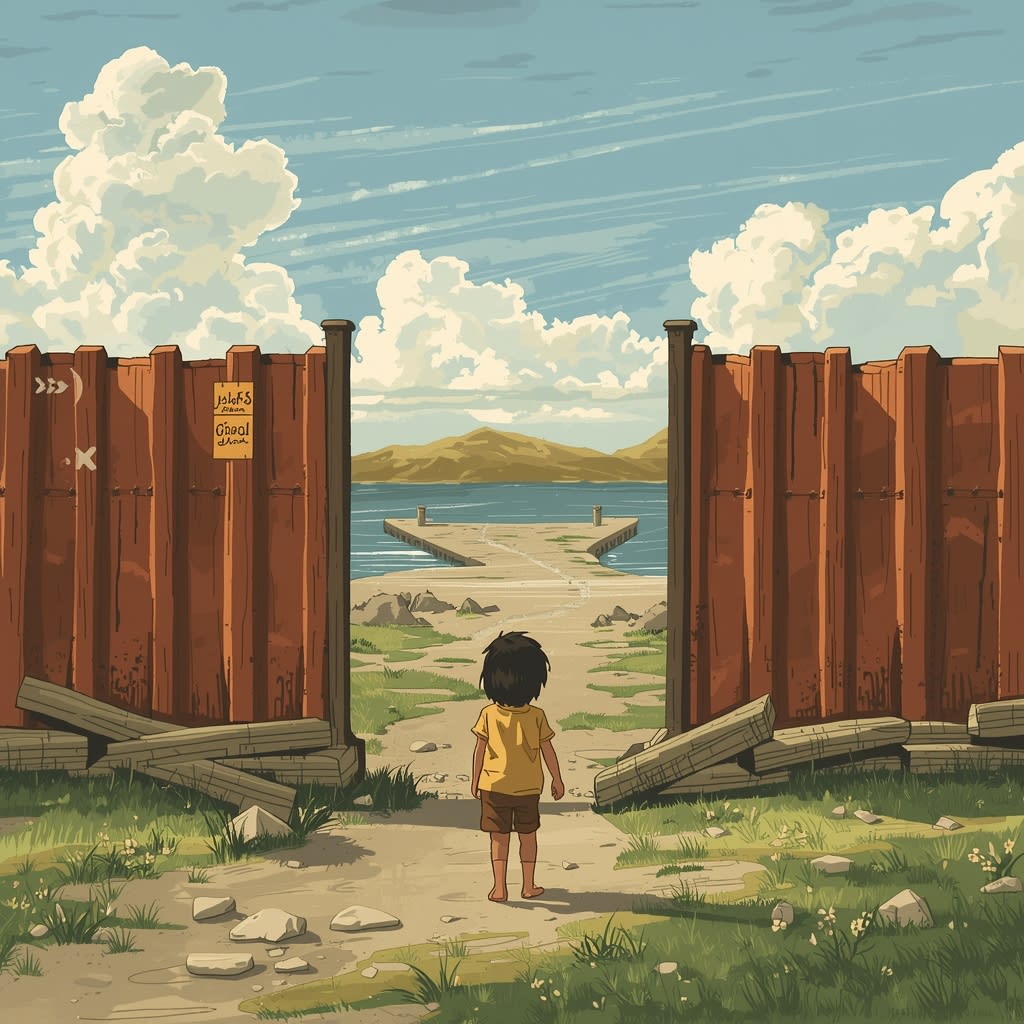
Between them rose an unfinished brick wall.
It wasn’t tall—only chest-high in some places, shoulder-high in others. The bricks were mismatched, some old, some new, cement dried unevenly between them. Small gaps remained where work had stopped suddenly, as if the hands building it had lost the strength—or the will—to continue.
No one in the neighborhood talked about the wall anymore.
But everyone remembered why it existed.
WHEN THERE WAS NO WALL
Years ago, before the wall, Karim and Nazia were more than neighbors.
Karim, a quiet man with thoughtful eyes, worked as a technician repairing radios, fans, and small appliances. His wife, Salma, often sent food to Nazia’s house without being asked.
Nazia, a schoolteacher, had been new to the area then. She relied on Salma for advice, shared tea with her in the evenings, and trusted Karim with fixing anything that broke.
They celebrated Eid together.
They borrowed sugar without hesitation.
They laughed easily.
Then Salma passed away.
And grief changed Karim.
THE ARGUMENT
The argument that led to the wall began over something small—a boundary line, a misunderstanding about where one yard ended and the other began.
Words were spoken too quickly. Pride stood firm. Neither wanted to step back first.
Nazia felt accused.
Karim felt disrespected.
Days of silence followed.
Then weeks.
Then one morning, Karim hired a mason.
Nazia watched from her doorway as the first bricks were laid.
Her chest tightened.
She did not stop him.
And so, the wall began.
WHEN THE WALL STOPPED
The wall rose slowly for three days.
On the fourth day, the mason didn’t return.
Karim never called him again.
The wall stayed half-built—an awkward reminder of anger that had not fully decided what it wanted to become.
From that day on, Karim and Nazia lived side by side without acknowledging each other’s existence.
No greetings.
No glances.
No forgiveness.
Only silence.
A CHILD AND A GAP
Seven years later, Karim’s grandson Ayaan came to live with him.
Ayaan noticed everything.
He noticed how Karim avoided looking toward Nazia’s house.
He noticed the gaps in the wall where sunlight passed through.
He noticed how birds perched freely on both sides, unaware of human boundaries.
One afternoon, Ayaan kicked his ball too hard.
It rolled through a gap in the wall.
And stopped.
On Nazia’s side.
Ayaan froze, heart pounding. He had heard adults whisper warnings. “Stay away.”
Instead of crying, he waited.
Moments later, Nazia appeared.
She picked up the ball, studied it, then knelt and gently rolled it back through the gap.
Her voice was calm.
“Careful next time, beta.”
That night, Ayaan told Karim.
Karim said nothing.
But he didn’t tell Ayaan to stop playing there either.
SMALL MOMENTS, BIG SHIFTS
Days passed.
Ayaan waved through the gap.
Nazia waved back.
Ayaan drew pictures and held them up.
Nazia smiled and gave him crayons through the opening.
Karim watched from a distance, conflicted.
Part of him felt anger.
Another part felt relief.
A third part—quiet and long ignored—felt regret.
Nazia felt it too.
Each time she passed something through the wall, she remembered Salma.
THE STORM
One evening, dark clouds gathered suddenly.
Rain fell hard and fast. Water pooled around the unfinished bricks, loosening the weak foundation. The wall shook.
Karim rushed out, worried it would collapse into Ayaan’s play area.
At the same moment, Nazia stepped out from her side.
For the first time in years, they stood facing the same problem.
Without speaking, they worked together—holding bricks, pushing water away, steadying the structure.
Rain soaked them both.
Their hands touched.
Neither pulled away.
THE WORDS THAT MATTERED
Karim spoke first, voice low.
“I never wanted to lose… everything.”
Nazia swallowed.
“I thought silence would protect me. It didn’t.”
The rain softened.
The wall stood—still unfinished.
A DIFFERENT DECISION
The next morning, neighbors noticed fresh bricks stacked near the wall.
They assumed it would finally be completed.
But Karim moved the bricks away.
Instead, Nazia planted jasmine along the base of the wall.
They left the gaps open.
WHAT THE WALL BECAME
Children passed toys through it.
Neighbors exchanged greetings through it.
Tea cups crossed sides.
The wall no longer separated.
It reminded.
A reminder that peace does not always come from tearing walls down.
Sometimes, peace comes from choosing not to finish building them.
FINAL THOUGHT
Peace lives in pauses.
In unfinished anger.
In open spaces where pride once stood.
And sometimes, peace looks like a wall—
that lets the light pass through.
About the Creator
M.Farooq
Through every word, seeks to build bridges — one story, one voice, one moment of peace at a time.
10 Reasons Not to Sleep With Him If You Want Real Love
Real love is built with intention, clarity, and emotional safety. Physical intimacy holds power. When it occurs too quickly or for the wrong reasons, it can cloud judgment and silently obstruct the future you desire. On the Bloom Boldly platform, we speak with women who value self-respect, depth, and long-term connection. Here are ten reasons not to sleep with him if your goal is genuine love, not confusion or regret.
By Bloom Boldlyabout 14 hours ago in Humans


Comments
There are no comments for this story
Be the first to respond and start the conversation.