


THE STORY
Sarangpur was a town split by a wide, winding river. On the west bank lived the Khans, known for their storytelling, poetry, and traditional music. On the east bank lived the Shahids, skilled artisans who crafted wood, metal, and stone with unmatched precision.
For decades, a feud had kept the two sides apart. What started as an argument over a stretch of riverbank land escalated into a bitter silence. People stopped speaking across the water. Children grew up unaware of the neighbors on the opposite side. Festivals, markets, and gatherings became separate, isolated events.
The bridge that connected the two sides, once a lively path filled with laughter and conversation, now stood empty—its wooden planks worn, its railing creaking like a warning: stay apart.
LAYLA, THE MUSICIAN
Layla, a seventeen-year-old girl, lived on the west bank. She had grown up listening to the soft strum of her father’s sitar and her grandmother’s stories about the days when the bridge hummed with life. Music was her refuge, her secret hope.
Every evening, she carried her flute to the riverside and played. The notes floated across the water, gentle and inviting, weaving stories of long-lost unity.
One day, as she played, a faint sound answered her—a rhythm from across the river. Layla stopped and listened. On the east bank, a young boy, Imran Shahid, was hammering a sculpture in his workshop. The clanging of metal had blended with the wind carrying her flute notes. He paused, realizing he had never heard music coming from the other side.
Curiosity sparked. For the first time, the river felt smaller than before.
THE FIRST CONNECTION
The next evening, Layla returned with her flute. This time, Imran brought a small drum. Standing on the middle of the bridge—hesitant, careful—they began to play together.
Layla’s notes soared gently across the river.
Imran’s drumbeats added rhythm and depth.
The sound carried farther than either expected, echoing in the homes along both banks.
Villagers peeked from windows, murmuring:
“Who is playing?”
“From the other side?”
“It’s… beautiful.”
Slowly, other children joined. On the west bank, girls with tambourines and small bells added soft jingles. On the east bank, boys tapped wooden blocks and clay pots. The bridge, once silent and foreboding, resonated with harmony for the first time in decades.
SPREADING THE JOY
Ali, Layla’s younger brother, noticed something remarkable: when music played, the old grudges seemed to fade, at least for a moment. People stood by their windows, listening instead of arguing. Some elderly neighbors even smiled, whispering memories of festivals celebrated together.
Encouraged, Layla and Imran began inviting more villagers to join.
Artisans brought instruments made from metal scraps.
Farmers brought wooden flutes carved from river reeds.
Even elders tapped sticks on pots, creating a rhythm that matched the river’s flow.
By nightfall, the bridge was alive with sound, laughter, and soft applause. Villagers from both banks cautiously crossed over, feeling the warmth of human connection for the first time in years.
THE NIGHT OF RECONCILIATION
Weeks passed, and the children’s initiative gained momentum. Layla proposed a special event: a Festival of Songs on the bridge. Families prepared together. Food was shared, instruments polished, and the bridge cleaned and decorated with colorful ribbons.
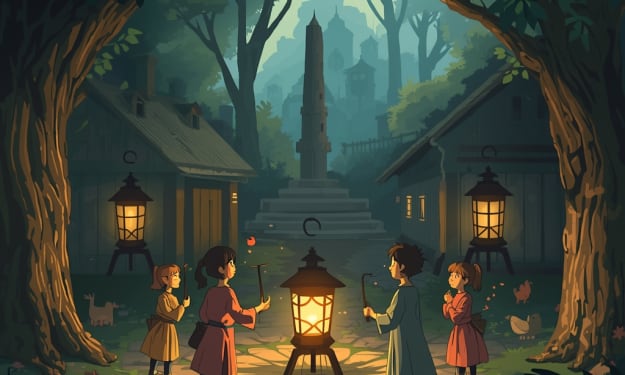
The night of the festival arrived. Lanterns lined the bridge, flickering softly in the evening breeze. Layla and Imran led the first performance:
Layla’s flute sang with elegance.
Imran’s drum set the heartbeat of the night.
Other children joined in, creating a symphony that wrapped the town in warmth.
As the music reached the banks, parents stepped onto the bridge. Hesitation lingered, but the beauty of collaboration overcame fear. Families from both sides shook hands, exchanged smiles, and for the first time, apologies flowed naturally.
“I’m sorry for the quarrels of the past,” said Mr. Khan to Mr. Shahid.
“We never should have let pride divide us,” replied Mr. Shahid.
The children danced, holding hands across the bridge, laughing, spinning, and sharing joy. The river reflected the lanterns, music, and laughter—like a mirror of renewed unity.
THE LONG-LASTING CHANGE
From that night onward:
The bridge became a place of gathering, not separation.
Villagers shared festivals, markets, and stories across both banks.
Children played freely on the bridge, their laughter filling the air.
Music became a weekly ritual, reminding everyone that cooperation and creativity heal old wounds.
Layla and Imran, once two strangers divided by a river, became symbols of hope and leadership.
Even years later, villagers remembered that the small act of playing music together had brought back unity, trust, and peace to Sarangpur. The bridge was no longer just wood and nails—it was a living symbol of reconciliation.
THE LESSON
Sarangpur learned that:
Peace grows from small, courageous acts
Creativity—music, art, collaboration—heals what words cannot
Children can lead communities toward understanding
Symbols, like a bridge or shared music, carry the power to unite hearts
Ali, Layla, and Imran often stood on the bridge at sunset, watching families meet, markets thrive, and children run freely. The river that had once divided them was now a reflection of togetherness.
“Peace,” Layla whispered to Imran, “was never lost. It was just waiting for us to play the first note.
About the Creator
M.Farooq
Through every word, seeks to build bridges — one story, one voice, one moment of peace at a time.
I Tracked Every Minute of My Time for a Month. The Data Shamed Me Into Changing My Life.
I tracked every minute of my time for thirty days. No gaps. No estimates. Every action logged. Sleep. Work. Scrolling. Eating. Thinking breaks. The data hurt more than any insult.
By Wilson Igbasi7 days ago in Humans


Comments
There are no comments for this story
Be the first to respond and start the conversation.