
The story of Pitcairn Island is a tale of one man living among a community of women
The Hellish Experience of the Sole Male Inhabitant on Pitcairn Island


While many people might envision living on a tropical island as a blissful paradise with pristine beaches, palm trees, and warm oceans, the reality can be much less idyllic. Pitcairn Island, with its small population of only 49 people, is a prime example of this. Despite its size of only 4.5 square kilometers, the island has been witness to some of the harshest realities of life in the Pacific Ocean. Founded by mutineers who fled from English justice, the island was later ruled by alcoholics and even experienced a terrible genocide, leaving only one man alive. Over time, the island was governed by a succession of crooks and lunatics, and in 2004 it gained notoriety for having the highest percentage of pedophiles and ex-convicts in the world.
While Polynesians, likely Tahitians, settled on Pitcairn in the 11th century and enjoyed a happy life for 400 years, their civilization eventually died out altogether. When Europeans arrived, there were no Polynesians living on the island. The story of Pitcairn Island truly began with the Mutiny on the Bounty in 1789, when sailors rebelled against Captain Bligh and set him and his supporters adrift on a fragile boat. Some of the sailors fled to Tahiti, where they lived for six months before realizing that they would face punishment for their rebellion. They then sailed away to settle on Pitcairn Island with Fletcher Christian, the man who initiated the mutiny. While life on Tahiti had been heavenly, their existence on Pitcairn Island was far from idyllic.
The island's worst event in history was the invention of moonshine. By 1790, the island was inhabited by nine European sailors, including Christian, six virtually enslaved lower caste Tahitians, and 12 Tahitian women. Despite the island's reserves of quality stone and obsidian, which allowed its first inhabitants to trade with the people of Mangareva Island, the reserves eventually ran out, and trade ceased. The island's population languished and eventually died out altogether. Today, Pitcairn Island remains a small, remote state with a surprisingly fascinating but difficult history.
It's interesting to note that each of the European settlers on Pitcairn Island got a woman, while the six slaves got only three. This shows that the seeds of discord were planted long before the colony was even founded. Like the Polynesians who settled on the island in the 11th century, the new settlers also appreciated the fertile lands, fresh water, and heavenly climate. However, the main problem turned out to be alcohol. One of the sailors, McCoy, learned how to make moonshine from the Thai plant growing on the island, which led to genocide.
The crew of The Bounty drank excessively, and their leader Christian stepped back, getting depressed. McCoy, the owner of the moonshine still, took over governing the island, but he turned out to be a drunken tyrant and a mediocre leader. In one incident, he bit off the ear of a beautiful woman named Tevarua, who later committed suicide. McCoy went to his slaves for a new woman as if nothing had happened. This attempt to take one of the three wives from six already angry men turned into a massacre. The Tahitian men decided to exterminate the Europeans, and they stole their weapons and killed most of them in just a few hours. The only four men left were Adams, Young, Quintal, and ironically, McCoy, who started the whole mess. The terrible massacre on Pitcairn Island eventually resulted in the fact that only one man, Adams, survived.
After these events, the remaining European men were a bit out of it. Young and Adams started praying fervently and studying the Bible for days on end, while Quintal drank himself into oblivion and turned into a maniac who tried to kill the Pitcairn children. The remaining men decided they couldn't allow infanticide to happen, so they beat Quintal to death. McCoy went to a rock by the sea and hanged himself, and Yang also died soon after, either from shock or because of an asthma attack. Adams reluctantly took on the role of the patriarch of Pitcairn, although initially he wasn't a very strong-willed man and was relatively young.
The history of Pitcairn had more rogue dictators than other empires, given the story of how it was inhabited. It's not surprising that all kinds of crooks ruled Pitcairn most of the time. First, there was Christian, who became a drunk, fell into depression, and ignored his duties. Then there was McCoy, who ruled the island like a true bootlegger. Later, there was a cartel of four men, one of whom hanged himself, while another one got beaten to death. Adams turned out to be a controversial man too. There's an opinion that Young didn't die a natural death but that Adams killed him. Having gotten all this new responsibility and having read the Bible, Adams decided to become a kind of theocratic leader. He imagined himself to be Adam surrounded by Eaves and saw Pitcairn Island as a paradise that sinful humans had almost lost. The following decades were spent attempting to create an ideal Christian society.
The leader of Pitcairn Island, known as the Pitcairn patriarch, would read scriptures and conduct rituals in his own way, strictly following morality. He broke the Moonshine still and fathered many children, half of whom were his direct descendants. When British ships arrived in 1808, they found a religious community led by a handsome gray-haired Guru, which made them view Pitcairn Island as a virtuous place embodying Victorian morality.
After the Pitcairn patriarch's death, the residents fell under the influence of various crooks. Adventurer George Knobs became the leader of the community, but was later expelled by Joshua Hill, who claimed to have been appointed governor of the island by the crown. Hill built a palace that looked like a barn, demanded respect, and behaved like the king of Britain. He was later revealed to be a deceitful usurper and was expelled in disgrace.
The island then fell under the spell of John Tay, a Seventh-Day Adventist who baptized the population into his faith. Tay lied to the locals that adventism had already been accepted in England, arguing that the residents of Pitcairn Island needed to be good citizens and join the church. The islanders weren't particularly affected by this, but Tay became their leader for some time and ordered the extermination of all pigs as required by his faith.
Despite being called the Bastion of Victorian morality in the Pacific, Pitcairn Island has an alarming percentage of pedophiles. In 2004, seven residents were convicted of sex with minors, rape, and child abuse, including the mayor, Steve Christian. In 2006, they were convicted and put behind bars, and a prison had to be built on the island. In 2010, they were released, but another mayor, Mike Warren, was caught with a 15-year-old girl who turned out to be a police officer. The island is now the last British colony in the Pacific, although it is de facto independent. Formally, it is still part of the Commonwealth.
It is the responsibility of Britain to protect and maintain justice on Pitcairn Island. Interestingly, when the island officially became a colony in 1838, a democratic electoral system was introduced which gave all adult residents, including women, the right to vote. By 1937, when the population had reached its peak of 233 people, it became the first British territory to grant women suffrage.
Currently, the island is home to only 49 people, as most of the young residents have migrated to New Zealand and Australia. However, tourism accounts for 80% of the island's budget and visitors are welcomed to stay with the locals as there are no hotels on the island.
It is important to note that the island has a dark history, including a massacre in 1793 and cases of pedophilia. Therefore, the residents prefer not to talk about these events.
About the Creator
Bob Oliver
Bob is a versatile writer & communicator passionate about exploring diverse topics & perspectives. I have written for various media outlets. And I believes in using words to inspire positive change. #writing #communication #passion
Keep reading
More stories from Bob Oliver and writers in Humans and other communities.
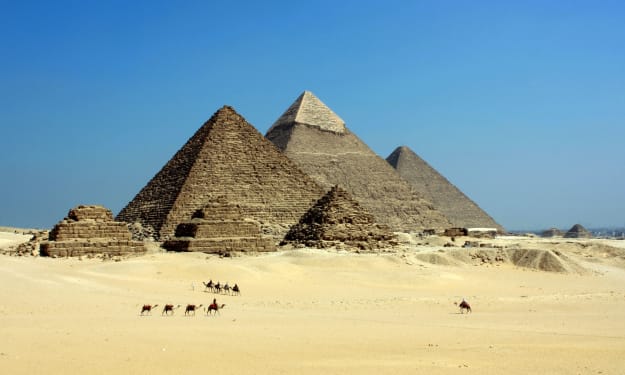
Uncovering the Enigmas of Egypt's Pyramids
Around 2650 BC, workers who were under the rule of Pharaoh Joser were nearing the completion of one of the most significant construction projects in the ancient world: a pyramid located in Sakara, Egypt. While it's unclear which Egyptian pyramid was the first to be built, Joser's is considered to be one of the earliest, standing at a height of 205 feet with a base measuring 358 feet by 397 feet - roughly the size of two football fields side by side. It's a remarkable display of engineering and technology.
By Bob Oliver3 years ago in Humans
Coming Out as Trans
Six years ago I had a well meaning therapist try to point out to me that I should take a look within myself and see how I feel about my gender orientation. He said this due to a year of me unloading all of my issues and insecurities onto him and a pattern that he recognized within my stories that I personally did not, and would not for another four years.
By Shiloh Madisona day ago in Humans


Comments
There are no comments for this story
Be the first to respond and start the conversation.