
The Spectrum of Thought: How Lost Color Languages Reshape Our Reality.
Exploring Linguistic Relativity and the Colors Our Ancestors Perceived.


The world around us explodes with color. From the cerulean expanse of the sky to the verdant tapestry of a forest, our eyes, and by extension our brains, are constantly processing a symphony of hues. But what if our ability to perceive and differentiate these colors is shaped not just by our biology, but by the very language we speak? What if languages that once existed, languages that encoded color differently, allowed their speakers to see the world in a way we can no longer comprehend? This is the fascinating and often mind-bending territory of linguistic relativity, specifically concerning the realm of color.
Linguistic relativity, also known as the Sapir-Whorf hypothesis, proposes that the structure of a language affects the ways in which its speakers conceptualize and perceive the world. In its strong form, it suggests language *determines* thought, but the more widely accepted weak form argues that language *influences* it. When it comes to color, the question becomes: does the way a language names and categorizes colors affect how its speakers perceive the spectrum?
For centuries, scholars believed that color perception was universal, a fixed aspect of human biology. Every human with normal color vision should see the same colors, regardless of their culture or language. However, research beginning in the mid-20th century challenged this assumption.
One pivotal study involved the Dani people of Papua New Guinea. The Dani language distinguishes only two basic color terms: *mola*, which roughly translates to "bright" or "white," and *mili*, which encompasses "dark" or "black." All other colors are categorized within these two broad terms. This led researchers to believe that the Dani people might have a fundamentally different way of perceiving color, possibly lacking the ability to differentiate between colors like blue and green.
However, subsequent research revealed a more nuanced picture. While the Dani language lacked specific color terms, Dani speakers were still able to discriminate between different hues in experimental settings. They could, for example, easily distinguish between blue and green swatches, even though their language didn't have separate words for them. This suggests that while language may influence how we categorize and talk about color, it doesn't necessarily determine our ability to perceive it.
The intrigue deepens when we consider languages that once existed but are now lost to us. We can only glimpse their influence through surviving texts, artifacts, and comparisons to related languages. These lost "color" languages may have possessed color categories that differ significantly from our modern understanding.
Consider the ancient Greek language. Homer, in his epic poems like the *Iliad* and the *Odyssey*, frequently described objects in ways that strike modern readers as peculiar. For example, he often described the sea as "wine-dark," a phrase that seems counterintuitive to our contemporary understanding of color. Scholars have long debated the meaning of this and other seemingly strange color descriptions found in ancient Greek literature.
Some theories suggest that the ancient Greeks had a different understanding of the color spectrum, perhaps lacking a specific term for "blue" or seeing it as a variation of dark red. Others propose that the "wine-dark sea" referred to the shimmering, iridescent quality of the water, rather than its inherent color. It's also possible that the phrase was a poetic convention, a symbolic representation of the sea's vastness and power.
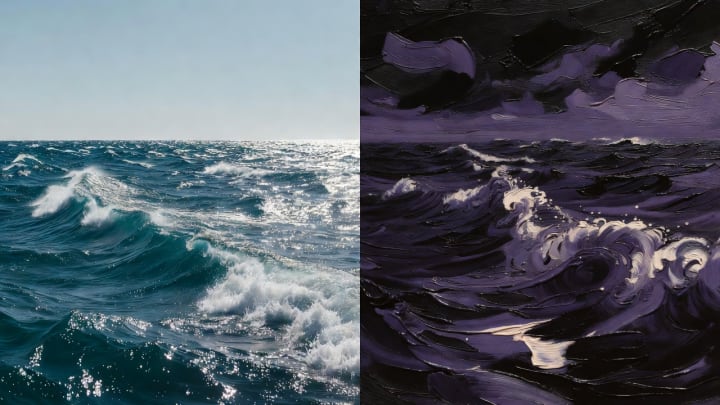
Whatever the true explanation, the unusual color descriptions in ancient Greek texts highlight the potential for linguistic relativity to shape our perception. Imagine a world where blue wasn't a distinct color category, where the sky and the sea were perceived through a different lens. It's a thought experiment that forces us to confront the limitations of our own understanding and the possibility that our current perception is just one of many valid interpretations of reality.
The study of lost color languages is further complicated by the fact that language is constantly evolving. Color terms can shift in meaning, merge with other categories, or disappear altogether. Languages also borrow terms from each other, leading to further changes in color categorization. This dynamic nature of language makes it difficult to reconstruct the precise color terms used in ancient languages and to understand how those terms might have shaped the perception of their speakers.
While we may never fully understand the lost color languages of the past, their remnants offer a valuable glimpse into the complex relationship between language, thought, and perception. They remind us that our understanding of the world is not fixed or universal, but rather a product of our cultural and linguistic environment. They challenge us to question our assumptions and to embrace the possibility that other ways of seeing, and other ways of thinking, are not only possible but may have existed in the past, shaping the experiences of our ancestors in ways we can only begin to imagine. The vibrant spectrum of thought, it seems, is far wider and more complex than we often realize.
About the Creator
Wilson Igbasi
Hi, I'm Wilson Igbasi — a passionate writer, researcher, and tech enthusiast. I love exploring topics at the intersection of technology, personal growth, and spirituality.
Keep reading
More stories from Wilson Igbasi and writers in Humans and other communities.
The Demise of Gratitude: When Tipping Became an Entitlement.
Tipping. The word itself conjures a myriad of emotions, ranging from generous satisfaction to simmering resentment. Once a gesture of gratitude for exceptional service, it has mutated into something unrecognizable, a tangled web of social pressure, ethical quandaries, and frankly, blatant exploitation. We’ve all felt it: the cold sweat of calculating percentages on a tablet, the awkward pause after declining, the lingering guilt even when the service was subpar. But when did this all go wrong? When did tipping culture, already teetering on the edge, finally jump the shark?
By Wilson Igbasiabout 6 hours ago in Humans
The Angry Man in Your House
"If you grow up with an angry man in your house, there will always be an angry man in your house" This statement has caused plenty of controversy online, people say its a statement that blames victims while also undermining those who break traumatic cycles to form health relationships... but if I'm honest now that I'm in my 30s it makes more sense to me than ever, and I'd argue that its not just about fathers and uncles.
By S. A. Crawford5 days ago in Humans
Lifestyle Adjustments That Boost Confidence And Attract Quality Partners
Confidence building and finding good partners is commonly initiated with the deliberate lifestyle changes. The single who want to get meaningful relationships can use the development of habits that will support his self-esteem, emotional stability, and the well-being of a person. Confidence is not merely physical but it is a state of mind, spirit and the way people treat other people. With specific behavioral changes in their everyday habits, health lifestyles, interactions with others, and self-development, single persons will automatically attract compatible, emotionally ready mates into their lives.
By Olivia Smithabout 6 hours ago in Humans




Comments
There are no comments for this story
Be the first to respond and start the conversation.