
The Role of Neuroscience in AGI Development
Role of Neuroscience in AGI Development

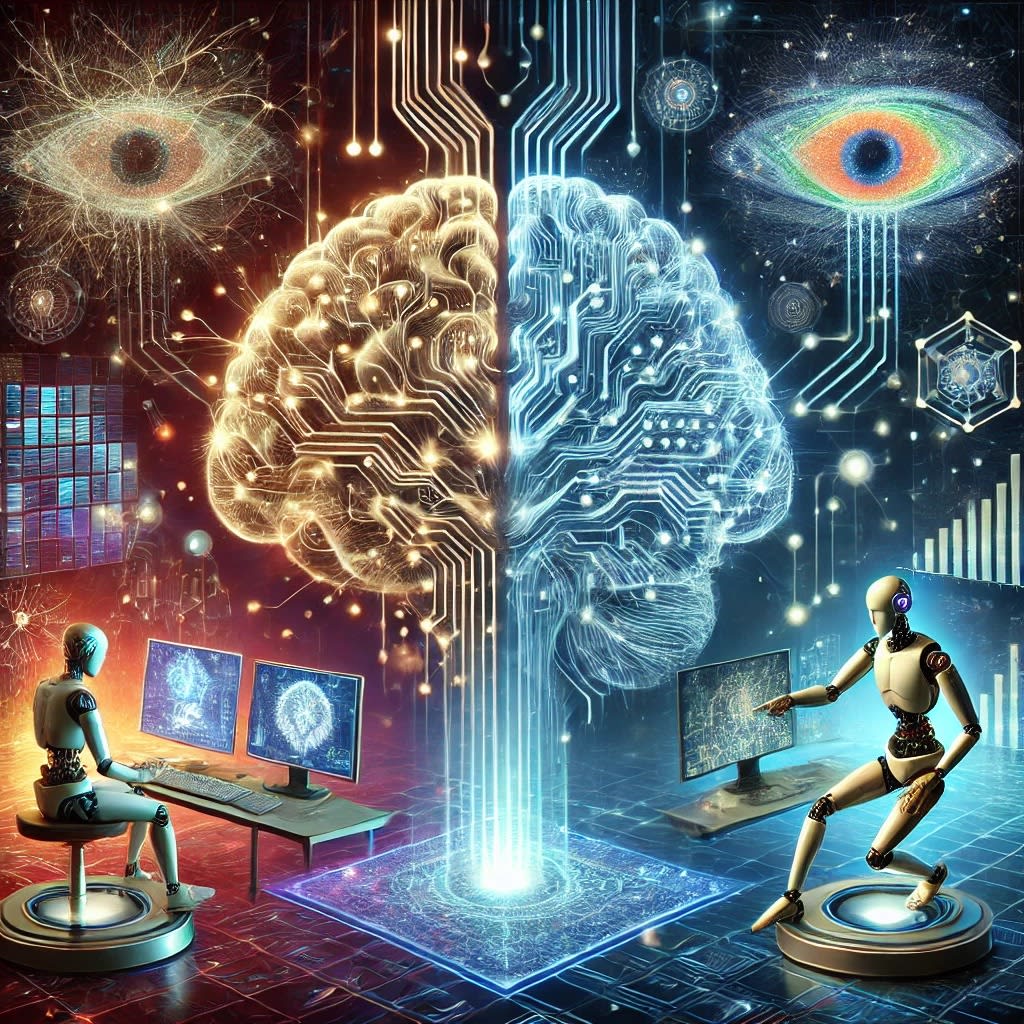
Artificial General Intelligence (AGI), a system capable of human-like reasoning, learning, and decision-making across diverse tasks, has become a focal point of technological research. While computer science and engineering are at the forefront of AGI development, neuroscience plays a vital role in shaping its foundations. By studying how the human brain processes information, learns, and adapts, neuroscientists provide valuable insights for building intelligent systems that mimic human cognition.
We explore how neuroscience contributes to AGI development and why understanding the brain is key to unlocking AGI's full potential.
How Neuroscience Influences AGI
1. Brain-Inspired Architectures
Neuroscience informs the development of computational models by studying how neurons in the brain work together to process information.
Neural Networks: Inspired by biological neural networks, artificial neural networks (ANNs) are the backbone of machine learning. Neuroscience research helps refine these architectures to improve their efficiency and accuracy.
Hierarchical Processing: The human brain processes data hierarchically, from simple features (edges, colors) to complex abstractions (faces, emotions). This principle guides the design of deep learning models used in AGI.
2. Learning and Memory Mechanisms
Neuroscience sheds light on how humans acquire and retain knowledge, offering inspiration for AGI learning algorithms.
Hebbian Learning: “Neurons that fire together wire together” is a principle derived from neuroscience. This concept underpins many learning algorithms, allowing systems to adapt based on experience.
Synaptic Plasticity: The brain’s ability to strengthen or weaken connections between neurons is a model for creating AGI systems that can learn dynamically and adjust to new information.
3. Understanding Human Cognition
Neuroscience explores the mechanisms behind decision-making, perception, and reasoning, which are critical for AGI.
Cognitive Models: AGI development often incorporates models of human cognition, such as attention, memory, and problem-solving, to replicate human-like behavior.
Emotion and Decision-Making: Emotions influence human decisions. Neuroscience helps AGI developers create systems that understand and simulate emotional responses, enhancing interaction with humans.
Current Applications of Neuroscience in AGI
1. Vision Systems
By studying how the human visual cortex processes images, researchers have developed advanced computer vision algorithms. Neuroscience-inspired techniques enable AGI systems to recognize objects, interpret scenes, and make sense of visual data.
2. Natural Language Processing (NLP)
Neuroscience research into language processing and comprehension informs AGI systems like chatbots and voice assistants. Insights into how the brain understands syntax, semantics, and context are key to improving AI’s conversational abilities.
3. Reinforcement Learning
Inspired by the brain’s reward system, reinforcement learning enables AGI to learn from rewards and punishments. Neuroscience research into dopamine pathways has directly influenced this field, helping AGI systems learn more effectively.
Challenges in Applying Neuroscience to AGI
1. Complexity of the Brain
The human brain is incredibly complex, with approximately 86 billion neurons and trillions of connections. Replicating even a fraction of this complexity in AGI is a monumental task.
2. Limited Understanding
Despite advances in neuroscience, much about the brain remains unknown. This incomplete understanding limits the extent to which AGI can accurately model human cognition.
3. Ethical Considerations
Applying neuroscience to AGI raises ethical questions, such as whether machines with human-like cognition should have rights or moral considerations.
Future Directions: Bridging Neuroscience and AGI
1. Brain-Computer Interfaces (BCIs)
BCIs are emerging technologies that allow direct communication between the brain and machines. These systems could provide real-time insights into brain activity, advancing AGI development.
2. Neuromorphic Computing
Neuromorphic chips are designed to mimic the structure and function of the brain, enabling more efficient and brain-like AGI systems. These chips promise significant advancements in energy efficiency and adaptability.
3. Cross-Disciplinary Research
Collaboration between neuroscientists, computer scientists, and ethicists is crucial for overcoming challenges and ensuring AGI development aligns with societal values.
Conclusion: A Symbiotic Relationship
Neuroscience and AGI development are deeply interconnected, with each field driving advancements in the other. By unraveling the mysteries of the human brain, neuroscientists provide the foundation for building AGI systems capable of transforming society.
As AGI continues to evolve, its reliance on neuroscience will likely grow, paving the way for systems that are not only intelligent but also intuitive and adaptive. Understanding this symbiotic relationship is essential for anyone interested in the future of artificial intelligence.
About the Creator
Ayesha Rasheed Rajpoot
Video Editor & Content Creator || Expert in Web Content & Blog Posts || SEO Specialist || Social Media & YouTube Management || Handling Social Media Profile & Pages
Keep reading
More stories from Ayesha Rasheed Rajpoot and writers in Humans and other communities.
AGI and Existential Risk: A Philosophical Debate
Artificial General Intelligence (AGI) represents the next frontier in technology, promising machines capable of performing any intellectual task as effectively as humans — or better. While the potential benefits of AGI are undeniable, its development also raises critical existential questions: What happens if AGI surpasses human intelligence? Could it become a threat to humanity's very existence?
By Ayesha Rasheed Rajpootabout a year ago in Humans
Autonomy Is The Real Privilege
Good morning, freedom-seekers! Today we’re gonna be looking at autonomy. A strange word, I know; one many would probably look at blankly and run away from on sight. We’re gonna figure out what it actually means, consider how it’s achieved, and decipher just how deeply most of us are tangled up in dependence without realising it.
By That ‘Freedom’ Guyabout 20 hours ago in Humans
Ryan Hurst and the Weight of Quiet Strength in Storytelling
Some actors fill the screen with noise. Others arrive softly and stay with you long after the scene ends. Ryan Hurst belongs to the second kind. There is something steady about his presence, something that feels lived in rather than performed. When he appears on screen, he carries a sense of history, as if the character existed long before the camera found him. This article explores why Ryan Hurst continues to resonate with audiences who crave depth over spectacle. His career is not about chasing attention. It is about holding space for complex emotions, moral conflict, and quiet pain. By looking closely at his roles, his choices, and the themes he often embodies, we begin to understand why his work feels so personal to so many viewers.
By Muqadas khan6 days ago in Humans




Comments
There are no comments for this story
Be the first to respond and start the conversation.