
The Reason Why Cancer is so Hard to Beat
How does this battle for survival unfold?

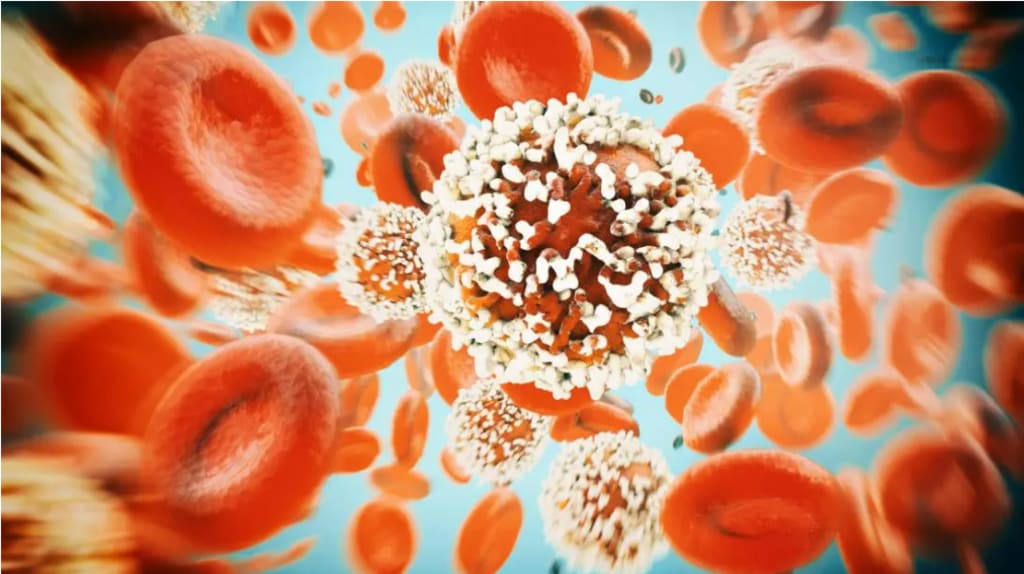
The battle for survival against cancer unfolds in a series of phases: the Elimination Phase, the Equilibrium Phase, and the Escape Phase. Here's how the story plays out:
The Elimination Phase:
It all begins with a single corrupted cell that starts multiplying rapidly. The tumor, though not yet cancerous, grows and forms new genetic lineages. Some mutations make the cells weaker, while others make them fitter and better at survival. The tumor begins to damage neighboring healthy cells, attracting the attention of the immune system. First responder immune cells, such as macrophages and natural killer cells, invade the tumor and start killing and consuming tumor cells. Dendritic cells collect samples and activate specialized T cells, the deadliest cancer killers. The T cells block the growth of new blood vessels, starving thousands of tumor cells and causing the tumor to collapse. The tumor is eradicated, and the body cleans up the dead cells.
The Equilibrium Phase:
In this phase, natural selection inadvertently selects the fittest tumor cells. These cells survive and multiply, forming a new tumor that consists of more resilient cells. The immune system recognizes the tumor and launches another attack, but once again, a few cells survive. This cycle repeats multiple times, with the surviving cells becoming stronger and more resistant to the immune response. Eventually, a tumor cell changes in a way that makes it properly dangerous and capable of becoming cancerous. It gains the ability to switch off the immune response by targeting inhibitor receptors on anti-cancer cells. This cell becomes the powerful founder of a new lineage of cancer cells.
The Escape Phase:
In this phase, the cancer cells have become immune to the immune system. Tumor growth resumes, and the cancer cells create a microenvironment that actively shuts down immune defenses. They send corrupt signals and erect roadblocks to prevent the immune system from attacking. The tumor expands, taking up space and nutrients, and can potentially spread to other tissues, building new "Tumor Towns." This is a dangerous stage where the cancer becomes more malignant and threatens organ function.
However, the battle against cancer is not without hope. Scientists are actively working on new and improved ways to combat cancer, such as immunotherapy. Immunotherapy involves modifying a patient's own immune cells to better target and kill cancer cells. This approach holds promise for more effective cancer treatment. With continued advancements in research and medical technology, the hope is that one-day cancer can be eradicated for good.
Please note that the narrative provided is a metaphorical representation of the biological processes involved in cancer development and treatment. The actual mechanisms and details of cancer progression can vary depending on the specific type and stage of cancer.
You are correct that cancer can manipulate and evade the immune system, making it challenging to effectively treat and eliminate tumors. However, there is ongoing research focused on breaking this vicious circle and improving immune responses against cancer. Here are a few key areas of investigation:
Immunotherapy: Immunotherapy has revolutionized cancer treatment by enhancing the immune system's ability to recognize and attack cancer cells. Various approaches are being explored, such as immune checkpoint inhibitors, which block the signals that cancer cells use to suppress the immune response. These inhibitors unleash the immune system's full potential to target and destroy cancer cells.
Combination Therapies: Researchers are investigating combinations of different treatment modalities to overcome immune evasion strategies employed by cancer cells. This may involve combining immunotherapies with traditional treatments like chemotherapy or radiation therapy to maximize the effectiveness of both approaches.
Targeted Therapies: Targeted therapies aim to specifically inhibit cancer cells' growth and survival by targeting molecular alterations or specific pathways driving their growth. By disrupting these specific targets, such as mutated genes or proteins that support tumor growth, targeted therapies can help prevent cancer cells from evading the immune system.
Cancer Vaccines: Vaccines are being developed to stimulate the immune system's response against cancer cells. These vaccines can be designed to train the immune system to recognize specific tumor antigens, thereby priming it to launch a targeted attack against cancer cells.
Tumor Microenvironment Modulation: Researchers are studying the tumor microenvironment, which consists of various cell types and factors surrounding the tumor, to identify ways to modulate it in favor of an anti-tumor immune response. By altering the conditions within the tumor microenvironment, it may be possible to enhance the immune system's ability to recognize and eliminate cancer cells.
These are just a few examples of the research and approaches being explored to break the cycle of immune evasion in cancer. The field of cancer immunology and immunotherapy is rapidly evolving, and while challenges remain, the development of innovative strategies offers hope for more effective cancer treatments in the future.
About the Creator
Keep reading
More stories from Ralin Mae Lopez and writers in Humans and other communities.
Don’t chase happiness. Become antifragile | Tal Ben-Shahar | Big Think
There are only two kinds of people who do not experience painful emotions. The first kind is psychopaths. The second kind is dead. There is a false understanding or expectation that a happy life means being happy all the time. No, Learning to accept, and even embrace painful emotions is an important part of a happy life. And the study of painful emotions is an important part of the field of happiness studies. There is a very important concept that was introduced by Nassim Taleb. And that is antifragility. Antifragility is essentially resilience 2.0. Resilience 1.0 is when we put pressure on a system. After the pressure is lifted, that system goes back to its original form. Antifragility takes this idea a step further. You put pressure on a system. It grows bigger, stronger. We see antifragile systems all around us and within us. For example, in our muscular system, we go to the gym and we lift weights. We're putting pressure on our muscles. What happens, as a result, we grow stronger. We're an antifragile system. On the psychological level, you know what that's called? PTG, post-traumatic growth. So where post-traumatic stress disorder, PTSD, is about breaking down, post-traumatic growth is about growing stronger as a result of the pressure of stress. It's antifragility. The role of the science of happiness is to teach us what conditions we can put in place to increase the likelihood of growing from hardship.
By Ralin Mae Lopez3 years ago in Education
Whiskey At Dusk
Guess the whiskey was more important to you in the end, wasn’t it? It was more than the well-being of your friends; more vital than showing up to the places you promised you would and could come to; more critical of a matter than fulfilling your damn responsibilities and getting the press off your back.
By Snarky Lisa3 days ago in Humans
Modern world is just a joke
Artificial food, chemical substances in tools, virtual currency……… As you can see, the thing i listed above are all fake. So what actually is real in modern? And as the barrier between “real” stuff and “fake” stuff gets more and more blurry, what can we do? should be just give up and resign by accepting the fake stuff, or are there any alternative ways to solve this modern madness? So pause for a while and think.
By Curtis Wong2 days ago in Humans


Comments
There are no comments for this story
Be the first to respond and start the conversation.