
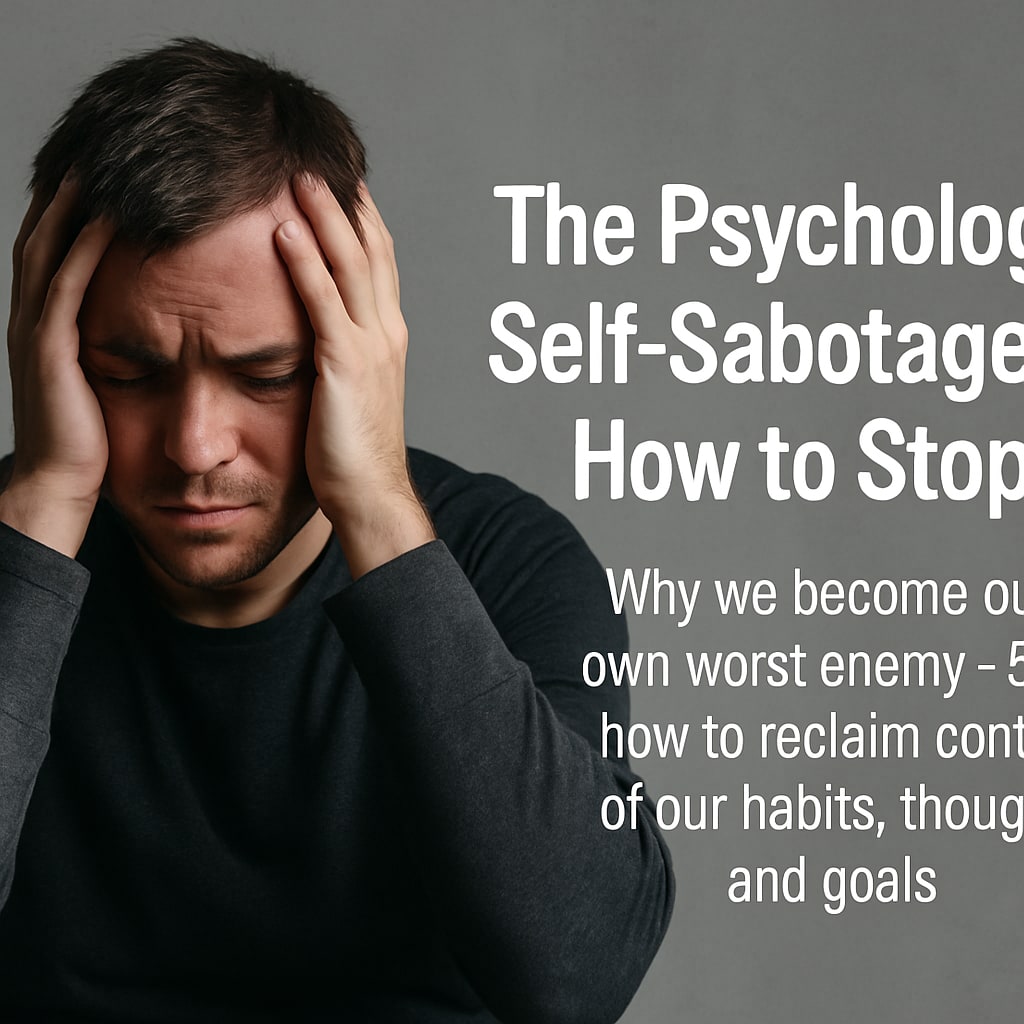
The Psychology of Self-Sabotage—and How to Stop It
Why we become our own worst enemy—and how to reclaim control of our habits, thoughts, and goals.

Introduction
You set a goal. You make progress. Then, without warning, you procrastinate, panic, or give up—again. Sound familiar? That’s self-sabotage, and it’s more common than we like to admit.
Self-sabotage is the act of getting in your own way—whether consciously or unconsciously—when trying to achieve something important. It’s missing deadlines you had time to meet, ghosting opportunities that could change your life, or giving in to fear just before a breakthrough.
But why do we do this? More importantly, how do we stop?
What Is Self-Sabotage, Really?
At its core, self-sabotage isn’t laziness or lack of willpower—it’s protection. Our brain, designed to keep us safe, sometimes confuses growth with danger. When we move outside our comfort zone—whether it’s asking for a promotion, starting a relationship, or launching a business—our inner alarm bells go off.
So instead of moving forward, we unconsciously hit the brakes.
Self-sabotage can take many forms:
- Procrastination: “I’ll do it tomorrow,” becomes “I never did it at all.
- Perfectionism: “It’s not good enough yet,” becomes “I never finish anything.”
- Negative self-talk: “I’m not cut out for this,” becomes a self-fulfilling prophecy.
- Overcommitting: Taking on too much and burning out.
- Avoidance behaviors: Distracting yourself with food, social media, or drama to escape real growth.
Why We Sabotage Ourselves
There are several psychological reasons behind self-sabotaging behavior:
- Fear of Failure: Trying and failing feels painful. So sometimes, we don’t try at all. Ironically, avoiding failure ensures it.
- Fear of Success: It sounds strange, but success brings responsibility, attention, and change. For some, that feels scarier than staying stuck.
- Low Self-Worth: Deep down, we may believe we don’t deserve success, love, or happiness. So we unconsciously push it away.
- Comfort in Chaos: If you grew up in instability, peace might feel uncomfortable. You may unintentionally recreate stress because it feels familiar.
- Imposter Syndrome: You think, “Any minute now, they’ll find out I don’t belong here.” So you hold back to avoid being ‘exposed'.
Recognizing the Patterns
The first step to stopping self-sabotage is awareness. Ask yourself:
- Do I delay important tasks until the last minute?
- Do I set unrealistic expectations, then beat myself up for falling short?
- Do I ruin good things before they can grow?
- Do I talk myself out of opportunities because “I’m not ready”?
If you see a pattern, you’re not broken—you’re just repeating a coping mechanism that once served you but now holds you back.
How to Stop Self-Sabotaging
- Identify the Trigger: What situations or emotions lead you to sabotage yourself? Is it stress, fear of judgment, or a need for control?
- Challenge the Story: Our inner critic often lies. When you hear “I’m not good enough” or “I’ll fail anyway,” pause and ask, Is that really true? Use facts to fight fear.
- Set Realistic Goals: Perfectionism fuels procrastination. Break goals into small, doable steps, and allow yourself to be imperfect while progressing.
- Practice Self-Compassion: Self-sabotage thrives in shame. Instead of saying, “Why do I always do this?” try, “This is hard, but I’m learning.”
- Create Accountability: Tell someone your goal. Hire a coach. Set deadlines. Having external structure can keep you moving when your inner saboteur shows up.
- Build Self-Worth, Daily: Affirmations sound cheesy, but they work over time. Write down your wins. Celebrate effort, not just outcomes. You become what you believe.
- Get Comfortable with Discomfort: Growth feels awkward—like learning a new language. Get used to that discomfort and push through it. That’s where change lives.
A Personal Note: You’re Not Alone
Everyone self-sabotages in some way. Even high-achievers. Even therapists. What matters is how quickly we recognize the pattern and choose differently next time.
The truth is: You’re probably not afraid of failure—you’re afraid of what it means about your identity. But what if success didn’t have to change who you are, but reveal who you’ve always been?
You are worthy of growth, joy, peace, and success. Even if it scares you. Even if it’s unfamiliar.
Conclusion
Self-sabotage is not a character flaw—it’s a habit born from fear. But habits can be broken. And replaced.
The next time you catch yourself backing away from something good, ask: What am I really afraid of—and what would happen if I believed I could handle it?
Because the truth is—you can.
About the Creator
HazelnutLattea
Serving stories as warm as your favorite cup. Romance, self reflection and a hint caffeine-fueled daydreaming. Welcome to my little corner of stories.
Stay tuned.🙌
Keep reading
More stories from HazelnutLattea and writers in Humans and other communities.
See What Your Horoscope Says About You: The Zodiac Advantage
Have you ever wondered what makes you stand out? Why people love being around you, or how you handle life like no one else? The answer might be written in the stars. Whether you are a bold Aries, or a dreamy Pisces, your zodiac sign carries unique strengths that shape your personality.
By HazelnutLattea9 months ago in Humans
Silver Screen Magic with Mae West
American actress and singer Mae West became a popular film actress during the Great Depression. She started entertaining in vaudeville, then performed on Broadway, and finally went to Hollywood. She signed up with Paramount Pictures and made her debut in the 1932 film “Night After Night.” She also starred in musicals, comedies, and crime dramas. The American Film Institute named her one of the best classic Hollywood actresses.
By Rasma Raisters5 days ago in Geeks


Comments (1)
🙃👍