
The Prison Inside Your Head
Why Overthinking Feels Like Control But Is Actually Fear

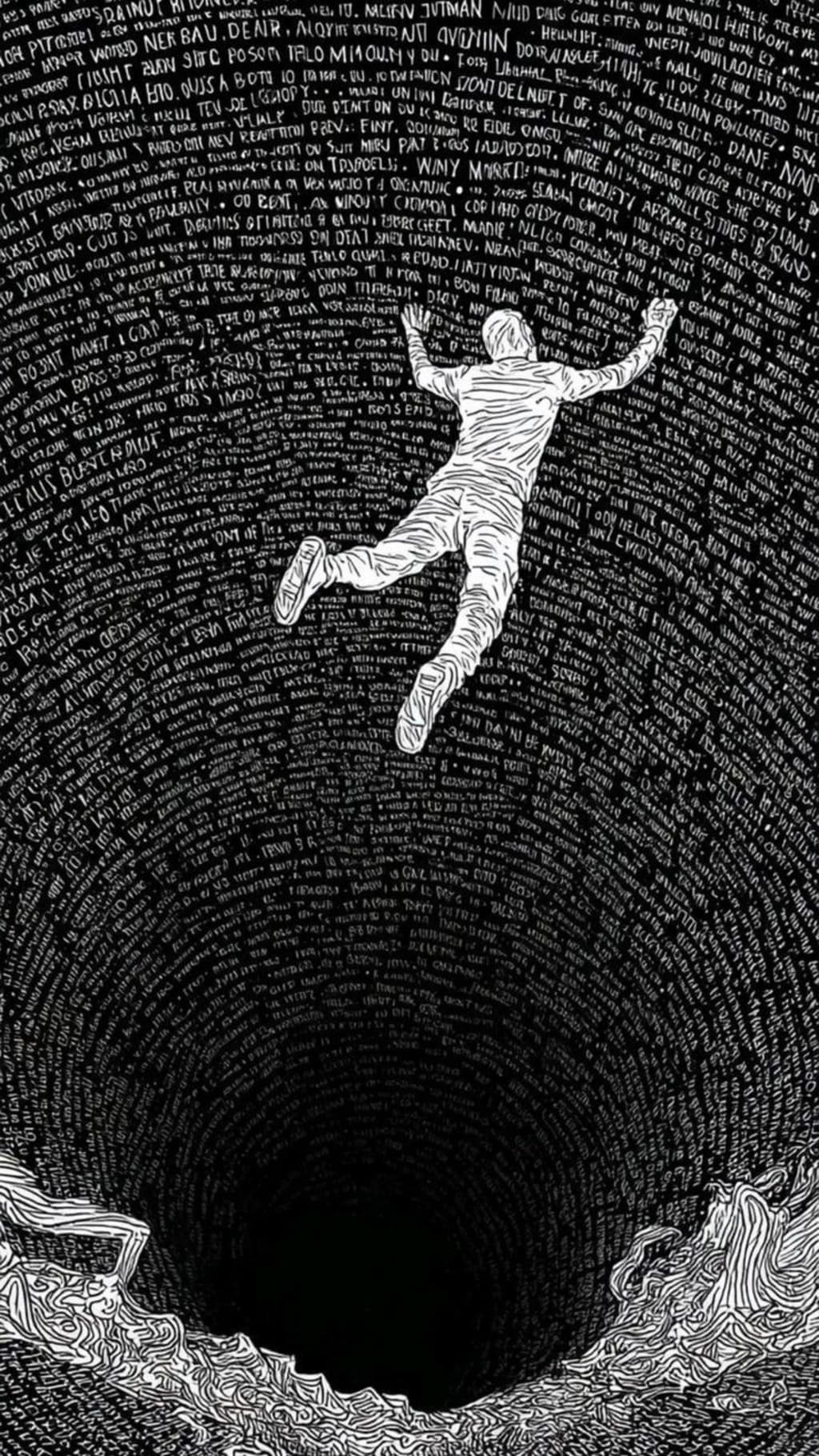
Overthinking feels productive.
It feels like you’re solving something.
It feels like you’re being careful.
It feels like you’re protecting yourself.
Most of the time, you’re not.
You’re spiraling.
---------------------------------------------------
Overthinking isn’t deep thinking.
Deep thinking leads somewhere.
Overthinking goes in circles.
Same thoughts.
Different angles.
No resolution.
________________________________________
Overthinking is disguised fear
Fear of making the wrong choice.
Fear of being judged.
Fear of failing.
Fear of regret.
So the mind keeps running simulations.
“If I do this, what happens?”
“But if I don’t do it…”
“What if they think…”
“What if I mess everything up…”
The brain is trying to create certainty.
Life doesn’t offer certainty.
So the brain never stops.
________________________________________
You mistake mental activity for progress
Thinking feels safer than acting.
Thinking doesn’t risk embarrassment.
Thinking doesn’t risk rejection.
Thinking doesn’t risk failure.
Action does.
So you stay in your head.
It feels busy.
But nothing changes.
________________________________________
Overthinking creates the illusion of control
You can’t control outcomes.
You can control effort.
Overthinking pretends to control outcomes by imagining every scenario.
That’s comforting.
It’s also fake.
________________________________________
Your brain is wired to protect, not to make you happy
The brain’s job is survival.
Not fulfillment.
Not peace.
Survival favors caution.
Survival favors scanning for danger.
That made sense thousands of years ago.
Today, danger looks like:
Embarrassment.
Rejection.
Uncertainty.
The brain reacts the same way.
Fight or flight.
Except now it happens internally.
________________________________________
Overthinking shrinks your world
You avoid things.
You delay conversations.
You hesitate to start.
You postpone decisions.
Life becomes smaller.
Not because you lack ability.
Because you don’t trust yourself.
________________________________________
Most outcomes are survivable
This is the truth people forget.
You can survive awkwardness.
You can survive rejection.
You can survive mistakes.
You’ve survived worse.
Your mind exaggerates consequences.
Reality is usually less dramatic.
________________________________________
Perfectionism feeds overthinking
“If I can’t do it perfectly, I won’t do it.”
Perfectionism sounds high-standard.
It’s fear in a tuxedo.
Nothing starts perfect.
Everything improves through iteration.
________________________________________
You don’t need to eliminate overthinking
That’s unrealistic.
You need to change your relationship with it.
Notice the thought.
Acknowledge it.
Don’t obey it automatically.
Thoughts are suggestions.
Not commands.
________________________________________
Action interrupts spirals
Small action.
Send the message.
Write the paragraph.
Take the step.
Movement breaks mental loops.
You don’t think your way into clarity.
You act your way into clarity.
________________________________________
Trust is built through evidence
You don’t suddenly trust yourself.
You earn it.
By showing up.
By keeping small promises.
By trying even when unsure.
Every action deposits into self-trust.
Over time, the noise gets quieter.
________________________________________
Stillness helps
Not scrolling stillness.
Actual stillness.
Silence.
Breathing.
No input.
At first it feels uncomfortable.
That’s withdrawal from stimulation.
Stay with it.
Your mind settles.
Not permanently.
But enough.
________________________________________
You are allowed to be a beginner
At conversations.
At relationships.
At goals.
At life.
Being bad at something doesn’t mean you’re doomed.
It means you’re early.
________________________________________
Final thought
Overthinking isn’t intelligence.
It’s unchanneled energy.
You don’t need a perfect plan.
You don’t need certainty.
You don’t need permission.
You need to move.
One imperfect step.
Then another.
That’s how you escape your head.
That’s how you start living.
About the Creator
Whiskey At Dusk
Guess the whiskey was more important to you in the end, wasn’t it? It was more than the well-being of your friends; more vital than showing up to the places you promised you would and could come to; more critical of a matter than fulfilling your damn responsibilities and getting the press off your back.
By Snarky Lisa2 days ago in Humans



Comments
There are no comments for this story
Be the first to respond and start the conversation.