
The Power of Rest: Unlocking the Psychological Benefits of Quality Sleep
How a Good Night’s Sleep Enhances Mental Health, Cognitive Function, and Emotional Well-Being
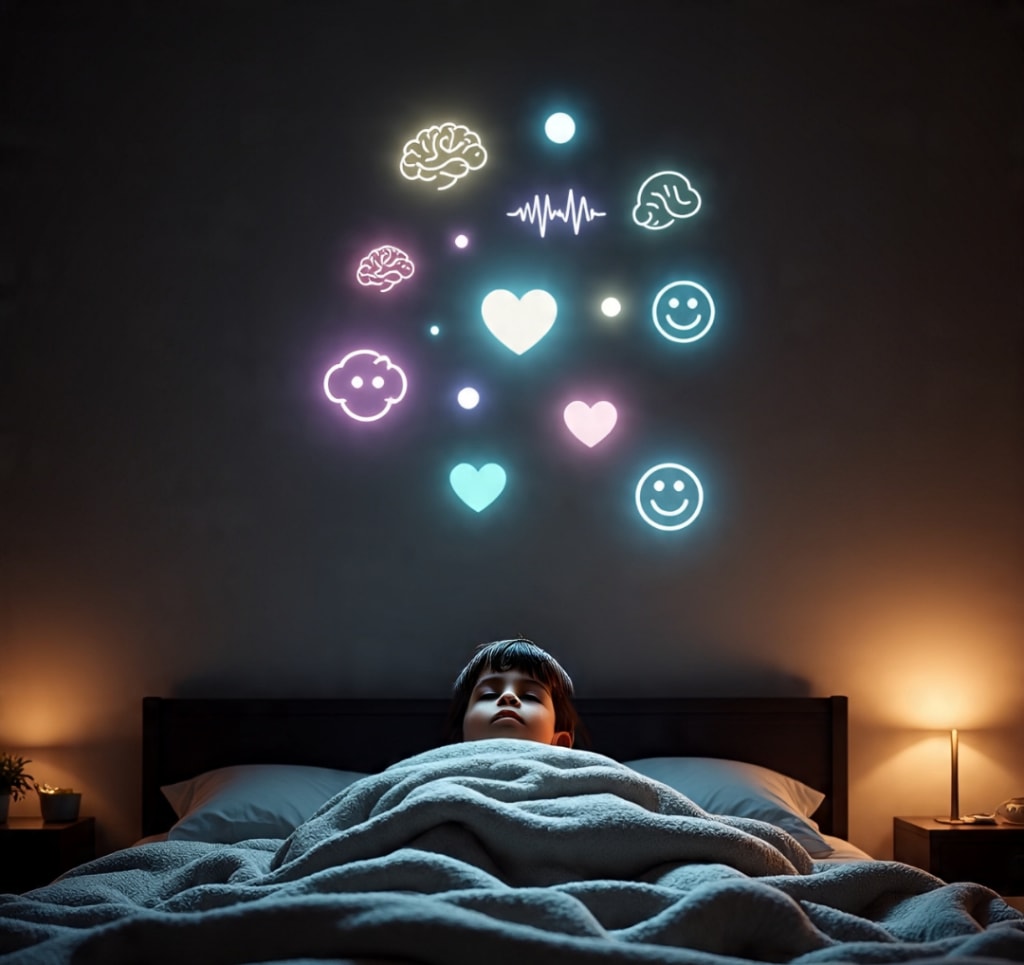
The Power of Rest: Unlocking the Psychological Benefits of Quality Sleep
When Maya started her new job at a fast-paced design firm, she felt energized—at first. But as the weeks passed, late-night deadlines, early-morning meetings, and a steadily growing to-do list began to chip away at her sleep. “I’ll catch up on rest this weekend,” she told herself each Friday. But the weekend never seemed long enough. Eventually, her energy dipped, her mood darkened, and even her creativity—the very skill she was hired for—began to falter.
What Maya was experiencing is something millions face daily: the psychological toll of poor sleep. While most of us recognize sleep as a biological need, science increasingly shows that it is also a pillar of mental well-being and psychological health. In fact, sleep isn't just something we do when everything else is done—it's a fundamental process that actively restores our minds, balances our emotions, and strengthens our ability to think, learn, and cope.
The Brain on Sleep
Sleep is more than just rest. It is a dynamic period during which the brain engages in critical activities that impact mood, memory, and mental clarity. During deep stages of non-REM sleep, the brain consolidates memories, processes information, and clears out waste proteins that accumulate during the day—a sort of nightly cleaning service for our neurons.
Then there’s REM (Rapid Eye Movement) sleep, a stage rich with dreams and emotional processing. Studies have shown that during REM sleep, the brain replays emotional events in a safer, dream-like environment, helping us regulate our feelings and reduce stress. That’s why after a solid night’s sleep, a problem can feel smaller or a difficult conversation less upsetting. It’s not just “sleeping on it”—it’s the brain doing emotional housekeeping.
Sleep and Mental Health: A Two-Way Street
Psychologists often describe the relationship between sleep and mental health as bidirectional. Poor sleep can contribute to mental health issues like anxiety and depression, and those same conditions can in turn disrupt sleep. It becomes a cycle that, if left unchecked, can lead to chronic emotional distress and cognitive decline.
But there’s a bright side: improving sleep can directly improve mental health. Cognitive-behavioral therapy for insomnia (CBT-I), for instance, is a highly effective treatment that not only helps people sleep better but often reduces symptoms of anxiety and depression in the process.
Dr. Emma Rodriguez, a clinical psychologist specializing in sleep disorders, puts it simply: “Sleep is like a mirror for your mental health. When sleep improves, so does your emotional resilience.”
The Hidden Power of Naps and Routines
Not all sleep happens at night. Short naps—10 to 20 minutes—can refresh the brain without causing grogginess. In fact, research shows that a well-timed nap can boost memory, enhance creativity, and reduce stress. It’s no surprise that companies and schools in some parts of the world are experimenting with nap pods and flexible rest breaks.
But beyond naps, the key to better psychological health through sleep lies in consistency. A regular sleep-wake cycle helps regulate your body’s internal clock, or circadian rhythm, which in turn supports hormone regulation, mood stability, and attention span.
Small changes can lead to big improvements:
Keeping a consistent bedtime—even on weekends
Limiting screen time before sleep
Creating a calming pre-sleep routine (like journaling, reading, or meditating)
Making the bedroom a sanctuary for rest—cool, dark, and quiet
Maya’s Turnaround
Maya eventually visited a therapist who specialized in sleep and mental health. Together, they identified how stress and poor sleep were feeding off each other. With some gentle structure, mindfulness practices, and a consistent bedtime, Maya began to feel better—more focused, more hopeful, and, yes, more creative.
“I didn’t realize how much sleep was affecting everything,” she says now. “Once I made it a priority, everything else started falling into place.”
A Final Thought
Sleep is not a luxury. It’s a biological necessity and a psychological superpower. In a culture that often glorifies hustle and late nights, choosing to sleep might feel like falling behind—but the science is clear: sleep helps us show up as our best selves.
So tonight, when you rest your head, know that you're not being lazy or unproductive. You're healing. You're growing. And you're giving your brain the care it needs to face tomorrow with clarity and strength.
About the Creator
Keep reading
More stories from Muhammad Saad and writers in Humans and other communities.
Embracing the Night: Finding Strength in the Shadows
Embracing the Night: Finding Strength in the Shadows When Maya was a child, nightfall brought a sense of quiet panic. The sun’s retreat felt like the closing of a protective curtain, and what came after was a stage for her fears. Shadows morphed into monsters. The ticking of the clock became footsteps. Even the breeze that brushed the curtains felt like something unseen brushing past her. She never told anyone. Fear at night seemed like something people outgrew, and she didn’t want to seem silly or weak. But as she got older, the fear evolved. It no longer came from imagined creatures or strange noises. It became a fear of the unknown, of being alone with her thoughts, of the silence that whispered doubts and insecurities. Even in her twenties, Maya kept a light on in her apartment, not because she couldn’t find her way in the dark—but because she didn’t want to face what might come with it. One evening, after a long and emotionally draining day, Maya found herself walking home later than usual. Her phone was dead, and the familiar streets felt unfamiliar under the weight of night. She had two options: take the busy main road or the quiet path through the park. Something within her urged her to choose the park. It was darker, quieter—but maybe, she thought, that was exactly what she needed to face. As she stepped into the park, a hush wrapped around her like a blanket. The trees swayed gently above her, their branches whispering secrets to the stars. At first, her heart raced with old, familiar fear. Every crunch of gravel underfoot sounded like a warning. But slowly, she started to notice something else. The moonlight painted soft patterns on the ground. A gentle breeze carried the scent of pine and damp earth. Somewhere in the distance, an owl called out—not in alarm, but as if simply announcing its presence. There was no danger, no monster, no judgment. Just the quiet truth of night, calm and present. Maya sat on a bench by the path and closed her eyes. She took a breath. Then another. For the first time, she didn’t run from the darkness—she sat with it. And in that silence, something shifted. She began to realize that fear at night wasn’t just about the dark. It was about vulnerability—being left alone with yourself, your thoughts, your doubts. It’s in the quiet that your inner voice grows loud. But maybe that voice wasn’t meant to scare her. Maybe it was there to teach her. In the following weeks, Maya began to change her relationship with night. She started turning off the lights before bed, allowing her eyes to adjust to the dark. She learned about the science of fear—how our brains are wired to be more alert in the dark as a survival mechanism. It wasn’t weakness; it was biology. But it was also something she could work with, not against. She picked up journaling, especially at night, to process her thoughts. She read about ancient cultures that revered the night as a time of reflection and renewal. In many traditions, the darkness wasn’t feared—it was honored. It was where seeds grew, where ideas formed, where the soul found rest. One night, Maya invited a few friends over for a “darkness dinner.” No lights, just candlelight and conversation about fear, growth, and the hidden gifts of nighttime. They laughed, shared stories, and found common ground. Most of them had feared the night at some point in their lives. But they all agreed—facing it made them stronger. The more Maya embraced the night, the less power her fears held over her. She began to see the darkness not as something to escape, but as something that offered peace, stillness, and even beauty. Her favorite part of each day became the moment she stepped outside before bed, looked up at the sky, and took a deep breath under the stars. That was her reminder: the night, like fear, wasn’t something to be avoided. It was something to be understood. And once understood, it could become a source of strength. --- Moral of the Story: Fear in the night is natural—but it’s also an invitation. When we stop running from it and instead listen to what it’s trying to teach us, we often find courage, clarity, and peace waiting quietly in the dark.
By Muhammad Saad 5 months ago in Humans
Autonomy Is The Real Privilege
Good morning, freedom-seekers! Today we’re gonna be looking at autonomy. A strange word, I know; one many would probably look at blankly and run away from on sight. We’re gonna figure out what it actually means, consider how it’s achieved, and decipher just how deeply most of us are tangled up in dependence without realising it.
By That ‘Freedom’ Guyabout 16 hours ago in Humans
Shadow of the Crown
In the heart of the ancient kingdom of Eldoria, where golden spires kissed the clouds and rivers shimmered like molten silver, there lived a dog named Arion. Unlike ordinary dogs, Arion was no mere pet; he was the companion of the royal family, a silent witness to their triumphs, tragedies, and secrets. His coat was a deep, glossy black that reflected the sunlight like polished onyx, and his eyes, a piercing amber, seemed to understand every whispered word and unspoken emotion of those around him. Arion had been born in the royal kennels, a litter of five pups, but even as a young puppy, he showed signs of extraordinary intelligence and loyalty. While the other pups played and tumbled, Arion would sit quietly near the throne room, listening intently to the council meetings and royal discussions. The courtiers joked that he was born to serve the crown, not just the family, and as he grew, this joke turned into truth. The king, a stern yet fair man named King Alaric, noticed Arion’s unique nature. Unlike the other dogs, Arion would sit by his side during state matters, resting his head on the king’s knee during long discussions and accompanying him through the castle corridors with a sense of purpose. Over time, Arion became more than a companion; he became a guardian, a confidant, and a symbol of loyalty that transcended words. It was during the Festival of the Silver Moon that Arion’s loyalty would be tested like never before. Eldoria had long been a peaceful kingdom, but whispers of unrest had begun to echo from the northern borders, where a rival lord, Lord Malric, coveted the throne. He was cunning and ruthless, and many feared that he would strike during the festival, when the city would be crowded with nobles and merchants. King Alaric, aware of the threat, had fortified the palace and strengthened the guards, yet he could not shake a growing unease. Arion sensed it too. On the eve of the festival, the dog patrolled the palace halls tirelessly, sniffing for danger, his tail low and tense, his ears twitching at every unfamiliar sound. That night, Arion had a vision of what could come—a shadow creeping through the halls, a dagger glinting under the torchlight, a scream swallowed by silence. When the festival began, Eldoria’s streets were alive with music, laughter, and the scent of roasted meats and sweet pastries. The nobles danced, children played, and the king presided from the balcony of the royal palace, smiling and waving to his people. Arion, however, remained ever watchful. He slipped through the corridors, his paws silent against the marble floors, his eyes scanning for the slightest hint of danger. It was then that Arion noticed him—a cloaked figure moving with unnatural stealth among the servants. The dog’s hackles rose as the figure approached the throne room. Without hesitation, Arion leapt from the shadows, his growl deep and threatening. The would-be assassin stumbled, surprised by the sudden attack. Arion’s teeth clamped gently, yet firmly, on the cloak, pulling the intruder back from the throne. The king, alerted by the commotion, rushed forward, and the guards quickly restrained the intruder. It was Lord Malric’s most trusted assassin, sent to kill the king and plunge Eldoria into chaos. King Alaric knelt beside Arion, patting his loyal companion’s head. “You have saved Eldoria,” he said, his voice thick with gratitude. “And you have saved me, old friend. No reward could ever match your loyalty.” But Arion’s trials were far from over. That same night, under the cover of darkness, a group of Malric’s soldiers infiltrated the palace. Their goal was simple: kidnap the heir, Princess Liora, and use her as leverage against the king. Arion, sensing danger even before the soldiers reached the princess’s chamber, intercepted them in the long, torch-lit corridor. The battle that followed was one of cunning and courage. Arion was outnumbered, yet he moved with precision, barking loudly to alert the palace guards while fending off the attackers with swift, calculated bites and relentless determination. The soldiers, unprepared for the dog’s ferocity and intelligence, were soon overwhelmed. Arion had managed to protect the princess until reinforcements arrived. Princess Liora, though frightened, knelt beside him, stroking his head. “You are more than a dog,” she whispered. “You are the heart of Eldoria.” From that day on, Arion was no longer seen merely as the royal dog; he became the kingdom’s silent guardian, the protector of the throne, and the symbol of unwavering loyalty. Years passed, and Arion grew older, his movements slower but his spirit undimmed. King Alaric aged, too, and eventually, it was Princess Liora who ascended the throne. Yet Arion remained by her side, guiding her through the challenges of leadership, comforting her during times of doubt, and warning her of dangers before they arrived. Tales of the royal dog spread far and wide, inspiring songs, poems, and paintings, each depicting the black-coated guardian with amber eyes, standing resolutely by the throne. One fateful winter, the kingdom faced its greatest threat: a devastating fire that swept through the castle’s northern wing. Arion, despite his age, ran into the flames, rescuing trapped servants and guiding them to safety, refusing to leave until the last soul was accounted for. By the time the fire was extinguished, Arion was found lying near the royal chambers, exhausted but alive, his coat scorched and his eyes weary yet proud. King Alaric and Queen Liora, tears in their eyes, embraced the dog who had given so much for the kingdom. “You are the soul of Eldoria,” the king said. “And your legacy will never fade.” In honor of his bravery, a statue of Arion was erected in the palace courtyard—a black dog with amber eyes, forever watching over the kingdom. Even in death, Arion’s influence remained. Generations of rulers would come and go, but the story of the royal dog of Eldoria endured. The people spoke of his courage, his intelligence, and his unbreakable loyalty, teaching their children that true nobility was not only in blood and crown but in heart and devotion. And so, Arion’s shadow lingered over the kingdom, not as a ghost of fear, but as a beacon of hope and protection. In every loyal dog, in every act of bravery, in every quiet moment of guardianship, the spirit of Arion lived on—a reminder that sometimes, the most extraordinary heroes wear no crown, speak no words, and serve with a heart that knows no bounds.
By The best writer 2 days ago in Humans



Comments
There are no comments for this story
Be the first to respond and start the conversation.