
The People Who Sit by the Window
A story about quiet lives, shared spaces, and the courage to be seen

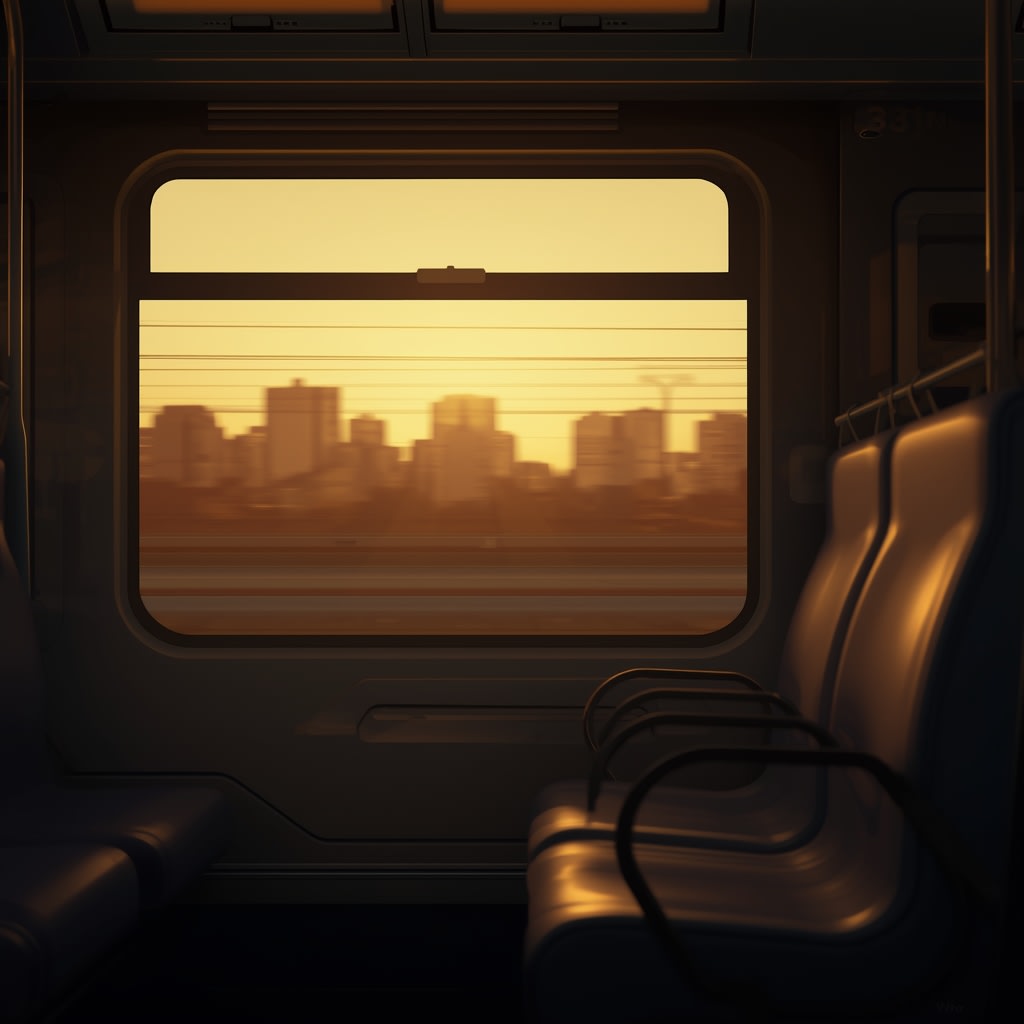
Buildings blurred into one another, storefronts flickered past like unfinished thoughts, and the sunlight slipped through the windows at an angle that made everything feel temporary. Emma always sat by the window. Not because she loved the view, but because it gave her something to focus on when her thoughts became too loud.
She had been riding the same train for three years.
Same car. Same seat. Same routine.
People changed, of course. Faces came and went, clothing shifted with the seasons, conversations floated in and out of her awareness. But the rhythm stayed the same. The train doors opened. The train doors closed. Life moved forward whether you were ready or not.
Emma worked at a print shop downtown, a place that smelled like ink and warm paper. She liked the predictability of it—files, orders, measurements. Words that didn’t ask questions. Customers rarely remembered her name, and she rarely offered it.
That suited her just fine.
Until she noticed him.
He boarded at the third stop after hers and always sat across the aisle, one row forward. He was young, maybe early twenties, with headphones resting around his neck instead of over his ears. He never listened to music. He just held them like a shield.
Most days, he stared at his hands.
Emma noticed the way he flinched when the train screeched too loudly, the way he checked the route map even though the train never changed direction. He reminded her of herself—careful, contained, quietly bracing for impact.
They never spoke.
But they began to notice each other noticing.
One Thursday, the train stopped unexpectedly between stations.
The lights flickered. Conversations paused. Someone sighed loudly.
Minutes passed.
“This is taking forever,” a man muttered near the doors.
Emma felt the familiar tightening in her chest. She focused on the window, even though there was nothing to see but concrete and darkness.
That’s when she felt it.
A piece of paper sliding across the seat beside her.
She looked down.
It was a folded receipt.
On the back, someone had written:
It always feels worse when you don’t know why you’re stuck. But we’ll move again.
Emma glanced up.
The young man across the aisle met her eyes for half a second, then looked away.
Something loosened inside her.
When the train finally lurched forward, Emma unfolded the receipt again, then carefully wrote beneath his words.
Thank you.
At the next stop, she stood, crossed the aisle, and placed the paper on his seat before stepping off the train.
The next day, she wondered if that would be the end of it.
It wasn’t.
The following afternoon, she found a note waiting on the seat beside her.
A lot of people panic when things stop unexpectedly.
She smiled.
Over time, the notes became a quiet ritual.
Short sentences. Observations. Reassurances neither of them said out loud.
I count the stops so I don’t feel lost.
The window helps when the noise gets too much.
Some days feel heavier than others.
They never used names.
They didn’t need them.
One rainy evening, the train was nearly empty.
Emma arrived early and took her usual seat. The city outside the window looked blurred and tired, like it needed rest. When the young man boarded, he hesitated before sitting down.
Then he spoke.
“Hi,” he said.
The word hung between them, fragile.
“Hi,” Emma replied.
Silence followed—but it was different now. Softer. Shared.
“I’m Alex,” he said finally.
“Emma.”
They exchanged small smiles, like people stepping carefully onto unfamiliar ground.
They didn’t talk much after that. Just enough. About work. About the train. About how crowded places made their thoughts feel tangled.
“I like sitting by the window,” Alex said once. “It reminds me that things are moving, even when I feel stuck.”
Emma nodded. “Me too.”
Weeks passed. Then months.
One afternoon, Alex didn’t show up.
Emma told herself it was nothing. People changed routines. Life happened.
But the seat across the aisle stayed empty.
Days passed. Then a week.
On the eighth day, Emma found a folded note tucked into the corner of her window seat.
I got a new job. Different hours. Different train.
Her chest tightened.
But I wanted to say thank you.
She unfolded the paper slowly.
You made the ride easier. You made it quieter in my head.
At the bottom, a final line:
Keep the window seat.
Emma stared at the note long after the train pulled away from the station.
For a while, the ride felt emptier.
But something had changed.
She noticed the people around her more. The nervous tapping fingers. The tired eyes. The way some passengers leaned toward the windows like they were searching for proof that movement still existed.
One day, a woman sat beside her, gripping her bag tightly.
Emma hesitated.
Then she reached into her pocket, pulled out a small piece of paper, and wrote:
It helps to watch the city move.
She slid the note across the seat.
The woman looked down, then up, surprised.
She smiled.
Emma turned back to the window as the train moved forward.
She still liked sitting by it.
But now she understood something she hadn’t before.
Sometimes, the people who sit by the window aren’t trying to escape.
They’re just learning how to stay.
About the Creator
Yasir khan
Curious mind, storyteller at heart. I write about life, personal growth, and small wins that teach big lessons. Sharing real experiences to inspire and motivate others.
Keep reading
More stories from Yasir khan and writers in Humans and other communities.
The Attention Economy Is Quietly Rewriting Our Minds — and Most People Don’t Notice
Every time you unlock your phone, scroll a feed, or tap a notification, you are participating in something far bigger than momentary distraction. You are engaging in what experts call the attention economy — a system where human focus is the most valuable resource on Earth. This isn’t hyperbole. It’s reality. For the companies that fuel the modern internet, your attention is currency. Every second spent watching, clicking, or reacting generates data that platforms use to predict your behavior, tailor your feed, and pull you deeper into their ecosystem. And the consequences go beyond algorithms. They are reshaping how we think, feel, and decide — often without our conscious awareness.
By Yasir khan2 months ago in Humans
The Stranger I Met That Changed Everything
It was one of those quiet afternoons that feel almost invisible. The sky was cloudy, the wind was gentle, and the small park near my apartment looked peaceful. People were walking along the paths, some were jogging, and a few parents were watching their children play near the swings. Normally, it was a place full of life. But that day, I felt completely disconnected from everything around me. I was sitting alone on a wooden bench, holding my phone in my hands but not really paying attention to it. My mind was somewhere else — stuck in a cycle of frustration and disappointment. For weeks, nothing had been going the way I hoped. I had applied for several opportunities, worked on projects that never succeeded, and watched others move forward in their lives while I felt completely stuck. It seemed like everyone around me had a clear direction, while I was just standing in the same place. The worst part wasn’t failure. It was the feeling that maybe I wasn’t good enough. That thought had been sitting quietly in my mind for days. I looked around the park. A group of friends nearby were laughing loudly about something. A child was running toward his mother with a big smile on his face. An old couple was slowly walking together along the path. Everyone seemed to have a place to go. Except me. I sighed and leaned back against the bench, staring at the cloudy sky above. That was when someone sat down beside me. I turned slightly and saw an elderly man, probably around sixty-five or seventy years old. His hair was gray and slightly messy, and he wore a simple jacket that looked a little worn but comfortable. His face had deep lines, the kind that usually come from years of experience and quiet reflection. At first, we both sat there in silence. The park sounds continued around us — birds chirping, leaves moving softly in the wind, distant laughter from children playing. Then, after a few minutes, the man spoke. “You look like someone carrying a heavy thought.” His words surprised me. I hadn’t expected a stranger to notice anything about me. I gave a small awkward smile and replied, “Just thinking about life, I guess.” He nodded slowly. “Life gives us a lot to think about,” he said. Something about his calm tone made me feel comfortable enough to continue the conversation. Without planning to, I started explaining how I felt. I told him about my frustrations, the plans that didn’t work out, the opportunities that slipped away, and the constant feeling that I was falling behind everyone else. He listened patiently the entire time. He didn’t interrupt me once. When I finished talking, he remained quiet for a moment, as if carefully thinking about what to say. Then he looked toward the tall trees across the park and asked me a simple question. “Do you know why you feel stuck?” I shook my head. “You believe that everyone else is moving faster than you,” he said. I thought about it and realized he was right. He smiled gently and pointed toward the trees. “Look at them,” he said. “Some grew quickly, others slowly. But none of them are competing with each other.” I followed his gaze. The trees stood quietly, their branches moving slightly in the wind. “They grow at their own pace,” he continued. “And that’s exactly how life works.” His words made me pause. For the first time in a long while, my thoughts began to slow down. The man then shared a small part of his own story. When he was younger, he had tried to build a business. He failed several times. Friends doubted him, relatives criticized him, and many people believed he was wasting his time. But he kept trying. Not because he was sure he would succeed, but because he believed stopping would mean giving up on himself. Eventually, after many years, things began to improve. But when he looked back, he realized something interesting. “The success wasn’t the best part,” he said with a smile. I looked at him curiously. “The best part was the person I became while trying.” Those words stayed in my mind. After a few minutes, he slowly stood up from the bench. Before leaving, he looked at me and said something that I will probably remember for the rest of my life. “Don’t rush your story,” he said. “The most meaningful chapters often take the longest to write.” Then he walked away along the park path, disappearing among the trees and people. I never saw him again. But that short conversation with a stranger changed something inside me. Sometimes we search for answers in complicated plans, long books, or big life events. But sometimes, the lesson we need the most comes from a simple conversation with someone we may never meet again. That afternoon, a stranger reminded me of something important. Life isn’t a race. Everyone moves at their own pace. And sometimes, the moment you feel most lost is actually the moment your story begins to take a new direction.
By Sahir E Shafqat2 days ago in Humans


Comments
There are no comments for this story
Be the first to respond and start the conversation.