
The Night Train Ticket
A Journey Where Forgiveness Took a Seat

THE STORY
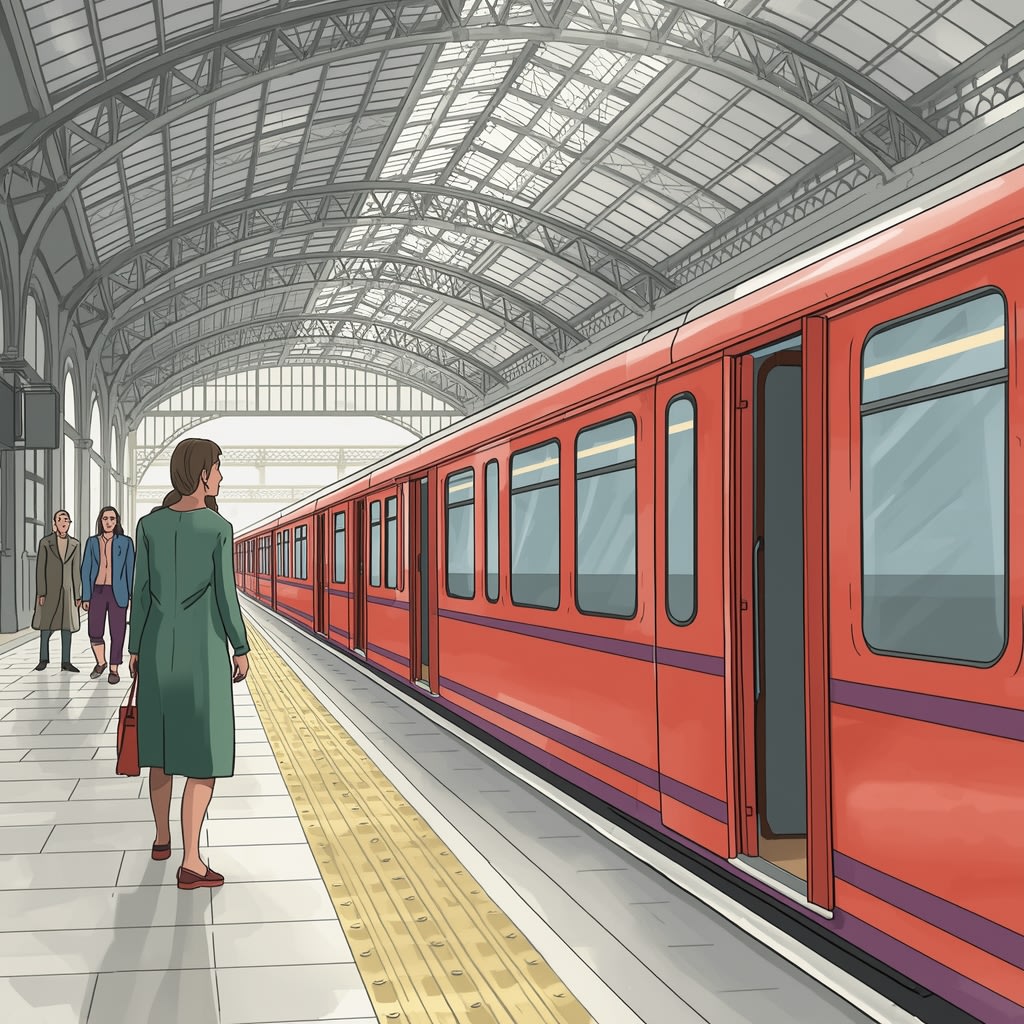
The railway station of Mehrabad did not sleep—it only waited.
During the day, it looked tired. Dust settled on the benches, stray dogs curled into shadows, and tea stalls shut their wooden doors as if the place itself needed rest. But at night, especially before the 2:15 a.m. train, the station woke with quiet urgency.
Footsteps echoed.
Suitcases rolled.
Whispers floated in the air.
Everyone who arrived at that hour carried something heavier than luggage.
Among them was Rashid.
RASHID’S ROUTINE
Rashid had worked as a ticket checker for almost twenty years. His uniform was always neat, his shoes polished even though no one asked him to. He believed small discipline was the only thing keeping him steady.
Every night, he arrived early.
He checked clocks.
Straightened benches.
Watched people.
He knew the regular travelers—the laborers heading to distant cities, the students returning after holidays, the women clutching prayer beads as they waited.
But Rashid rarely spoke unless necessary.
He preferred watching faces.
Faces told stories words never could.
THE PLATFORM OF MEMORY
Platform number three was Rashid’s quiet punishment.
Fifteen years earlier, it had been the place where his life split into before and after.
That night, his younger brother Irfan stood there with a single suitcase and restless eyes. He had just gotten a job in another city—his first real chance to build something of his own.
Rashid hadn’t been proud.
He had been afraid.
Afraid of being left behind.
Afraid of responsibility.
Afraid of losing the only family he had left.
So he spoke harshly.
“You’re running away,” Rashid had said.
“You always do.”
Irfan’s face tightened.
The train arrived.
The argument never finished.
The doors closed.
That was the last time Rashid saw his brother alive.
THE GUILT THAT STAYED
Weeks later, news arrived of an accident.
Rashid didn’t cry.
He didn’t scream.
He just kept coming to work.
Night after night, he stood on the same platform, checking tickets for people leaving—while he stayed behind, trapped in a moment he could never fix.
Peace, to him, felt like something meant for other people.
THE WOMAN WITH THE TREMBLING HANDS
On a cold winter night, Rashid noticed her.
She stood alone near the edge of the platform, clutching a worn handbag and a crumpled train ticket. Her hands shook, not from cold, but from hesitation.
Rashid approached gently.
“Madam,” he said softly, “is everything alright?”
She looked up, eyes clouded with doubt.
“I don’t know if I should go,” she whispered.
Rashid paused.
“Where are you traveling?”
“To my son’s city,” she said. “We haven’t spoken in years.”
Something inside Rashid tightened.
THE BENCH
He guided her to a bench.
The station hummed around them—vendors calling, engines breathing—but the space between them felt still.
“I said things I shouldn’t have,” the woman continued. “Pride stayed longer than love.”
Rashid stared at the tracks.
“I understand,” he said quietly.
For the first time in years, he spoke about Irfan.
Not the fight.
Not the accident.
But the silence he never broke.
The woman listened without interrupting.
When Rashid finished, she said something that stayed with him forever:
“Peace doesn’t wait for perfect words.
It waits for courage.”
THE TRAIN ARRIVES
The whistle cut through the night.
Passengers stood.
Suitcases lifted.
Decisions pressed hard.
The woman rose slowly.
“Thank you for listening,” she said, her voice steadier now.
Rashid checked her ticket.
As she boarded, she turned back once more.
“I hope you take your journey too.”
The train disappeared into darkness.
THE LONGEST NIGHT
That night, Rashid didn’t sleep.
He sat at home, holding an old photograph—two brothers smiling, unaware of how fragile time was.
For the first time, he allowed himself to feel regret fully.
Not as punishment.
But as a reminder.
Peace, he realized, wasn’t about erasing the past.
It was about facing it.
THE TICKET
The next evening, Rashid did something he had never done before.
He bought a night train ticket.
Not to escape.
Not to run.
But to visit Irfan’s family.
To apologize—even if forgiveness never came.
THE JOURNEY
As Rashid sat by the window, the train moved slowly out of Mehrabad.
Lights faded.
Tracks stretched ahead.
He felt fear—but also relief.
For the first time, he wasn’t standing still.
THE ARRIVAL
At dawn, Rashid reached the city.
Irfan’s wife opened the door.
She looked surprised.
Then silent.
Rashid lowered his head.
“I came too late,” he said. “But I came.”
She stepped aside.
Peace did not arrive suddenly.
But it arrived.
THE MEANING
Months later, Rashid returned to work.
But something had changed.
Now, when he checked tickets, he smiled more.
When people hesitated, he spoke gently.
Because he understood something deeply:
Peace doesn’t come when the train is on time.
It comes when we finally decide to board.
FINAL THOUGHT
Some journeys are delayed.
Some apologies come late.
But peace is patient.
It waits—
on quiet platforms,
in trembling hands,
inside a single ticket—
until we are ready to move.
About the Creator
M.Farooq
Through every word, seeks to build bridges — one story, one voice, one moment of peace at a time.
I Communicated Only Through Writing With My Partner for a Week. It Fixed Our Biggest Fight.
Fights in relationships can feel endless. Words get tangled with emotion, frustration builds, and even the simplest issue can explode. My partner and I had been stuck in a recurring argument for months, and no amount of talking seemed to fix it. Then I tried something unusual: we agreed to communicate only through writing for an entire week. The results were surprising—and transformative.
By Wilson Igbasi7 days ago in Humans
Day 4 of Quitting
If this is how sobriety feels, maybe it’s better to go through life a little buzzed… this, along with other hits like, I want to kill myself, I wish I was dead, and I’m going to throw myself off a bridge have been the only thoughts on rotation these past few days. I promise myself that if, in a month, I still feel like this (‘this’ meaning despondent, full of rage, and simultaneously numb) I can go back to smoking. Until mid-February though? Nicotine is off the table.
By sleepy drafts6 days ago in Longevity


Comments
There are no comments for this story
Be the first to respond and start the conversation.